




























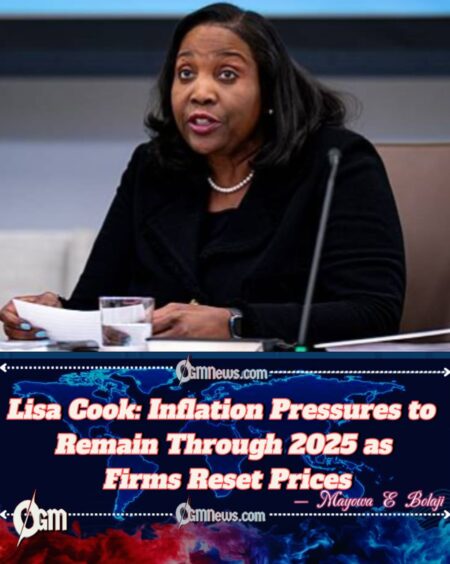
Lisa Cook, a member of the Board of Governors of the U.S. Federal Reserve System, has disclosed that the Personal Consumption Expenditures (PCE) price index rose by 2.8% year-on-year in September, remaining well above the Federal Reserve’s 2% inflation target. Cook stated that both the headline and core inflation measures — the latter excluding food and energy — are holding steady at 2.8%, signaling continued inflationary pressure across the American economy.
Lisa Cook explained that the persistent inflation rate reflects the ongoing influence of tariff-affected goods and supply chain adjustments. “Both of these readings are as high or higher than those from a year earlier,” she noted, adding that tariff-related costs continue to filter through the economy. The latest figures, based on available data for September, indicate that the Federal Reserve’s fight to bring inflation back to target remains challenging despite earlier signs of moderation in consumer prices.
Lisa Cook emphasized that inflationary forces are not yet fully subdued, citing global trade frictions and domestic pricing adjustments as key contributing factors. She said the Fed remains vigilant in assessing economic conditions but declined to speculate on future policy moves, given the sensitivity of ongoing cases and market reactions.
Lisa Cook Links Inflation Pressures to Tariff Pass-Through Delays
Lisa Cook highlighted that a major factor sustaining price growth is the incomplete pass-through of tariffs from firms to consumers. Her outreach to business leaders suggests that many companies are still absorbing part of the cost increases rather than fully passing them on to retail prices. “Many firms have adopted a strategy of running down inventories purchased at lower price levels before raising prices,” she explained.
According to Lisa Cook, some firms remain cautious amid uncertainty surrounding trade policies and potential tariff adjustments. “Others have reported waiting until tariff uncertainty is resolved before passing increases on to consumers,” she said, implying that once trade conditions stabilize, more price adjustments could follow. Economists interpret this as a sign that inflationary momentum may persist longer than expected, even if immediate price hikes appear moderate.
Lisa Cook warned that the gradual repricing process will continue as new goods enter the market. “As new car models, clothing lines, and other products enter the market, that process will continue to provide firms with opportunities to reset prices,” she stated. Her remarks suggest that the second-round effects of tariffs — where initial cost shocks ripple through different sectors — could sustain inflation into the coming year.
Lisa Cook Predicts Inflation Will Stay Elevated Through 2025
Lisa Cook expressed her expectation that inflation will remain elevated over the next year, driven by continued pricing realignments across industries. She said that while supply chains have improved since the pandemic, structural price pressures from tariffs, labor shortages, and global cost increases remain significant. “As such, I expect inflation to remain elevated over the next year,” Cook affirmed.
Lisa Cook refrained from commenting on specific monetary policy responses, citing the sensitivity of the ongoing economic case. “Because the case is ongoing, it would be inappropriate for me to comment further today,” she said. However, her remarks underscore the Fed’s cautious stance as it balances inflation control with the need to support economic growth and employment stability.
Lisa Cook concluded by reaffirming her commitment to public service, calling it “the honor of my life to serve on the Board of Governors of the Federal Reserve System.” She pledged to continue carrying out her sworn duties “on behalf of the American people,” signaling her dedication to maintaining economic stability and policy transparency amid a complex global financial landscape.

[…] […]