


























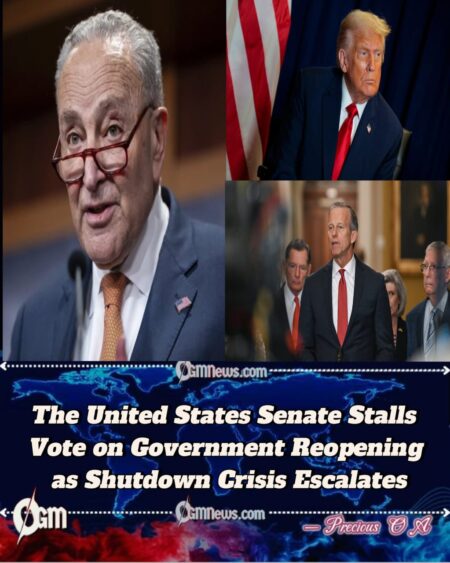
The United States Senate has announced it will not hold a vote on reopening the federal government until at least Tuesday — the same day the nation is set to tie the longest government shutdown in American history. With negotiations stalling and both parties locked in a tense standoff, millions of federal employees continue to face uncertainty and financial strain. The delay has sparked outrage from citizens, advocacy groups, and business leaders who say the deadlock reflects the deep dysfunction of Washington politics in an era of growing division.
U.S. Senate leaders revealed that the shutdown, which began weeks ago over a bitter funding dispute, has effectively paralyzed several federal agencies, disrupted public services, and threatened economic stability. Despite growing public pressure, neither side appears willing to back down from its entrenched position. The White House has maintained a firm stance on securing funding for its proposed border policies, while Democratic lawmakers have refused to concede to what they describe as “political hostage-taking.” The breakdown of communication between both chambers of Congress has further complicated matters, with each side blaming the other for the prolonged crisis.
Federal agencies have continued to report severe operational strain as the shutdown drags on. Employees have missed paychecks, airports are experiencing delays due to staff shortages, and national parks remain shuttered, leaving thousands of tourists stranded and local economies damaged. Economists warn that the longer the impasse continues, the deeper the economic repercussions could become, with potential long-term harm to federal infrastructure, public trust, and national productivity. Analysts have cautioned that this shutdown, if extended, could leave a scar that will take months — if not years — to repair fully.
U.S. Senate insiders have stated that conversations will continue through the weekend, but expectations for a breakthrough remain low. A senior congressional aide described the mood on Capitol Hill as “grim and fatigued,” adding that “neither party wants to be seen as surrendering.” Staffers have noted an overwhelming sense of frustration, as many lawmakers face pressure from their constituents to bring the standoff to an end while trying to maintain loyalty to their party’s broader political objectives. The halls of Congress have grown tense, with meetings stretching late into the night and tempers flaring across party lines.
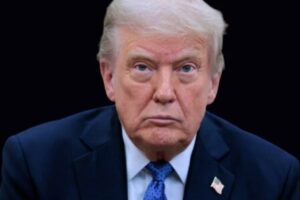
U.S. Senate officials have noted President Trump’s defiant posture, as he insists that Democrats are playing “evil political games” and accuses them of deliberately stalling negotiations to energize far-left voters ahead of upcoming elections. The president has framed the debate not merely as a budgetary disagreement but as a moral and patriotic struggle for the future of the country, further fueling the political theater surrounding the crisis.
Trump Accuses Democrats of Political Manipulation
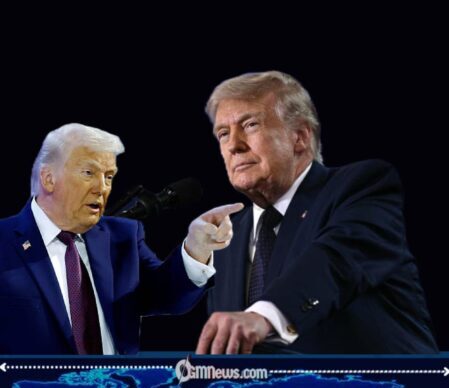
U.S. President Donald Trump has sharply criticized Democratic lawmakers, accusing them of using the shutdown as a tool to manipulate electoral outcomes. “They waited until the election to juice far-left turnout,” Trump said during a late-night address, condemning the opposition for what he described as a “reckless disregard” for the well-being of American workers. His remarks came as millions of federal employees face the uncertainty of unpaid bills and suspended benefits, while the public grows increasingly impatient with both parties’ unwillingness to compromise.
U.S. Senate members observed that according to the president, the refusal by Democrats to compromise reflects a deeper political strategy rather than genuine concern over fiscal priorities. “This isn’t about policy,” Trump stated. “It’s about power. They think they can score points by keeping the government closed and blaming me for it.” The White House has continued to frame the shutdown as a necessary battle to force Democrats into action, portraying the president as a defender of ordinary Americans against what he calls “a political elite more interested in optics than outcomes.”
U.S. Senate reactions have been divided, with Republican allies echoing the president’s frustration, arguing that the Democratic leadership is intentionally prolonging the crisis for political advantage. Meanwhile, Democratic lawmakers have accused the president of manufacturing the standoff to push his agenda, describing his remarks as “divisive,” “detached from reality,” and “a direct assault on the democratic process.” Each side has taken to the media to push their narrative, transforming the shutdown into a high-stakes public relations war.
Public opinion polls have revealed that Americans remain increasingly frustrated with the gridlock in Washington. A majority of citizens are calling for immediate bipartisan compromise, while analysts suggest that as the shutdown stretches on, both parties risk long-term political damage. Surveys show that faith in federal institutions has dipped significantly, with many citizens expressing deep cynicism about the ability of elected officials to put national interest above partisan ambition.
U.S. Senate observers have further noted that this prolonged standoff could redefine voter confidence in both parties, as the public grows increasingly weary of legislative paralysis and partisan hostility. Political analysts warn that this shutdown may not only impact immediate governance but could also shape voter behavior and trust in government for years to come.
Nation Braces for the Longest Shutdown in U.S. History
If no resolution is reached by Tuesday, the ongoing impasse will officially tie the record for the longest government shutdown in U.S. history. By Wednesday, it would surpass that mark, setting an unprecedented milestone that underscores the deepening dysfunction in Washington. The approaching record has heightened anxiety among federal workers, many of whom have gone weeks without pay, relying on food banks, community donations, and temporary assistance programs to get by.
U.S. Senate reports indicate that federal workers, contractors, and families dependent on government assistance continue to bear the brunt of the crisis. Stories of unpaid rent, delayed medical bills, and shuttered child care facilities have filled local and national headlines, painting a grim picture of a nation stalled by partisan warfare. Many federal employees have described feeling “abandoned” and “disposable,” as the political battle rages above them without relief in sight.
U.S. Senate economic briefings have warned that the prolonged shutdown could cost the U.S. billions of dollars in lost productivity and consumer spending. The ripple effects are already being felt in sectors such as air travel, tourism, and small business, particularly in regions reliant on federal infrastructure and operations. Economists caution that every additional week of closure increases the likelihood of permanent damage to small businesses and government-funded programs.
Lawmakers across both parties are facing mounting criticism from constituents, advocacy groups, and state officials to restore operations. Yet, as of Sunday night, there was little indication that a compromise was imminent. Many citizens have called for mass demonstrations, urging Congress to act swiftly to end what some are calling “a self-inflicted wound on the nation.” The atmosphere in Washington remains charged with uncertainty and public resentment.
U.S. Senate analysts agree that as Tuesday approaches, the United States finds itself standing on the edge of an unwanted record — one born not from necessity, but from the deep political divide that continues to define its government. Whether the impasse will end before the shutdown becomes the longest ever remains uncertain, but one fact is clear: the patience of the American people is wearing dangerously thin, and faith in Washington’s ability to govern is rapidly eroding.
[…] […]