

























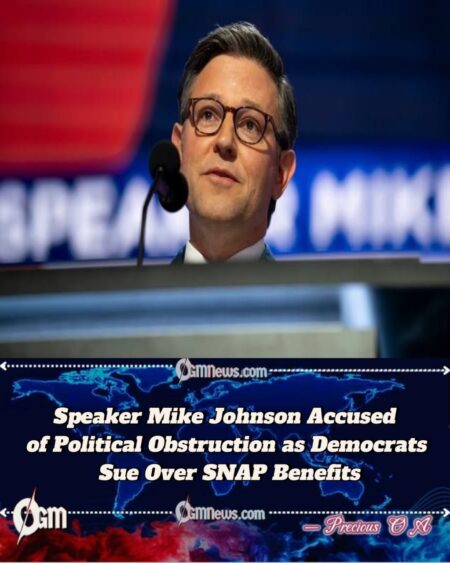
Speaker Mike Johnson, a staunch conservative from Louisiana known for his close alignment with President Donald Trump, has ignited a wave of criticism after adjourning the House of Representatives for 42 days, leaving critical legislation in limbo. The decision has triggered outrage from Democrats, independent lawmakers, and policy advocates who accuse congressional Republicans of neglecting their duties during a period of growing national urgency. As political tensions rise and the country grapples with multiple domestic and economic challenges, the absence of congressional action is drawing concern from both sides of the aisle, with calls mounting for an immediate return to session to address the mounting legislative backlog.
Mike Johnson’s move to recess the House has been described by opponents as a “strategic stall” meant to delay debate on key welfare and funding bills that affect millions of Americans. With pressing issues such as food assistance, healthcare reform, infrastructure development, and energy policy awaiting attention, critics argue that the extended break reflects a lack of commitment to governance at a crucial moment. The Speaker, however, has defended his decision, maintaining that the recess is necessary to allow lawmakers to engage directly with their districts, meet community leaders, and gather firsthand feedback on the concerns of the people they represent before resuming session.
The decision has also sparked renewed scrutiny of congressional leadership during one of the most turbulent political periods in recent memory. While supporters of the Speaker praise his insistence on party unity and his focus on strengthening conservative values, many lawmakers have voiced deep concern over the timing of the adjournment. The absence of legislative oversight, they warn, leaves major policy initiatives hanging in uncertainty—especially as the country faces rising living costs, increasing inflation, and a growing number of families struggling to afford basic necessities. The recess, according to many policy experts, sends a troubling signal to Americans who expect decisive leadership from Washington during times of economic distress.
Mike Johnson’s handling of the situation has further strained relations with the White House and Democratic leaders. Many see the prolonged adjournment as a calculated political maneuver aimed at shielding the administration from accountability over delayed Supplemental Nutrition Assistance Program (SNAP) benefits. The Speaker’s critics argue that while Washington engages in partisan maneuvering, ordinary citizens continue to suffer under the weight of food insecurity, unemployment, and economic uncertainty—issues that require urgent legislative attention. The controversy has now evolved beyond a procedural dispute into a broader conversation about the priorities of those in power and their willingness to act in the interest of the public.
Mike Johnson Democrats Sue Over Withheld SNAP Funds
Mike Johnson’s refusal to reconvene the House has complicated ongoing legal efforts to compel President Donald Trump to release federal Supplemental Nutrition Assistance Program (SNAP) funds. Democratic lawmakers, frustrated by weeks of administrative delay and what they describe as deliberate obstruction, have taken the unprecedented step of filing a lawsuit demanding the immediate release of the funds. The move underscores the deepening partisan rift between Congress and the White House, with each side accusing the other of acting in bad faith while millions of Americans wait for relief.
Mike Johnson’s allies argue that the lawsuit is a politically motivated stunt designed to weaken the credibility of both the Speaker and the administration. They insist that the delay stems from a legitimate budgetary review process aimed at ensuring fiscal responsibility, transparency, and the prevention of fraud or misuse of federal resources. According to Republican sources, the administration’s goal is to guarantee that every dollar distributed through SNAP is accounted for, particularly at a time when federal expenditures are under close public scrutiny. However, Democrats strongly reject this justification, contending that the Speaker’s unwillingness to facilitate negotiations has left millions of low-income families without access to essential food aid.
The legal standoff has sent shockwaves through Washington, intensifying partisan divisions at a critical time for the nation’s most vulnerable citizens. Community organizations, food security advocates, and faith-based groups are now calling for urgent intervention to restore SNAP benefits, warning that further delay could lead to widespread hunger and hardship during the winter months. Many families have already turned to emergency food banks as temporary lifelines, and some states have reported surges in demand for charitable food services not seen since the peak of the pandemic. Policy analysts say the situation reflects a deeper structural problem in how social welfare programs are managed and politicized in the United States.
Mike Johnson’s office has remained largely silent on the lawsuit, offering only a brief statement reaffirming the Speaker’s “commitment to responsible governance, budget integrity, and the protection of taxpayer interests.” Yet, critics argue that accountability requires more than rhetoric—it demands prompt and compassionate action to ease the burden on struggling citizens. The longer the political battle continues, the more severe its consequences may become for families who depend on SNAP for daily sustenance. For many, the issue is no longer just about policy—it is about survival and dignity in the face of bureaucratic indifference.
Republicans Shift Blame to Democrats
Mike Johnson and his Republican colleagues have pushed back strongly against mounting criticism, claiming that Democrats are responsible for the political impasse. Party leaders assert that repeated GOP efforts to engage in bipartisan dialogue have been met with what they describe as “partisan resistance” and “deliberate obstruction” from Democratic lawmakers. The Speaker’s office insists that the current gridlock reflects deeper ideological differences rather than administrative negligence, pointing to disagreements over spending priorities, social welfare expansion, and the balance between state and federal powers.
Mike Johnson’s defenders emphasize that the House recess was not an abandonment of duty but a carefully planned period for lawmakers to “consult constituents, assess district-level needs, and refocus legislative goals.” They argue that the Speaker’s decision was made in the spirit of transparency and inclusion, not obstruction. Still, opposition voices remain unconvinced, warning that the nation cannot afford prolonged inaction while citizens face worsening economic hardship, housing instability, and declining trust in government institutions. Critics note that while political leaders debate, millions of Americans continue to face uncertainty about how to feed their families and pay their bills.
Mike Johnson’s relationship with President Donald Trump has also drawn attention, as the two leaders appear closely aligned on most major policy fronts. Supporters of the administration praise the coordination between the Speaker and the President as evidence of a unified Republican front, asserting that such unity is essential to advancing national interests. However, detractors view the alliance as a consolidation of political power that sidelines meaningful debate and excludes dissenting voices from decision-making processes. The growing perception of political polarization has left many Americans disillusioned with both parties.
Mike Johnson now faces growing pressure to recall Congress and resume legislative work amid a shifting national mood that demands accountability and action. Whether Mike Johnson chooses to act decisively or continue to deflect criticism will likely determine not only his leadership legacy but also the broader trajectory of the Republican Party in the months ahead. As the political standoff drags on, one thing remains clear: millions of Americans are watching closely, waiting for Washington to finally put partisanship aside and deliver solutions that make a tangible difference in their everyday lives.

[…] […]