















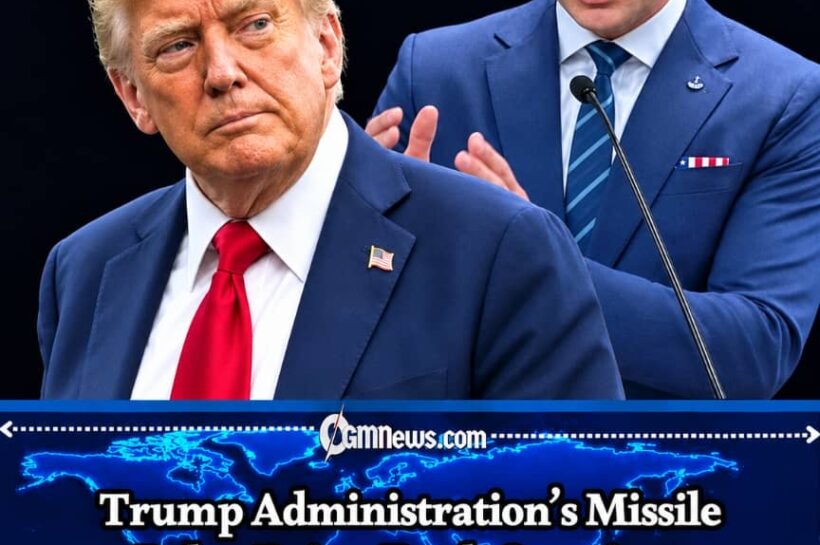





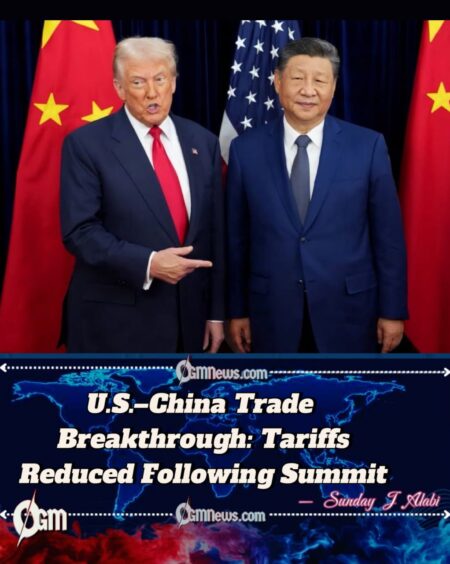
President Donald Trump, currently serving his second term, announced a significant reduction in U.S. tariffs on Chinese imports following what he described as an “amazing meeting” with Chinese President Xi Jinping in South Korea. The decision marks a major development in efforts to ease ongoing trade tensions between the two world powers after months of tariffs and negotiations.
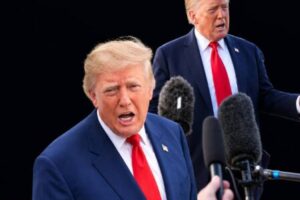
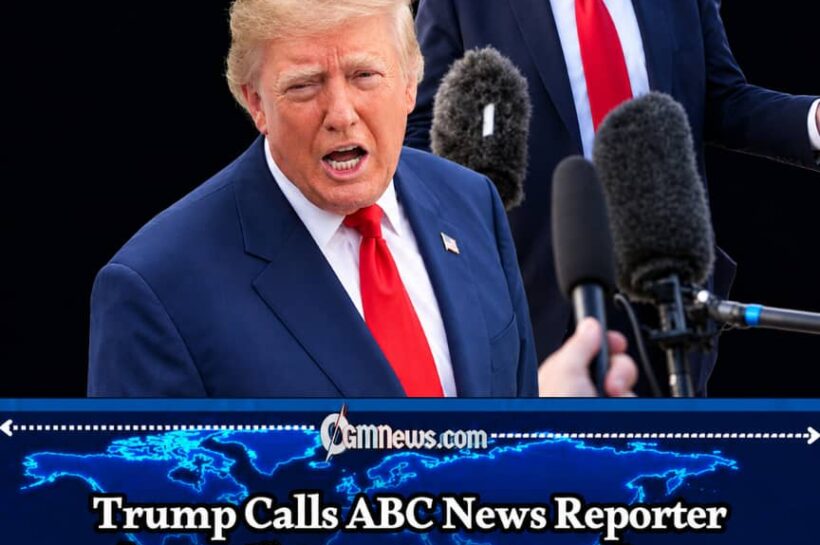
Speaking to reporters aboard Air Force One on his return to Washington, the president said the high-stakes summit produced substantial progress toward a new trade agreement. “On the scale from zero to 10, with 10 being the best, I would say the meeting was a 12,” he said, emphasizing shared commitments on trade, fentanyl controls, and agricultural purchases.
Trade Breakthrough and Tariff Reduction between President Trump and Xi
President Trump confirmed that the U.S. will reduce tariffs on Chinese goods from 57% to 47%, a move he linked to China’s pledge to limit exports of fentanyl precursor chemicals to the U.S. While the rate remains historically high, the decrease signals a step away from the sharp tariff escalations that defined recent economic tensions.
The president Trump stated that negotiators “brought a lot of things to finalization” during the 90-minute session, adding that he expects to sign the new trade pact “pretty soon,” although he noted future renegotiations may be likely. He praised Xi as a “tremendous leader of a very powerful country,” underscoring efforts to stabilize relations despite strategic and commercial rivalry.
In addition to tariff concessions, Mr. Trump said China had agreed to resume purchases of U.S. soybeans “immediately” — a relief for American farmers affected by previous trade restrictions — and reported progress on resolving disputes over rare earth exports. However, specific implementation details remain limited.
Diplomatic Signals and Strategic Posture
The meeting took place at a South Korean military facility near the end of the president’s Asia tour, focused on reinforcing economic partnerships in the Indo-Pacific region. President Trump noted plans to visit China in April for continued talks, while Xi is expected to visit the U.S. later this year.
During their remarks, Xi emphasized the importance of cooperation between the two largest global economies, acknowledging “major concerns” but calling bilateral ties “stable on the whole.” He said the nations should remain “partners and friends,” even as differing national priorities create friction.
While trade dominated the agenda, other key geopolitical questions hovered over the summit. Mr. Trump acknowledged no discussion took place regarding Taiwan, despite public calls from former Secretary of State Mike Pompeo urging the administration to affirm support for Taiwan’s sovereignty. Moments before the meeting, the president also announced directives to restart U.S. nuclear weapons testing and support South Korea’s development of a nuclear-powered submarine — moves likely to draw international scrutiny.
Broader Context and Emerging Agreements
Thursday’s discussions came after months of intensive negotiations and a series of tariff threats, including a previously floated 100% tariff increase that officials now say is “off the table.” U.S. and Chinese officials have faced a complicated balancing act as they navigate trade disputes tied to technology, defense, and national security interests.
Beyond tariff policies, expectations are growing that President Trump and Xi may soon finalize an agreement placing TikTok under majority U.S. ownership, while allowing China-based ByteDance to retain a minority stake. The deal would represent another major point of negotiation in the evolving economic and digital relationship between the nations.
The Busan summit marked the first in-person meeting between the leaders since 2019 and concluded a trip aimed at solidifying American influence and commercial partnerships across the region. As the Trump administration prepares for another round of diplomacy in Asia, the latest developments signal cautious optimism — with both sides emphasizing progress while acknowledging challenges ahead


Logging in is a breeze and the site stability is amazing even during peak hours....