






















U.S. Attorney General Pam Bondi has announced a far-reaching federal investigation targeting Illinois Governor J.B. Pritzker, former Chicago Mayor Lori Lightfoot, and several other state and city officials accused of obstructing federal immigration enforcement operations. The probe, unveiled during a Department of Justice press briefing in Washington, D.C., marks one of the most assertive actions yet by the Bondi-led Justice Department under President Donald Trump’s second administration.
Pam Bondi stated that her office had gathered substantial evidence suggesting coordinated efforts by state and local authorities to interfere with Immigration and Customs Enforcement (ICE) activities, including cases where ICE officers were reportedly denied access to detainees and records. According to her, such actions “constitute a deliberate obstruction of federal law and a violation of the constitutional balance between federal and state authority.”
Federal officials have already issued subpoenas to several Illinois departments and municipal agencies, demanding documents, communications, and policy directives relating to cooperation—or lack thereof—with ICE. The investigations are expected to cover a span of incidents dating back to 2021, encompassing local ordinances and executive actions viewed as defiant toward federal immigration mandates.
Pam Bondi emphasized that the Justice Department’s goal is not political retaliation but “the protection of federal agents and the enforcement of the law without interference or intimidation.” She noted that the Justice Department has received multiple reports from ICE field offices alleging threats, intimidation, and political obstruction in Illinois and neighboring states. Her firm tone signaled a new era of federal accountability, one that prioritizes enforcement over political convenience.
The announcement has sent shockwaves through Illinois’s political establishment. The Governor’s office and city officials have scrambled to release statements defending their positions, while immigrant advocacy groups and civil rights organizations are preparing to challenge the legality of the investigation. What began as a federal probe could quickly evolve into a national legal showdown testing the limits of state sovereignty and federal power.
Political Reactions and Escalating Tensions
Pam Bondi’s announcement drew immediate responses from political leaders across the country, igniting fierce debate over the boundaries of federal and state authority. Governor J.B. Pritzker swiftly condemned the investigation, denouncing it as “a politically motivated distraction intended to punish Illinois for standing up for human rights and immigrant families.” He maintained that the state’s policies were lawful and rooted in protecting community trust, not in obstructing federal enforcement. “Illinois will not bow to intimidation or be complicit in federal overreach,” Pritzker declared during a press conference at the State Capitol.
Her firm response to Pritzker’s comments made clear that “the investigation is about law, not politics.” She accused certain state leaders of “hiding behind humanitarian rhetoric while undermining federal authority.” Her statement underlined her resolve to pursue the case regardless of political fallout, adding that “no public official is above the law.”
Pam Bondi also faced criticism from Democratic lawmakers and immigrant rights groups, who accused her of weaponizing the Justice Department for political gain. Nonetheless, she reiterated that her office would act strictly within the law and evidence, not ideology. “We are not investigating compassion; we are investigating obstruction,” she said, stressing that cooperation between state and federal agencies is essential to national security.
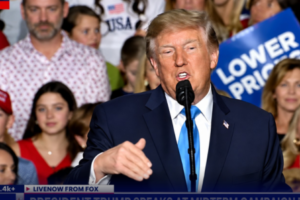
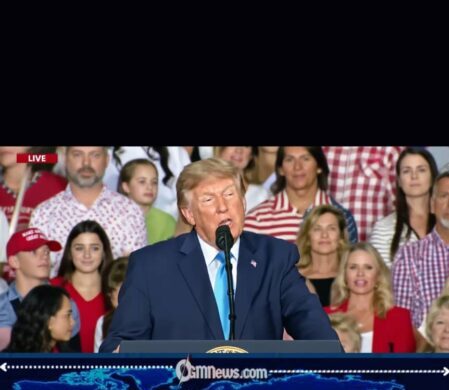
Donald Trump has strongly backed the move, declaring at a rally in Des Moines that “our ICE officers risk their lives every day, and no governor or mayor has the right to block them from doing their job.” The president reaffirmed his administration’s commitment to enforcing immigration laws uniformly across all states, calling the investigation “a decisive step toward restoring respect for law enforcement.”
Pam Bondi’s persistence has turned the investigation into a lightning rod for national debate. Supporters view her as a champion of law and order, while opponents see the probe as an infringement on state autonomy. Either way, her leadership has brought renewed attention to a long-standing conflict that continues to divide America’s political and legal landscapes.
Broader Implications for Federal-State Relations
Pam Bondi’s Justice Department appears ready to test the limits of federal authority over state and municipal governments. Legal analysts suggest that this investigation could redefine the delicate balance between federal power and states’ rights in matters of immigration enforcement. The Justice Department’s position is clear: states cannot obstruct federal officers carrying out lawful duties, even if their policies differ politically or ethically.
The Justice Department has reportedly instructed prosecutors to explore potential violations under federal obstruction and civil rights statutes, particularly if it is proven that ICE agents were denied access to detainees or faced deliberate interference. Sources within the department indicate that this is part of a larger initiative to ensure that no state becomes a “safe haven” for illegal activity by restricting federal enforcement.
Pam Bondi has also coordinated with the Department of Homeland Security to ensure that ICE agents operating in Illinois receive increased legal and tactical support. She emphasized that “this is not a symbolic move—it’s a necessary defense of the rule of law.” Her determination reflects a broader philosophy within the Trump administration: restoring federal supremacy in immigration control and dismantling what they view as unconstitutional sanctuary policies.
Experts predict that state leaders may challenge the probe in federal court, invoking the Tenth Amendment and states’ rights provisions. Yet constitutional scholars counter that the Supremacy Clause ensures that federal laws and agents cannot be obstructed under any circumstance. This legal tug-of-war may eventually reach the Supreme Court, potentially reshaping how the United States defines federal-state relations for decades to come.
Pam Bondi’s commitment to this cause underscores her growing influence within the Trump administration. As the investigation unfolds, it could become a defining moment not just for Illinois but for the entire nation’s legal and political framework. What began as an inquiry into alleged interference with ICE agents may ultimately evolve into a test of how far the federal government can go to ensure that its laws are upheld across every state in the Union.
[…] […]