




























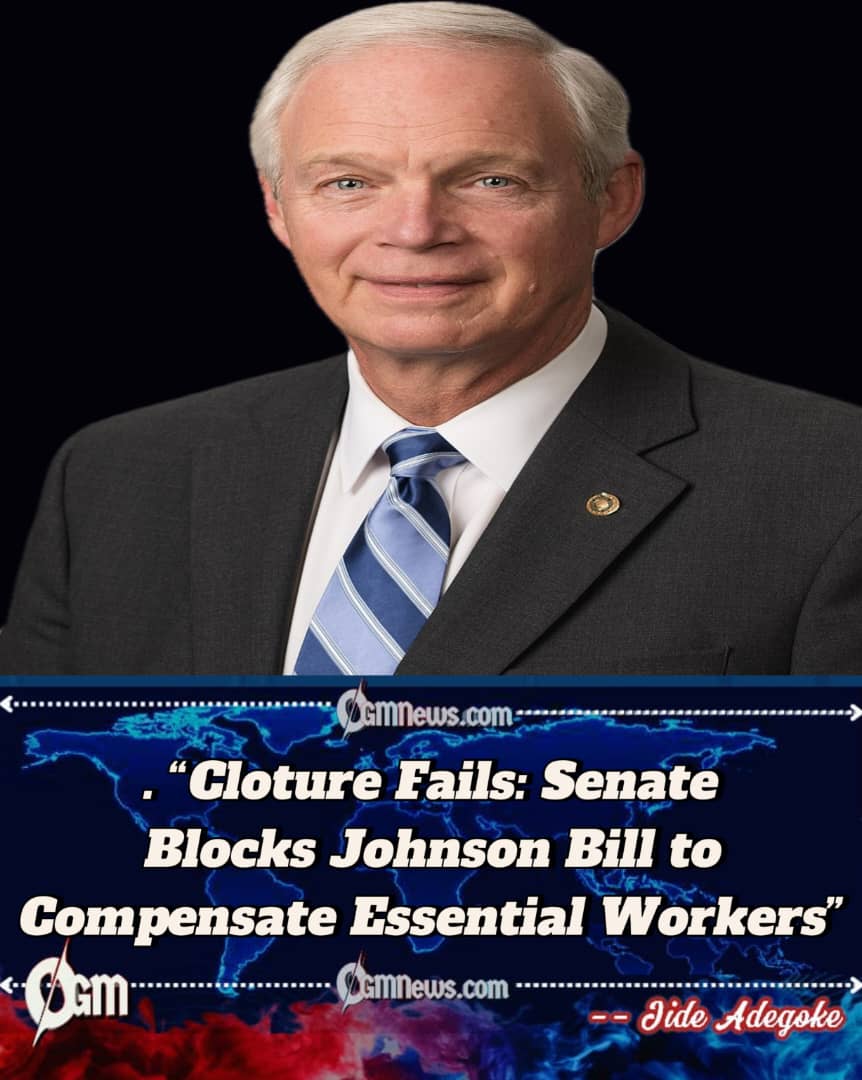
The Senate on Thursday failed to advance Sen. Ron Johnson’s measure designed to provide pay to certain federal workers during the ongoing government shutdown. The vote tally—falling short of the 60-vote threshold—marked a significant setback in efforts to address mounting financial strain on “excepted” employees still required to work without compensation.
Senate Failure in Advancing Johnson’s Proposal: “Shutdown Fairness Act” Falters
The Senate’s inability to invoke cloture on the Shutdown Fairness Act, authored by Sen. Ron Johnson, underscored deep divisions over how to structure relief for federal workers during a lapse in appropriations. While the bill would not have ended the shutdown itself, it would have authorized pay for certain employees deemed essential—those continuing to work in agencies despite the funding gap.
In the crucial procedural vote, the measure fell 54–45, well short of the 60 votes needed to move forward. Only three Democratic senators—John Fetterman, Jon Ossoff, and Raphael Warnock—defected to support the Johnson proposal. Democrats objected that Johnson’s bill would grant the administration, specifically the White House budget director, excessive discretion to decide who would receive pay and who would not—effectively allowing selective compensations.
Johnson’s Opposition to Alternative Democratic Bills Deepens the Divide
The Senate failure was compounded by Johnson’s refusal to yield to rival Democratic proposals. Early Thursday, Sen. Chris Van Hollen’s bill—intended to provide pay to all federal workers, including those furloughed, and to bar further unconstitutional layoffs during a shutdown—was blocked by Johnson’s objection. Similarly, Sen. Gary Peters’ narrower alternative aiming to limit the relief to working employees through the period leading up to enactment was also rejected through procedural blockage.
Sen. Johnson defended his position, arguing that advancing his bill would open the legislative process to amendment and negotiation. He claimed that many objections to differences between his bill and the Democrats’ versions were superficial, and that the core goal—ensuring pay to those forced to continue working—was shared. Nonetheless, Johnson maintained that limiting executive authority is a matter for future negotiation, not a prerequisite for advancing his bill.
As the shutdown stretches on, the Senate’s inability to agree on a mechanism for partial federal pay highlights the political impasse at the heart of the stalemate.



[…] […]