





















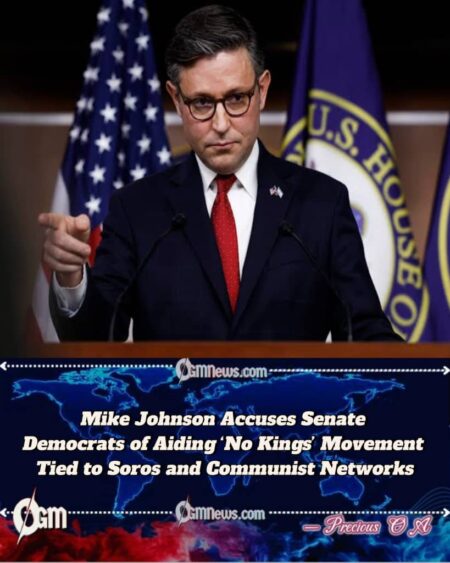
Mike Johnson, the current Speaker of the U.S. House of Representatives, is known for his sharp conservative intellect, strong Christian values, and unwavering loyalty to President Donald Trump’s agenda. A Louisiana Republican who rose rapidly through the ranks after years as a constitutional lawyer, Johnson has built a reputation as both a disciplined policy strategist and a staunch defender of traditional governance. His latest accusation—targeting Senate Democrats for allegedly joining Soros-funded and Communist-backed “No Kings” rallies—has sent shockwaves through Washington, further deepening partisan divides and inflaming debate over the limits of political protest in America.
Mike Johnson declared during a heated press briefing that the “No Kings” rallies, held across major U.S. cities, were far from peaceful demonstrations. He claimed the protests were “carefully orchestrated operations intended to normalize political violence under the guise of resistance.” According to him, Democratic senators who attended these events “stood shoulder to shoulder with movements seeking to delegitimize the Constitution and destabilize the presidency.” He urged immediate investigations into what he called “a betrayal of the democratic process.”
Democrats swiftly countered these claims, denouncing Johnson’s remarks as a “dangerous distortion of free expression.” Senate Majority Leader Chuck Schumer’s office released a statement calling the rallies “constitutionally protected gatherings organized by ordinary citizens demanding transparency and accountability.” Schumer accused Johnson of exploiting political tension to distract from “deep dysfunction within the Republican-controlled House.”
Mike Johnson’s assertion that Senate Democrats endorsed political violence has divided opinion among analysts. Some conservative commentators have praised his courage for confronting what they view as “radical infiltration” of American institutions, while moderate voices have warned that the Speaker’s rhetoric risks inflaming polarization at a time when the nation remains fragile. The absence of concrete evidence tying Democratic senators directly to violent actions has further complicated the narrative, prompting calls for clarity and restraint from both parties.
Funding Controversies and the Evidence Divide
Mike Johnson centered his allegations on claims that Soros-linked foundations funneled large sums of money into the “No Kings” movement through a network of activist fronts. He alleged that these funds were used to organize and promote rallies that “celebrated defiance rather than democracy.” Johnson insisted that “foreign-backed funding channels” had been uncovered by House investigators, hinting at forthcoming disclosures that would reveal a “disturbing pattern of subversive coordination.” Though no evidence was presented publicly, his warnings have intensified scrutiny of the protest organizers.
Mike Johnson further alleged that the Communist Party USA directly aided in coordinating regional rallies, providing ideological guidance and strategic messaging. He described the movement as “a Marxist front masquerading as grassroots activism,” claiming that its slogans and imagery carried “unmistakably revolutionary undertones.” He accused Senate Democrats of legitimizing extremist elements simply by appearing at events where such rhetoric was promoted, saying, “When senators attend rallies advocating regime change, they are no longer observers—they are participants.”
Mike Johnson’s claims were immediately challenged by the Open Society Foundations, which he had cited by name. The organization issued a statement calling his remarks “false, inflammatory, and irresponsible,” emphasizing that it supports peaceful advocacy and civic education—not political violence. Civil rights groups also condemned Johnson’s comments, arguing that he sought to demonize lawful protest movements and weaponize unfounded accusations for partisan gain.
Independent analysts have urged transparency on both sides. While acknowledging that large philanthropic networks occasionally support activist organizations, they note that no verified evidence links Soros to any violent actions or communist coordination. “The Speaker’s charges need documentation, not insinuation,” said Georgetown University political scholar Dr. Elaine Tully. “Without verifiable proof, such claims risk turning political discourse into a battleground of suspicion rather than substance.”
Political Fallout and National Repercussions
Mike Johnson’s accusations have unleashed fierce debate across Washington’s political landscape. Republican lawmakers have largely rallied behind him, praising his determination to “expose radical influence” within the Democratic Party. Several GOP senators have called for formal congressional hearings into the alleged funding networks behind the “No Kings” rallies. Johnson’s supporters argue that he is standing up for national security and protecting democratic integrity against “coordinated subversion disguised as civic activism.”
Mike Johnson’s Democratic counterparts, however, have condemned the statements as reckless and divisive. Senator Elizabeth Warren accused the Speaker of “criminalizing dissent and painting ordinary Americans as enemies of the state.” Other Democratic voices warned that Johnson’s framing could justify state repression of peaceful demonstrations, setting a dangerous precedent for civil liberties. Advocacy groups have also expressed alarm that such rhetoric could be used to justify broader surveillance and restrictions on protest movements.
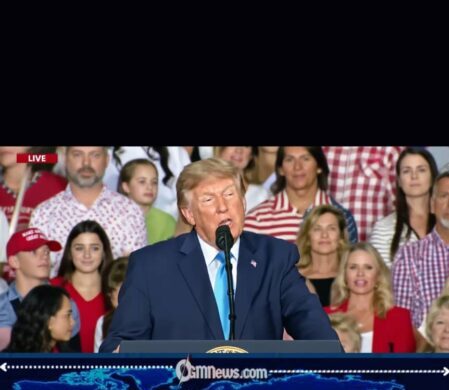
Mike Johnson’s stance has gained the backing of President Donald Trump, who described the “No Kings” rallies as “a coordinated attempt to destabilize the nation.” From the White House, the President praised Johnson’s “courage to tell the truth,” vowing that his administration “will not allow foreign-funded radicals to dictate the direction of the United States.” Their alignment on this issue has reinforced the Republican narrative of defending “law and order” against what they characterize as “globalist interference.”
Mike Johnson’s allegations, whether proven or not, have become a defining flashpoint in America’s ongoing ideological struggle. As political investigations and media scrutiny intensify, the controversy underscores a growing national dilemma: where to draw the line between legitimate protest and subversive activism. In an age when partisanship shapes perception more than evidence, Johnson’s charges have reignited a profound question—what truly constitutes loyalty to democracy in a nation increasingly divided over its meaning.
[…] […]