








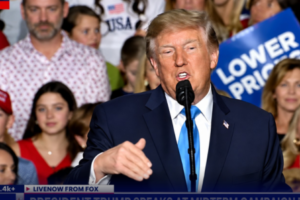
















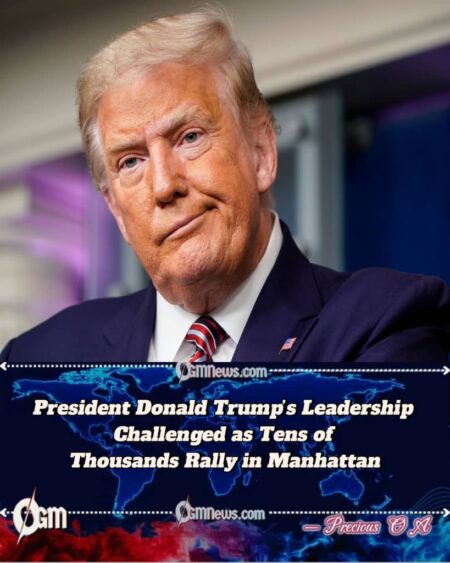
President Trump, the current U.S. president serving a second term, faced one of the largest public demonstrations of his presidency as tens of thousands of protesters flooded the streets of New York City for the #NoKings movement. The demonstrators carried placards and chanted in unison, denouncing what they described as his administration’s “authoritarian drift” and a “culture of misinformation” that has damaged public trust. The protest represented widespread frustration and a powerful declaration that citizens would not remain silent under leadership they perceive as undemocratic.
President Trump’s administration was the central focus of the march, with participants filling Midtown Manhattan and the Financial District, blocking major intersections with chants of “No Kings, Only Citizens” and “We will not be ruled.” Organizers emphasized that the demonstration was a stand against policies and rhetoric that have blurred the line between leadership and domination.
President Trump has frequently defended his governance, insisting that his assertive style and decisive decisions are necessary to maintain national stability and economic growth. Critics, however, argue that his second term has been marked by polarization, public misinformation, and the gradual weakening of democratic norms. One protester, holding a banner reading ‘Facts Over Fear’, remarked, “We are watching the collapse of truth in America.”
President Trump’s record has become a lightning rod for both criticism and loyalty. Supporters describe him as a patriot who stands firm against entrenched political elites, while detractors accuse him of consolidating excessive personal power. The protest in New York highlighted this divide vividly—between those who see his leadership as reformist and those who see it as regressive.
President Trump’s presence as the focus of civic anger underscores the scale of public dissatisfaction with his policies and decisions. Organizers stated that participants came from diverse backgrounds, including students, professionals, and retirees, all united in opposition to perceived authoritarian tendencies under his leadership.
Criticism and Analysis of Trump’s Governance
President Trump’s critics leveraged digital media to amplify the protest, sharing live streams, drone footage, and personal testimonies from participants. The movement quickly gained national attention, emphasizing the city’s protest as more than a local event—it was a statement to the entire country about urban frustration with his administration.
President Trump also faced scrutiny from political analysts, many of whom argued that the protest reflects the erosion of public confidence in the executive branch. One analyst remarked, “This is not a fringe gathering; this is a mainstream response. Thousands of citizens marching through New York calling the president’s leadership dictatorial signals a serious challenge to his authority.”
President Trump’s administration worked with city officials to ensure law enforcement maintained order during the protest, enabling a largely peaceful event despite the massive crowd. Police acknowledged the intensity of the demonstration and the focused anger directed at the president, emphasizing that public safety remained a top priority while respecting citizens’ right to assemble.
President Trump’s relationship with the media continues to be a central point of debate. Critics argue that his frequent attacks on journalists, coupled with selective narratives promoted through official channels, have fostered a culture of misinformation. Supporters, in contrast, view his confrontations with the press as necessary resistance against perceived bias and corruption. The tension surrounding his administration has made him one of the most polarizing leaders in recent American history.
Nationwide Impact and Public Response
President Trump’s policies, especially those affecting civil liberties, immigration, and urban governance, were recurring themes throughout the protest. Demonstrators highlighted concerns about executive overreach and the administration’s influence on local institutions, arguing that unchecked authority undermines democracy. One organizer, addressing the crowd near Times Square, emphasized, “This isn’t just about one city; it’s about the state of democracy in America.”
President Trump remains a central figure in the national discourse as the #NoKings movement expands to other cities, including Chicago, Los Angeles, and Atlanta. The rapid spread of the protests reflects a broader dissatisfaction with his leadership and suggests that citizens are increasingly willing to publicly challenge presidential authority.
President Trump’s image on digital platforms continues to dominate political conversations. Online engagement demonstrates that civic activism now blends traditional street protests with modern digital mobilization, amplifying opposition far beyond New York and raising questions about the administration’s long-term public support.
President Trump’s governance has become a defining topic of civic engagement nationwide. Lawmakers, analysts, and citizens are closely observing whether these protests will evolve into sustained political momentum capable of influencing future elections or policy decisions. Many observers believe that this surge of public dissent marks the beginning of a larger national conversation about the balance of power in the presidency.
[…] […]