


















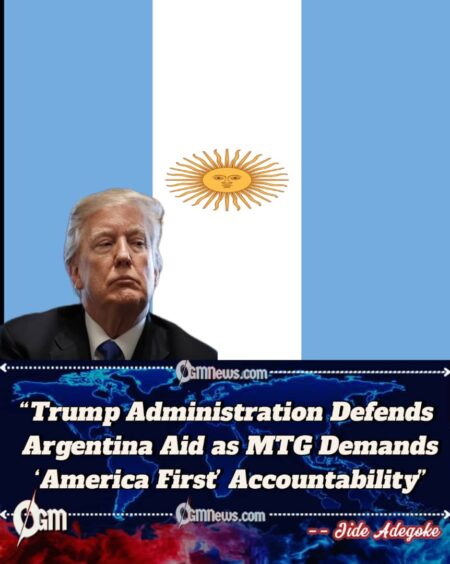
Firebrand Congresswoman Marjorie Taylor Greene has sharply criticized the Trump administration for what she describes as a “betrayal of American taxpayers,” following reports that the United States is backing a multi-billion-dollar bailout package for Argentina. The Georgia Republican accused President Donald Trump’s team—now in its second term—of prioritizing foreign aid over the financial struggles of Americans dealing with soaring living and insurance costs.
In a post on X (formerly Twitter), MTG wrote: “Americans are getting decimated by the high cost of living and skyrocketing insurance costs… Tell me how it’s ‘America First’ to bail out a foreign country with $20 or even $40 BILLION in taxpayer dollars.” Her remarks have ignited renewed debate over U.S. foreign aid priorities and fiscal responsibility.
MTG Slams Trump Administration: ‘Americans Are Getting Decimated’
Americans are getting decimated by inflationary pressures that have persisted despite strong economic growth figures. According to recent data, consumer prices remain stubbornly high, while health and auto insurance premiums have reached record levels. Against this backdrop, MTG’s criticism resonates with a portion of the American electorate who feel abandoned amid what they see as excessive foreign spending.
The congresswoman has long positioned herself as a voice for populist fiscal restraint, often targeting bipartisan spending initiatives she believes undermine domestic priorities. Her remarks this week amplify that message—especially as the Trump administration moves forward with a controversial bailout plan aimed at stabilizing Argentina’s debt-ridden economy through a U.S.-backed loan package reportedly worth between $20 billion and $40 billion.
Trump Administration Defends the Bailout: Strategic or Misguided?
Americans are getting decimated economically, but the Trump administration argues that global financial stability is essential to maintaining U.S. economic strength. White House officials insist that the bailout is not a handout but a strategic investment designed to prevent Argentina’s collapse, which could have ripple effects on U.S. markets and international lenders.
A senior administration official told reporters that Argentina’s economic failure could “trigger broader instability across Latin America, creating conditions that threaten U.S. interests.” Critics, however, argue that such reasoning fails to justify the use of American taxpayer money when domestic programs face chronic underfunding. Economists remain divided: some view the move as necessary to preserve dollar influence abroad, while others see it as another example of Washington’s misplaced fiscal priorities.
MTG Slams Trump Administration: Calls for Accountability and Transparency
Americans are getting decimated, MTG emphasized again, while Washington continues to “spend recklessly” on global financial rescue efforts. She has called for a congressional review of the bailout terms, demanding transparency on how funds will be allocated and repaid. Her office is reportedly preparing a formal inquiry into the Treasury Department’s role in coordinating the package through the International Monetary Fund (IMF) and other global partners.
“The American people deserve answers,” she said. “We cannot call it ‘America First’ if we’re the world’s piggy bank.” While her criticism has sparked partisan friction, even some moderate lawmakers have quietly expressed concerns about the long-term implications of expanding U.S. financial commitments overseas at a time of growing domestic economic hardship.
As debate intensifies over the Trump administration’s foreign aid priorities, MTG’s remarks underscore a growing divide within conservative circles about what “America First” truly means in practice. Whether the bailout proves to be a shrewd geopolitical investment or a costly political misstep remains to be seen—but one thing is clear: the question of how America spends its money abroad is once again at the center of Washington’s political storm.


Mexican players will love how well this platform handles local payment methods. Deposits via OXXO...