








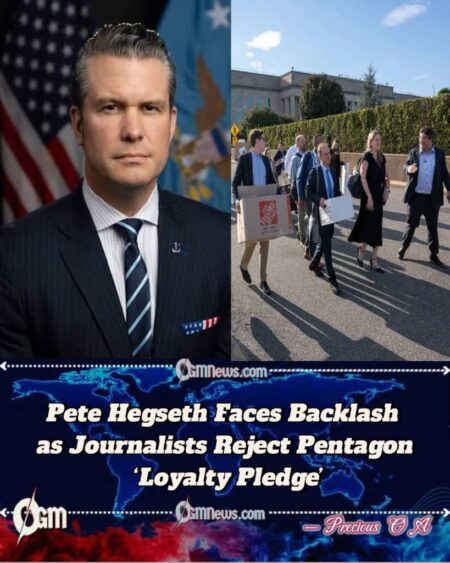
Pete Hegseth, the U.S. Defense Secretary and former Army officer known for his conservative commentary and close alliance with President Donald Trump, has ignited a nationwide debate after dozens of journalists resigned from the Pentagon over his newly introduced “reporting pledge.” The directive, which critics describe as the most aggressive challenge to press freedom in recent U.S. history, requires all accredited defense correspondents to sign a formal commitment emphasizing “national unity and responsible narratives.”
The measure has drawn fierce backlash from press organizations, lawmakers, and civil liberties advocates who warn it could silence independent reporting and blur the line between journalism and state messaging. Within 48 hours of the announcement, more than thirty journalists turned in their Pentagon access badges, emptied their desks, and walked out in protest, marking one of the largest mass resignations in modern Pentagon history.
Pete Hegseth announced the pledge earlier this week, framing it as a “necessary step” toward restoring integrity in defense journalism. His order reportedly requires reporters to “align with departmental priorities in times of national threat,” language that many critics view as an invitation for government influence over editorial content.
Sources inside the Pentagon describe the atmosphere as “tense and divided,” with some officials supporting Hegseth’s emphasis on loyalty while others quietly question whether the move undermines public trust. The Department has not said how it plans to fill the now-vacant press positions or if it will revise the pledge in response to mounting backlash.
Hegseth Defends the Move, Calls It ‘Patriotic Accountability’
Pete Hegseth defended the policy in a press briefing, insisting that the pledge does not restrict freedom of speech but instead “clarifies professional responsibility.” He argued that the Pentagon is not silencing journalists but encouraging “integrity, accuracy, and loyalty to truth.”
The Defense Secretary described his initiative as an act of “patriotic accountability,” claiming that years of “biased defense coverage” have eroded public confidence in the military. He stated that “in an era of global instability, the country cannot afford narratives that weaken morale or misrepresent the sacrifices of service members.”
Pete Hegseth’s remarks did little to calm critics. The Committee to Protect Journalists and the Reporters Committee for Freedom of the Press condemned the policy as a “thinly veiled loyalty oath.” Several journalists who resigned said the wording extends far beyond professional ethics, likening it to Cold War–era government control.
Conservative commentators, however, defended Pete Hegseth’s stance, saying it reflects legitimate concern for fairness in national reporting. Supporters argue that much of the media’s outrage stems from deep-seated bias rather than genuine fear of censorship. Yet the resignations underscore how divided the nation has become over the balance between patriotism and press freedom.
White House and Lawmakers React
Pete Hegseth received public backing from the White House, where President Donald Trump, now serving his second term, praised the pledge as a “responsible measure aimed at accountability, not censorship.” A statement from the administration described Hegseth as “restoring trust between the Pentagon and the American people,” though it avoided addressing the journalists’ walkout directly.
Lawmakers, however, were far less united. Senator Amy Klobuchar and Representative Adam Schiff called for congressional hearings to determine whether the pledge violates the First Amendment. “The press does not owe loyalty to the government; it owes loyalty to the truth,” Klobuchar said in a statement. Civil rights attorneys are also preparing to challenge the directive in court, describing it as unconstitutional and coercive.
Pete Hegseth responded to the criticism by stating that he “welcomes open debate” but will not “retreat from principles of unity and respect for the armed forces.” His aides confirmed he has no plans to revise or withdraw the pledge, calling the backlash “a test of journalistic integrity, not governmental overreach.”
Legal analysts suggest that the dispute could escalate into a landmark Supreme Court case if journalists pursue litigation. They note that the confrontation has already redefined the conversation about how far government authority can extend in shaping national security narratives.
A Defining Moment for the Pentagon and the Press
Pete Hegseth’s directive has already reshaped the Pentagon’s media landscape. Reporters who chose to stay describe a press wing half-empty and an uneasy calm between the remaining correspondents and Defense Department officials. Some fear that briefings will become more restricted, reducing transparency in how military operations are reported to the public.
Historians are comparing the controversy to previous confrontations between government and the media—from the Pentagon Papers to the Iraq War coverage—but none, they note, involved such a direct demand for ideological conformity inside the Defense Department itself.
Whether Pete Hegseth emerges as a reformer championing patriotism or as a symbol of executive overreach will depend on how the coming weeks unfold. For now, his pledge has forced the nation to confront a difficult question: can loyalty to country and loyalty to truth coexist in the same newsroom?

Mexican players will love how well this platform handles local payment methods. Deposits via OXXO...