

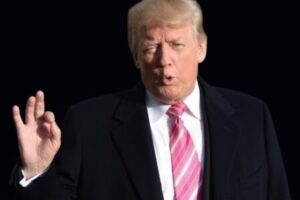
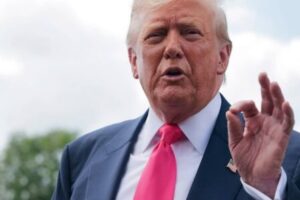







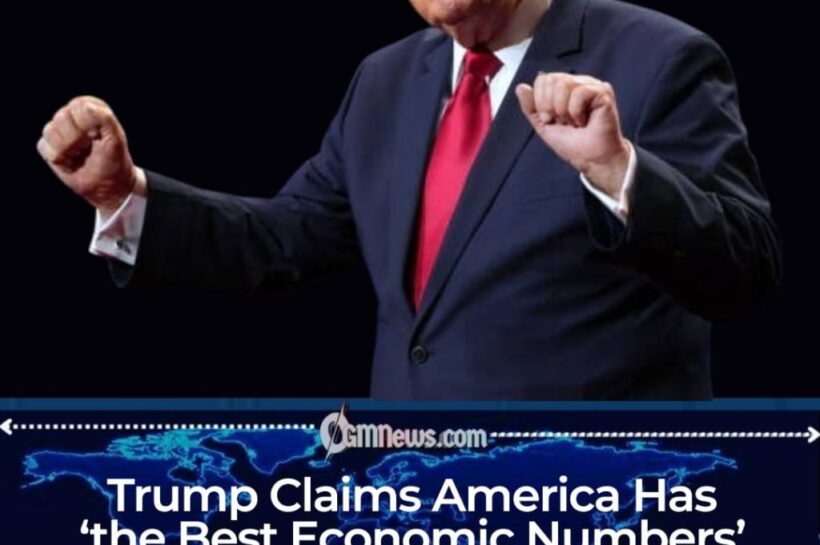

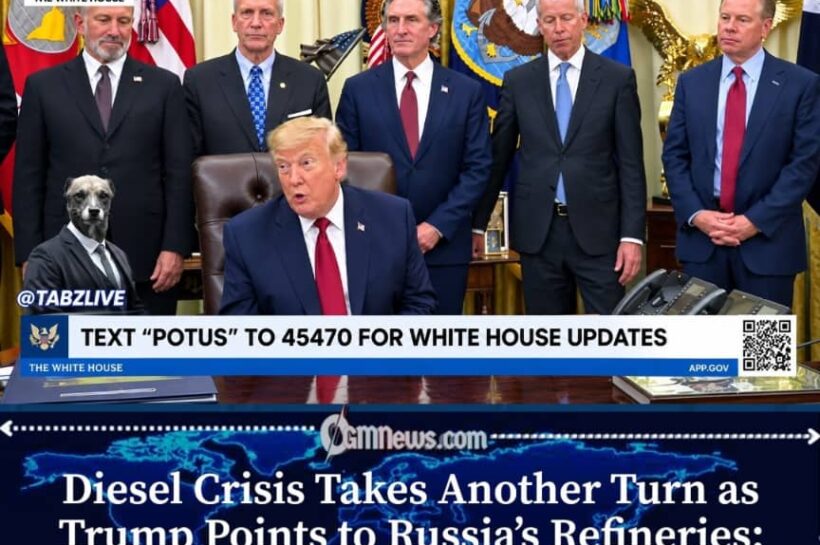





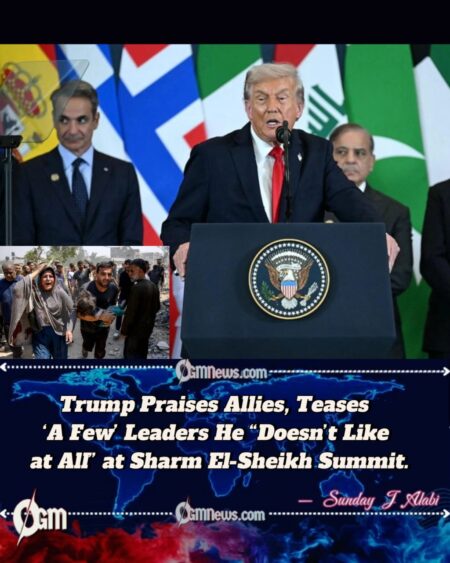
Speaking at the Gaza peace summit in Sharm El-Sheikh, Egypt, President Donald Trump — the current U.S. president serving a second term — delivered a broadly optimistic address on the prospects for a post-war transition while also injecting pointed, unscripted asides about fellow world leaders. Flanked by more than two dozen heads of state and senior officials who had gathered to endorse a ceasefire and a reconstruction plan for Gaza, the president Trump alternated between praise for partners and teasing remarks about a small number of leaders he said he “didn’t like at all.”
Summit Tone: Peace, Praise and Policy Framing
At the opening of his remarks, the president Trump framed the summit as a turning point for the region, calling for reconstruction and a political framework intended to prevent renewed hostilities. Trump highlighted commitments from regional and international partners to fund relief and stabilization efforts, and urged a coordinated approach to demilitarization of armed groups in Gaza. These policy points were central to the formal agenda and were echoed by other leaders in attendance.
Trump’s tone shifted between statesmanlike and improvisational. Trump praised several leaders by name for their roles in brokering or supporting ceasefire arrangements, using warm, familiar language with some allies while pressing for rapid action on reconstruction and security. The public emphasis on reconstruction costs and international guarantees was presented as part of a plan to make the immediate cessation of hostilities durable.
Trump Personal Barbs on the Stage: Jokes, Awkward Moments and Handshakes
Partway through the address, the president Trump read a roll call of participating countries and, after offering compliments to many, told the assembled crowd that there were “a couple I don’t like in particular” and “a few of them I don’t like at all,” adding that he would not say who they were — though he teased the possibility that they might be revealed. The remark was delivered lightly but drew attention because of the high-profile audience and the forum’s diplomatic purpose.
The lightly ribald exchange followed a small public awkwardness involving U.K. Prime Minister Sir Keir Starmer, who stepped forward when the president Trump gestured — apparently expecting to be invited to speak — only to find the president continue his own remarks, leaving Starmer briefly stranded on stage. That moment, widely shared on social platforms, underscored how unscripted personal interactions can briefly overshadow summit messaging.
A more physical illustration of theatrical diplomacy occurred during a prolonged handshake and close-quarters interaction between President Trump and French President Emmanuel Macron. Video and contemporaneous reporting described an intense handshake and an exchange of words that some observers interpreted as both cordial and competitive, followed by a rapid breakaway by Mr. Macron. The exchange was part of a string of similar, high-visibility gestures that punctuated the president’s public diplomacy on the trip.
Norway, Nobels and the Limits of Praise
When the president Trump reached “Norway” on the roll call, he quipped, “Oh, Norway, aye aye aye! Norway, what happened?” The remark was widely taken as a reference to the Nobel Peace Prize committee’s most recent selection and signaled a pointed, personal reaction to events outside the summit’s formal remit. The president Trump later searched the crowd for Norway’s leader, saying “I don’t think he wants to stand,” a line that was picked up by international and regional press.
Observers and diplomats at the summit framed these moments as part of a larger, sometimes theatrical, U.S. diplomatic posture on the trip — one that mixes high-stakes policy announcements with personality-driven improvisation. While the formal agreements and joint statements will determine the summit’s lasting impact, the punditry and press coverage have also fixated on the interpersonal scenes that played out onstage.
What It Means Going Forward
Officials said the immediate priorities are putting pledged reconstruction funds in motion, establishing mechanisms for disarmament and ensuring that humanitarian access and hostage-return arrangements proceed as agreed. Analysts cautioned that summit theatrics do not substitute for detailed timelines, verification processes or durable political settlements — all of which will be essential to prevent relapse into violence. The coming weeks will test whether summit commitments translate into measurable on-the-ground progress.
At home, the president Trump’s combination of diplomatic rhetoric and personal barbs adds a political dimension to an already consequential foreign-policy initiative. Supporters framed the theatrics as evidence of a forceful negotiating style; critics warned that unscripted personal commentary can complicate fragile multilateral coordination. Either way, the summit’s mix of policy and personality is likely to shape both short-term diplomacy and political narratives ahead.

[…] […]