















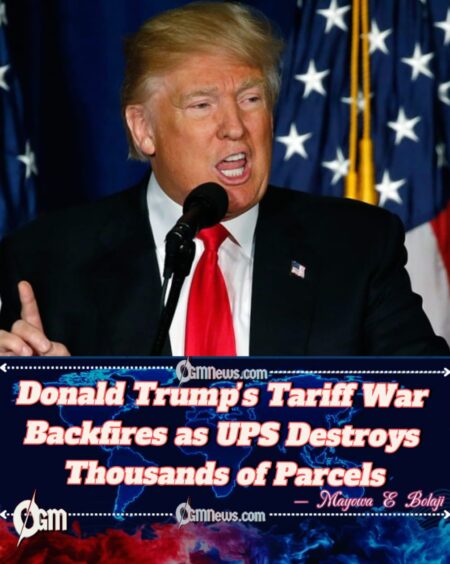
Donald Trump’s renewed tariff policies have thrown international shipping networks into complete turmoil, with UPS reportedly beginning to discard thousands of international packages trapped in customs. Sources close to the logistics giant reveal that new customs directives, driven by Trump’s aggressive trade measures, have rendered numerous shipments “noncompliant” or “undeliverable,” prompting destruction or return to senders at alarming levels.
Donald Trump’s latest economic move — which drastically expands duties on imported goods from China, Europe, and parts of Asia — has been presented as part of his broader “America First 2.0” trade revival. Yet, the unintended outcome has been mounting chaos across customs facilities and warehouses. Dozens of importers now face crippling delays, missing packages, and unpredictable costs, while international merchants accuse the U.S. of “weaponizing tariffs” against global trade.
Donald Trump’s trade team insists that these measures are essential to protect U.S. industries from exploitation by foreign producers. However, shipping insiders argue that the enforcement is poorly executed, overreaching, and devastating to logistics firms like UPS, DHL, and FedEx, which are now overwhelmed by a flood of returns and rejected parcels.
Donald Trump’s Customs Crackdown Sparks Consumer Outrage
Donald Trump’s customs overhaul has triggered a wave of public anger as UPS faces a growing crisis of undelivered international packages. Thousands of customers have flooded social media platforms, posting complaints and photos of lost items, inaccurate tracking updates, and notices stating that their parcels were destroyed due to “customs noncompliance.” Many small businesses say they have lost merchandise worth millions as a result of the trade chaos.
Donald Trump’s supporters defend the move, claiming the tariffs will ultimately strengthen American production and rebuild local manufacturing. But critics argue that ordinary citizens — not global corporations — are paying the price. Online sellers, artists, and small entrepreneurs relying on imports now face severe disruptions that could push them out of business. Economists also warn that the destruction of private property by shipping companies under tariff constraints could spark a legal and political backlash.
Donald Trump’s international trade stance has provoked growing diplomatic tension as well. European Union trade ministers have called the tariffs “unilateral and destabilizing,” while China accuses Washington of creating “economic bottlenecks” to assert global dominance. Analysts fear that if this continues, retaliatory tariffs could follow, escalating into a full-blown trade war that would further strain the global economy.
Donald Trump’s Tariff War Faces Political and Economic Fallout
Donald Trump’s tariff-driven trade policy is already attracting criticism from U.S. lawmakers, economists, and international observers who describe it as reckless and inflationary. Shipping experts say the UPS disposal scandal represents the first visible breakdown of a supply chain stretched beyond capacity by policy shockwaves. Prices of consumer goods, electronics, and textiles are already rising as import costs surge and delivery times double.
Donald Trump’s administration continues to frame the trade war as a patriotic mission to restore industrial dominance and shield American workers from foreign manipulation. Yet, small business owners and e-commerce platforms report widespread cancellations, payment disputes, and refund claims. Many accuse the government of mismanaging customs coordination and creating an enforcement regime that benefits no one except a few large domestic producers.
Donald Trump’s trade rhetoric remains defiant despite mounting criticism. He vows to push ahead with stricter tariffs and even hinted at expanding the policy to include digital services and renewable energy imports. But for millions of consumers and merchants worldwide, the ongoing UPS crisis has become the symbol of what happens when politics collides with global trade realities — a clash between nationalism and practicality that could reshape international commerce for years to come.

Downloading the utbetapp was a breeze! The app itself is very intuitive and makes placing...