

















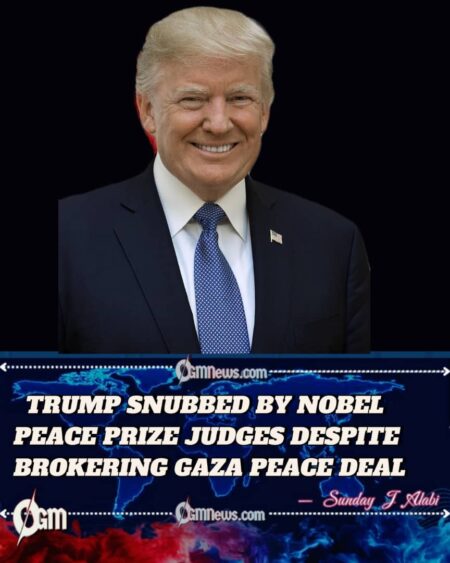
U.S. President Donald Trump was dealt a symbolic setback on Friday after the Norwegian Nobel Committee awarded this year’s Nobel Peace Prize to Venezuelan opposition leader María Corina Machado, bypassing the American president despite his high-profile efforts to end the Gaza war
Trump’s name had dominated speculation for weeks, with global headlines touting him as a front-runner for his role in brokering a tentative peace agreement between Israel and Hamas. The deal—widely seen as the first substantial step toward ending the two-year Gaza conflict—was hailed by both sides as a breakthrough. Yet the Nobel Committee ultimately recognized Machado for her “unwavering defense of democracy and human rights in Venezuela.”
The decision drew immediate attention in Washington, where Trump’s allies had anticipated the honor would crown what he called his “greatest foreign policy achievement.” The president had long insisted that his administration’s efforts “ended wars no one thought could end,” including regional conflicts in the Middle East and parts of Eastern Europe.
A Campaign for Recognition and a Question of Timing
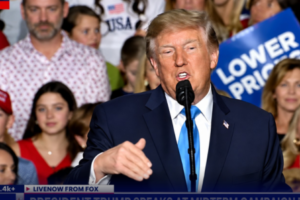
Behind the scenes, Trump’s pursuit of the Peace Prize had become almost as public as his diplomacy. Since returning to the White House for a second term in early 2025, he repeatedly touted his “20-point Gaza peace plan” as evidence of his credentials as a global peacemaker. During rallies and interviews, he often remarked that “many people” believed he had earned the prize “many times over.”
However, Trump’s campaign for recognition faced a significant technical hurdle. Nominations for this year’s Nobel Peace Prize closed in late January—shortly after his inauguration—meaning his Gaza achievements fell outside the formal consideration window. The committee’s rules stipulate that only actions carried out during the preceding calendar year are eligible for evaluation.
Despite being nominated more than ten times over the past decade by figures such as Israel’s Prime Minister Benjamin Netanyahu, Cambodia’s Hun Manet, and various U.S. and European lawmakers, Trump has yet to make the Nobel shortlist. The committee does not release names of nominees, and speculation surrounding Trump’s candidacy has often been fueled by his own statements and those of his political allies.
Global Reactions and the Legacy Debate
World leaders offered mixed responses following the announcement. Israeli Prime Minister Benjamin Netanyahu expressed gratitude to Trump for his “great efforts” in facilitating the Gaza peace framework, noting that “with God’s help we will bring all the hostages home.” He described the agreement as “a critical turning point made possible by our great friend and ally.”
In contrast, the Nobel Committee emphasized that its choice was guided by “the enduring defense of human dignity and democratic values,” rather than immediate political negotiations. Analysts said the outcome underscores the Committee’s preference for recognizing long-term humanitarian struggles over short-term diplomatic breakthroughs.
For Trump, who has often portrayed himself as a historic peacemaker, the snub may prove politically potent. In a statement posted on Truth Social, he maintained that “ending wars is the true measure of peace,” reiterating his claim of having “solved seven wars” during his presidency. The decision could reignite debate over the Nobel Committee’s criteria—and whether geopolitical considerations play a role in its selections.
Looking Ahead: The Prize and the President Trump
While the Nobel rejection marks a personal disappointment, the Gaza peace deal remains a cornerstone of Trump’s foreign policy legacy. The first phase of the accord—calling for the release of all remaining hostages and a gradual Israeli military withdrawal—has been praised by international observers as a cautious but promising start.
Still, questions persist about whether the agreement can survive the fragile political landscape of the Middle East. Critics warn that without sustained diplomatic oversight, the ceasefire could unravel, mirroring past failed peace efforts.
For now, Trump faces a familiar paradox: a president who craves global recognition for his diplomacy but remains one of the most polarizing figures in international politics. As the Nobel Peace Prize passes him by once more, his supporters insist that history—not the committee—will ultimately judge his contributions to peace.
[…] […]