















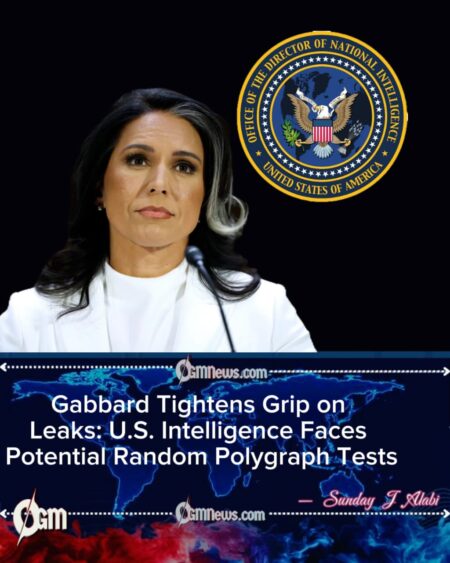
Director of National Intelligence Tulsi Gabbard has directed all U.S. intelligence agencies to evaluate whether random polygraph examinations of employees and contractors are feasible, in an effort to curb the persistent problem of leaks to the press. The directive, issued last month, urges agencies to ensure that polygraph tests include questions probing whether applicants or personnel have disclosed sensitive information to journalists.
According to opitanglobamedia News, Gabbard’s memo does not create new policies but reaffirms existing laws and procedures governing classified information. The Office of the Director of National Intelligence (ODNI) explained that the review is part of a broader counterintelligence initiative to assess whether insufficient screening has allowed some insiders to aid U.S. adversaries or breach trust. While the directive stops short of mandating new screenings, it underscores the administration’s determination to tighten control over national security information.
A spokesperson for ODNI said internal findings indicated that lapses in polygraph testing may have “emboldened” former intelligence officials to act against U.S. interests. The review comes amid renewed concerns over unauthorized disclosures that, according to the agency, have undermined U.S. alliances and intelligence credibility.
Gabbard continue with Past Administrations policy, but Growing Debate Over Press Freedoms
The move by Gabbard, who serves under President Trump’s second-term administration, echoes earlier efforts by both Republican and Democratic administrations to deter leaks of classified information. Following Edward Snowden’s disclosures in 2013, the Obama administration instructed agencies to scrutinize employees about sharing information with journalists. The Bush administration, too, ordered FBI investigations targeting government sources suspected of leaking to the press.
However, these policies have repeatedly faced backlash from press freedom advocates, who argue they create a chilling effect on whistleblowing and investigative reporting. Critics note that applying the Espionage Act—a law originally designed to prosecute spies and traitors—to officials who leak information to journalists is a troubling overreach. They warn that Gabbard’s directive may stifle legitimate dissent and restrict public access to information that is not necessarily classified but of public interest.
National security attorney Bradley Moss criticized the directive as an “obnoxious flexing of bureaucratic muscle,” accusing Gabbard of using her authority to intimidate staff and disrupt operations. Moss, whose law partner Mark Zaid recently sued the administration after his security clearance was revoked, suggested that Gabbard’s enforcement approach could deepen divisions within the intelligence community.
Balancing National Security and Transparency
The directive comes amid a series of high-profile leak investigations. Earlier this year, Gabbard announced she had made criminal referrals to the Department of Justice regarding leaks involving the Venezuelan criminal network Tren de Aragua, one of which allegedly reached The Washington Post. Her stance reflects an effort to demonstrate consistency in applying national security rules across agencies, even as she faces criticism for overreach.
Responding to public concern, ODNI spokesperson Olivia Coleman defended the initiative, stating, “The fact that deep state actors leaked information about DNI Gabbard’s directive—aimed at preventing leaks and protecting classified information—to the media is both deeply ironic and a powerful reminder of why her efforts are urgently necessary.”
Meanwhile, reports suggest the Pentagon is considering similar measures, including requiring military and civilian personnel to sign nondisclosure agreements and undergo random polygraphs. Pentagon spokesman Sean Parnell denounced The Washington Post’s reporting on the proposal as “untrue and irresponsible,” reflecting the tension between government secrecy and the public’s right to know.
As the Trump; administration seeks to fortify internal security measures, the balance between protecting national interests and preserving democratic transparency remains a central question—one that will likely continue to divide policymakers, journalists, and the intelligence community in the months ahead.

Logging in is a breeze and the site stability is amazing even during peak hours....