








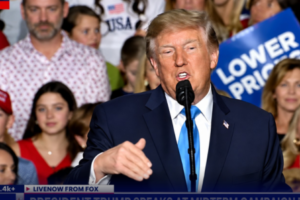




















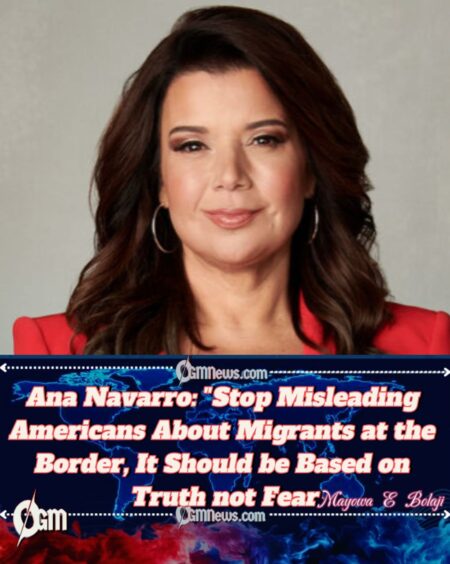
Ana Navarro, CNN Senior Political Commentator, has strongly pushed back against claims suggesting that the majority of migrants arriving at the U.S. border are criminals. Speaking during a televised discussion, Navarro emphasized that political leaders and commentators may disagree on immigration policy, but misrepresenting migrants as predominantly criminal is both misleading and harmful. Her remarks add to the ongoing national debate over immigration under President Donald Trump’s second term.
Ana Navarro argued that discussions around the border should be rooted in evidence rather than rhetoric. She stated, “You can say whatever you want about the border, but don’t come here and lie about most of them being criminals.” Her position reflects frustration with narratives that frame migration as an inherent threat rather than a complex social and economic issue.
Navarro’s remarks were directed at those who, in her view, attempt to stoke fear for political gain. She underscored that while border security is a legitimate concern, blanket portrayals of migrants as criminals undermine productive dialogue. Instead, she urged policymakers to focus on practical solutions that respect both national security and humanitarian obligations.
Ana Navarro also highlighted the broader consequences of mischaracterizing migrants. She pointed out that inflammatory language risks deepening divisions within American society, while failing to address the root causes driving migration.
Navarro’s Broader Critique of Immigration Politics
Ana Navarro has consistently spoken out against oversimplified narratives on immigration. As a veteran political commentator, she has drawn attention to the fact that many migrants are families fleeing violence, poverty, and instability. While acknowledging that border challenges exist, she argues that painting entire groups as criminal is factually unsupported.
Ana Navarro also criticized political figures who, in her view, benefit from portraying migration as a crisis without offering constructive policy alternatives. She suggested that such rhetoric contributes to gridlock in Congress, preventing bipartisan solutions from emerging.
Ana Navarro’s comments come at a time when immigration remains one of the most contentious issues in U.S. politics. With legislative proposals stalled and public opinion divided, her call for honest, evidence-based discussion adds weight to an already heated debate.
Ana Navarro and the National Conversation
Ana Navarro’s remarks illustrate the tension between media narratives and political strategy. As President Donald Trump continues to make immigration a centerpiece of his second term agenda, critics like Navarro are pushing back on what they consider distortions of fact.
Ana Navarro’s stance reflects a broader concern among commentators and analysts: that divisive rhetoric risks overshadowing nuanced policy discussions. Immigration reform, they argue, requires honesty, compromise, and recognition of humanitarian realities, not sweeping generalizations.
Ana Navarro’s message also resonates with viewers who see immigration as both a security and moral issue. By rejecting claims that migrants are “mostly criminals,” she positions herself within a larger effort to hold political debates accountable to facts.
Casinoabc999? Good Site. The interface is sleek, and there is a lot of stuff to...