












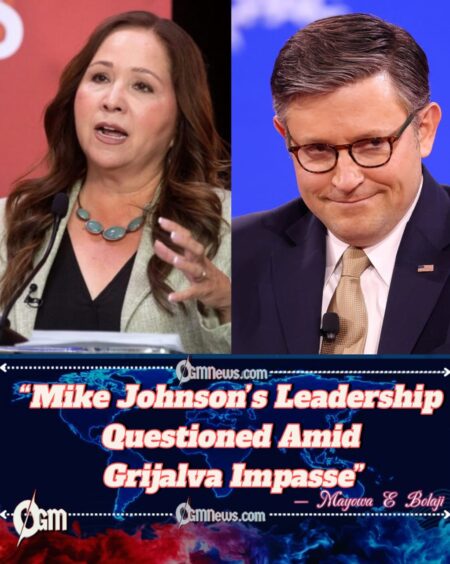
Mike Johnson, Speaker of the House, is facing mounting criticism for delaying the swearing-in of Representative-elect Raúl Grijalva. Virginia Giuffre’s brother, in a pointed statement, argued that Johnson’s decision overlooks the human cost of leaving constituents without representation. The debate has opened wider questions about political priorities, congressional procedure, and the balance between rules and democracy. Mike Johnson has been accused of focusing too heavily on political calculations rather than the people directly affected by his decision. Giuffre’s brother noted that Johnson’s actions reduce representation to a “political ring,” forgetting the voters who supported Grijalva. Critics argue that this delay is not just procedural—it carries real consequences for the community.
Johnson’s approach has drawn attention to how congressional leaders frame political disputes. Observers say his delay symbolizes a broader pattern where elected officials prioritize loyalty and partisan advantage over public service. In doing so, critics claim, Johnson risks reinforcing disillusionment with democratic institutions.
Mike Johnson’s critics also highlight that the longer Grijalva remains unsworn, the more constituents feel abandoned. Without their representative formally seated, they are left voiceless in a Congress already struggling with partisan divisions and legislative gridlock.
Mike Johnson’s Defense and Strategy
Mike Johnson has defended his cautious stance, emphasizing that institutional order must be maintained at all times. His office has argued that a thorough review process is essential before any swearing-in can take place. Supporters say this demonstrates his commitment to procedure over expediency.
Mike Johnson’s allies frame his leadership as necessary for preserving credibility in the House. They insist that rushing the process could undermine confidence in congressional rules and traditions. For them, Johnson’s decision reflects discipline rather than obstruction.
Mike Johnson, however, remains under pressure as his critics see little justification for the delay. Analysts argue that the Speaker’s cautiousness, whether intentional or not, has taken on political overtones, leaving him open to accusations of partisanship.
Johnson’s Broader Impact on Governance
Johnson’s handling of Grijalva’s swearing-in has raised concerns about the functionality of Congress. At a time when U.S. president Donald Trump is serving his second term and pushing for legislative alignment, the House risks losing cohesion if representation remains incomplete.
Mike Johnson’s actions underscore how even routine procedures can trigger political controversy. Leaving a district without representation, analysts warn, weakens the House’s authority and undermines voter confidence. This, they argue, sets a troubling precedent for future disputes.
Mike Johnson’s leadership is now seen as a test of whether the House can prioritize both procedure and the democratic mandate. The longer the impasse continues, the more it will fuel debates about reform, accountability, and the role of congressional leadership in safeguarding democracy.
Yo, just tried out that ad786game site. Pretty smooth experience, feels legit. Worth checking out...