



























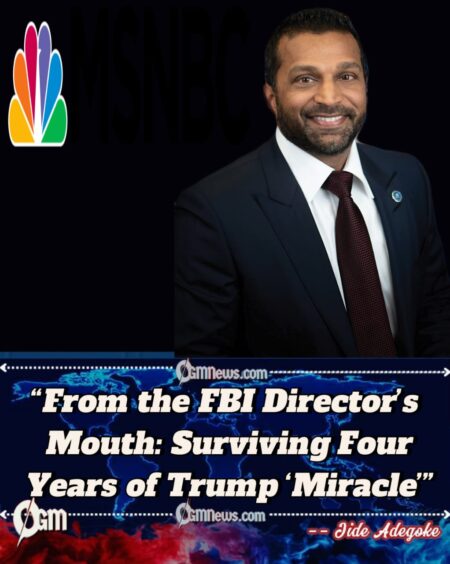
“It’ll be a miracle if we survive four years of Trump.” With that terse, striking declaration, FBI Director Kash Patel lit a political fuse, sparking fierce debate across Washington, media circles, and Capitol Hill. The remark—unequivocal and urgent—carries unusual weight coming from the nation’s top federal law enforcement official. At a time when institutional norms and partisan tensions are under intense strain, Patel’s message signals both a departure from convention and an invitation to examine deeper fault lines in U.S. governance.
“It’ll Be a Miracle”: Shockwaves from an FBI Director’s Warning
Such language, especially when uttered by the Director of the FBI, is virtually unheard-of in modern political discourse. It conveys existential stakes—suggesting that the very survival of federal institutions or democratic norms could be at risk. The bluntness has led observers to question whether Patel is issuing a warning, voicing disillusionment, or engaging in political positioning.
The response has been swift and polarized. Critics accuse Patel of abandoning the traditionally apolitical posture of the agency, while supporters argue that such candor is overdue. Doubts now swirl about whether the FBI under his leadership will remain insulated from political influence or increasingly aligned with the administration’s strategic interests.
Institutional Backlash and Political Reverberations
In the days since the tweet, federal officials, congressional leaders, and national security experts have scrambled to interpret its implications. Some senior lawmakers privately expressed alarm, arguing that such rhetoric from an FBI director could undermine public confidence in the bureau’s impartiality. Others see it as a reflection of internal anxiety over potential pressures from the White House.
At the same time, whispers have already surfaced of tension within the FBI ranks. Some agents reportedly fear reprisals for dissent or internal disagreement. Whether or not those concerns are realized, the perception alone risks chilling internal debate. Strategically, the comment may also take on a life of its own, shaping narratives about resistance or discipline within federal law enforcement.
Patel’s assertion arrives amid broader institutional shifts. His prior decision to sever longtime ties between the FBI and the Anti-Defamation League drew scrutiny from civil rights organizations and raised questions about whether the bureau’s priorities are shifting under his stewardship. The threat-laden tone of his new message compounds those concerns: if survival is in doubt, what challenges lie ahead, and who defines the rules of engagement?
Navigating the Aftermath: Stakes, Safeguards, and Strategy
Patel’s warning poses a dilemma for those who depend on the FBI’s integrity to carry out investigations, enforce laws, and safeguard national security. If the director himself frames the coming presidency in apocalyptic terms, will that posture empower or paralyze subordinate actors? Stakeholders—from Congress to inspector general offices—will now need to guard against abuses while preserving the bureau’s capacity.
In the court of public opinion, the tweet also carries symbolic weight. To some, it signals a man of conviction, one willing to speak plainly. To others, it underscores fears of politicization and fear-mongering. Its reverberations may shape how the public, the media, and future administrations view the FBI’s independence—or lack thereof.
As the administration and Congress respond, the larger question remains: will this moment mark the start of intensified institutional strain, or will new guardrails emerge? And in either case, whose version of “survival” ultimately prevails?


[…] […]