

























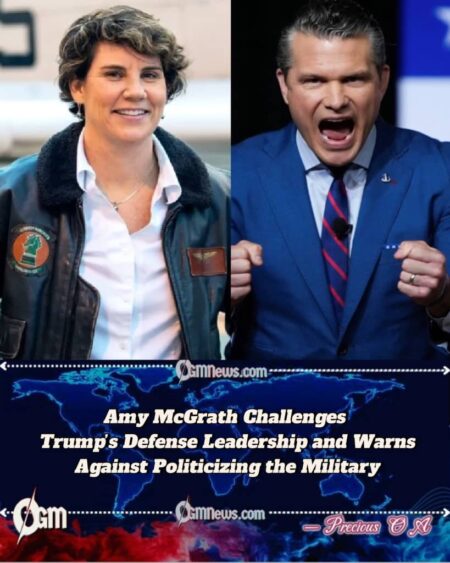
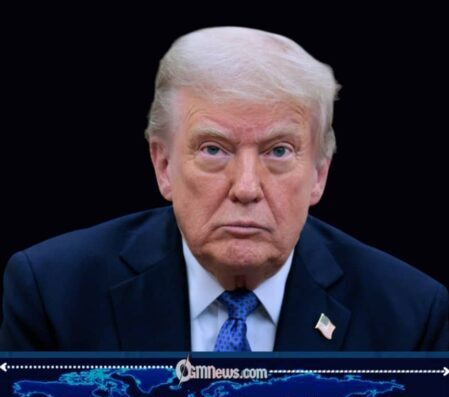
Amy McGrath: President Donald Trump and Defense Secretary Pete Hegseth addressed senior U.S. generals in a high-level meeting at a Virginia military base. According to official statements, the purpose of the speech was to outline new strategic priorities and strengthen ties between civilian leadership and the armed forces. Supporters described it as a bold articulation of national defense policy and a necessary call for unity among top commanders.
The remarks, however, contained unusually pointed criticisms of domestic political opponents and suggestions that disloyalty existed within certain military circles. This tone raised alarm among defense analysts who believe the armed forces should remain firmly nonpartisan. By making such accusations in front of military leaders, critics argue, the administration risked undermining the delicate balance of trust between elected officials and the professional military establishment.
Amy McGrath, a retired Marine Corps fighter pilot and former U.S. Senate candidate, described the speech as “reckless and divisive.” Her comments, shared widely online, quickly became a focal point for debate over civil-military relations. As a decorated combat veteran, she lent credibility to concerns that the remarks may have crossed an important line in American democratic tradition.
McGrath’s Viral Critique
Amy McGrath released her response through a video posted to social media that has since been viewed millions of times. In it, she stated that the address by President Trump and Secretary Hegseth was “an insult to every service member who swore an oath to defend the Constitution, not a political agenda.” She called on senior officers to “remember their duty to the nation, not to one individual.”
Amy McGrath’s background as a Marine aviator who flew combat missions in Iraq and Afghanistan gives her words particular resonance among service members and veterans. Commentators across the political spectrum have noted that she represents a growing group of former military leaders who are speaking out publicly about the principles of an apolitical military. Some see her intervention as a much-needed reminder of the norms that have long governed the relationship between civilian officials and the armed forces.
Amy McGrath also emphasized in follow-up interviews that her critique was not intended as a partisan attack but as a defense of constitutional values. She has stressed that leaders come and go, but the armed forces’ obligation to democratic principles must remain constant. Her remarks have been widely quoted by veterans’ organizations and bipartisan think tanks concerned about preserving public trust in national security institutions.
Broader Implications for Civil-Military Relations
Amy McGrath’s intervention has intensified discussion among lawmakers and policy experts about the proper role of the armed forces in political life. Many analysts point to the risks of politicizing the military as a tool for achieving domestic political goals. By bringing these concerns into the spotlight, her statements have forced a national conversation about the boundaries that should exist between civilian leaders and uniformed personnel.
Amy McGrath’s comments also underscore how former service members can influence the public debate on national security. Because she is not currently in uniform, she is free to speak openly in ways that active-duty personnel cannot. This dynamic has made her one of the most prominent voices calling for a reaffirmation of military neutrality and professionalism during President Trump’s administration.
Amy McGrath’s critique arrives at a time when members of Congress from both parties have begun asking for more transparency about the administration’s interactions with senior military officials. Some legislators have called for hearings to examine whether the president’s and secretary’s remarks were appropriate and consistent with long-standing norms. While the Pentagon has not formally responded to McGrath’s comments, it has reiterated in public statements that the Department of Defense remains committed to maintaining “the highest standards of professionalism” in its relationship with civilian leadership.
Amy McGrath’s high-profile stand has also highlighted the role of social media in shaping public perception of defense issues. In the past, debates about civil-military relations often took place in academic or policy circles. Now, viral videos and rapid online engagement can transform a single critique into a national talking point within hours. This shift raises new questions about how veterans and former officials can responsibly use their platforms to influence public discourse.
Amy McGrath, by speaking out in such forceful terms, has become a symbol of a broader movement of veterans advocating for nonpartisan military values. Whether her intervention will have a lasting effect on the administration’s approach to military affairs remains uncertain, but her remarks have clearly resonated with a significant audience.
Amy McGrath’s appearance in mainstream news outlets following the viral video has expanded her influence beyond veteran and policy communities. Her interviews on television and in print have reached millions of Americans who might otherwise have been unaware of the controversy. Analysts say this visibility has reinforced the idea that experienced military voices can play a critical role in defending democratic principles during politically charged times.
Amy McGrath’s message reflects a recurring theme in American history: the tension between strong civilian control of the military and the need for the armed forces to remain above partisan conflict. Her statements have become a touchstone for those seeking to reaffirm that balance. As the debate continues, her words serve as a reminder that safeguarding the apolitical nature of the military is not just an institutional concern but a cornerstone of democratic governance.

[…] […]