


















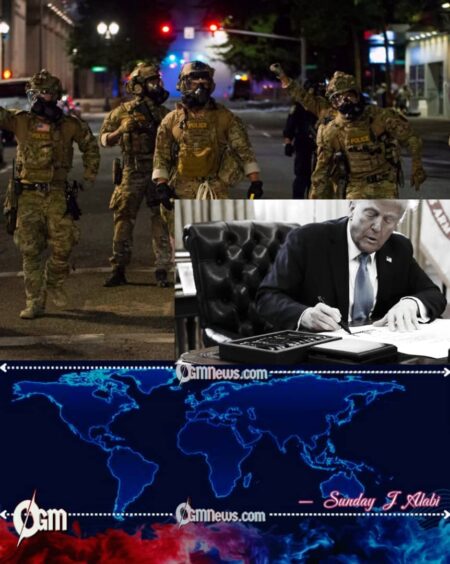
President Donald Trump, now serving his second term, has announced the deployment of National Guard troops to Portland, Oregon, describing the city as “war ravaged” and alleging that immigration facilities are “under siege from attack by Antifa and other domestic terrorists.” The move, revealed through his social media channels, immediately drew sharp criticism from Oregon’s leaders, who maintain there is no such crisis on the ground.
Oregon Governor Tina Kotek firmly rejected the president Trump’s characterization, stating, “There is no insurrection. There is no threat to national security and there is no need for military troops in our major city.” At a press conference in Portland, she stressed that the state is capable of managing its own law enforcement needs and reiterated her opposition after direct conversations with both President Trump and Homeland Security Secretary Kristi Noem.
Local officials and community leaders echoed Kotek’s position, insisting that the deployment is unnecessary and risks inflaming tensions rather than restoring order.
Dispute Over Conditions advanced by Trump Administration For Deployment
The announcement came with strong language from the president Trump, who described Portland as a city “under attack” by antifascists and “domestic terrorists.” His framing was quickly challenged by state authorities and Portland residents, who say the president Trump’s statements exaggerate the reality of the city’s situation.
On Saturday, hours after the announcement, downtown Portland remained calm. Only a handful of protesters—fewer than five—were present outside the Immigration and Customs Enforcement (ICE) field office that the president had claimed was besieged. Local journalists and residents alike noted that the atmosphere bore little resemblance to the “war zone” narrative promoted in conservative media outlets and repeated by the administration.
Portland officials argue that federal involvement risks reigniting tensions last seen during protests in 2020, when the arrival of federal law enforcement sparked widespread clashes. “This is not a war zone,” one resident told reporters, dismissing the president Trump’s characterization.
Political and Public Reactions
The president Trump’s decision underscores a widening political rift between the White House and Democratic-led states, particularly over questions of public safety, federal authority, and local governance. Supporters of the president Trump argue that the deployment demonstrates decisive leadership in the face of lawlessness, while critics contend it is an unnecessary federal overreach intended more for political theater than for genuine security needs.
Governor Kotek emphasized Oregon’s commitment to handling its own affairs under the rule of law. “Our state does not need or welcome this interference,” she said. Analysts suggest the move could become a flashpoint in national debates over law enforcement, civil liberties, and the role of federal power in local matters.
For now, Portland residents appear largely unconvinced by the president Trump’s justification for troops on their streets. As one community leader put it, “We don’t see a crisis—only an attempt to create one.”
[…] […]