



























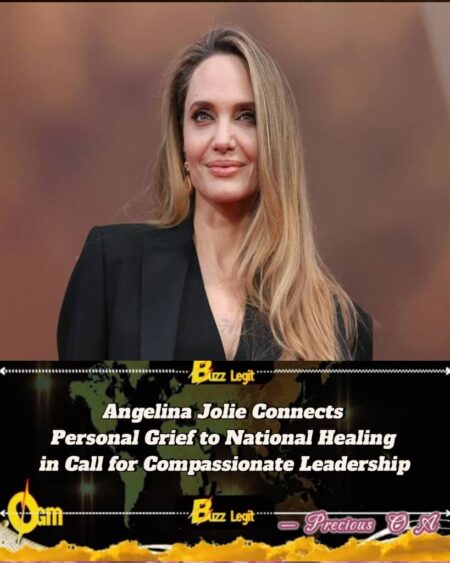
Angelina Jolie spoke candidly about her late mother, Marcheline Bertrand, who passed away in 2007 after a long battle with cancer. She described her mother as a woman of quiet strength and compassion, noting that the lessons she learned continue to shape both her personal life and her work as an advocate. Her comments revealed how personal history can continue to influence public roles, even many years later.
Angelina Jolie explained that she often turns to her mother’s words and example when making decisions for her six children. Her mother’s influence, she noted, gave her the courage to balance the demands of Hollywood with the responsibility of raising a family. She described parenting not as a challenge she faced alone, but as a path guided by wisdom that her mother had instilled. This guidance, she stressed, is the foundation of her ability to navigate fame without losing her personal grounding.
Angelina Jolie emphasized the importance of nurturing values that transcend material success. Bertrand encouraged her to use her voice for others—a principle that has fueled her activism on refugee rights, women’s empowerment, and education for children in conflict zones. By linking her mother’s values to her global advocacy, she underlined how deeply personal roots can inspire public service and human rights work.
Angelina Jolie underscored how personal loss can become a source of strength. By revisiting her mother’s memory, she not only honored her legacy but also bridged her private grief with her public mission. Her reflections showed how memory and mourning can be transformed into motivation, producing a lasting influence on both family and society.
America at a Crossroads
Angelina Jolie shifted her attention from personal reflection to the current state of America. She expressed deep concern about the nation’s direction, pointing to widening social divisions, a lack of empathy in public discourse, and the ongoing struggles of vulnerable communities. She described these issues not as abstract problems, but as urgent realities that threaten the lives of millions.
Angelina Jolie argued that leadership must be grounded in compassion, not just policy. According to her, the moral tone of a nation is defined by how it treats its most disadvantaged citizens. She stressed that the United States is at a crossroads—choosing between embracing inclusivity or deepening polarization. Her comments suggested that the choice facing the nation is moral as well as political, with consequences that extend far beyond borders.
Angelina Jolie highlighted that while America has long represented hope and opportunity, its internal challenges risk undermining its global credibility. She urged citizens and leaders alike to recommit to justice, equality, and truth. Without such a commitment, she warned, the image of America as a beacon of freedom could be permanently damaged. Her words echoed the concerns of many who feel that international leadership must be earned through moral authority.
Angelina Jolie reflected broader frustration among cultural figures who believe that political rhetoric often overshadows the everyday needs of families, workers, and communities struggling to be heard. She pointed out that when the conversation is dominated by partisanship, the human dimension of governance is forgotten. Her intervention stood as both a cultural critique and a political warning, delivered from the perspective of someone deeply engaged with humanitarian issues.
A Call for Compassionate Leadership
Angelina Jolie urged a return to values rooted in compassion, fairness, and unity. She underscored that no meaningful progress can be made without empathy at the center of national decision-making. By putting compassion first, she argued, leaders can address both the immediate and long-term needs of the people they serve.
Angelina Jolie called on leaders—including President Trump and policymakers across party lines—to prioritize the dignity of individuals above partisan battles. In her view, leadership is not about power but about service, and she emphasized the urgent need for a political culture that reflects humanity over hostility. She positioned this not simply as an appeal but as a standard that she believes all democratic systems must uphold.
Angelina Jolie also spoke directly to younger generations, encouraging them to take active roles in shaping the future of America. She noted that the resilience of youth movements gives her hope that the nation can overcome its current divisions. Her message to young people was framed as both a challenge and an inspiration: to channel frustration into activism and to ensure that tomorrow reflects the values of justice and unity.
Angelina Jolie concluded with a reminder that systemic change begins with individuals choosing kindness, integrity, and courage in their daily lives. By linking her mother’s legacy to America’s challenges, she delivered both a personal tribute and a call to conscience. Her reflections made clear that personal history, national identity, and global responsibility are interconnected, and that addressing one without the others leaves the picture incomplete.



[…] […]