




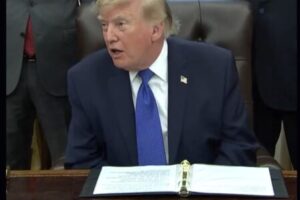



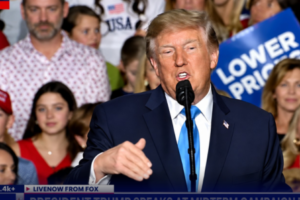





















President Trump announced Saturday his nomination of senior White House aide Lindsey Halligan as U.S. attorney for the Eastern District of Virginia, following the abrupt departure of Erik Siebert amid controversy over pressure to prosecute New York Attorney General Letitia James. The nomination comes as the Virginia federal prosecutor’s office faces unprecedented political pressure and internal discord over the handling of a criminal investigation targeting one of Trump’s longtime legal adversaries.
Halligan Selected Hours After Acting Attorney Appointment Creates Confusion
President Trump’s selection of Halligan came just hours after conservative lawyer Mary “Maggie” Cleary informed staff via email that she had been named acting U.S. attorney for the Eastern District of Virginia. The overlapping appointments have created uncertainty about who will lead the office while Halligan’s Senate confirmation process unfolds.
In a social media post departing the White House for a Mount Vernon event, Trump praised Halligan as someone who “will be Fair, Smart, and will provide, desperately needed, JUSTICE FOR ALL!” CBS News has reached out to the White House for clarification on the competing leadership claims.
Cleary, who recently rejoined the Justice Department as senior counsel in the criminal division, had told employees she was “humbled to be joining your ranks” and emphasized building upon the Eastern District’s “distinguished legacy.” Her background includes work as a prosecutor in Virginia and service in Republican Governor Glenn Youngkin’s administration.
Trump’s Nominee Brings History of Defending President in Legal Battles
Halligan has maintained close ties to Trump’s legal team for several years, notably serving as one of his attorneys during the early stages of the FBI’s investigation into classified documents at Mar-a-Lago. Trump specifically referenced this connection in his nomination announcement, describing Halligan as a “tough, smart, and loyal attorney” who witnessed firsthand what he characterized as the “Weaponization of our Justice System.”
The president elaborated on their working relationship in a subsequent Truth Social post, stating that Halligan “stood up for my rights during the Unconstitutional and UnAmerican raid on my home, Mar-a-Lago, in Palm Beach, Florida.” More recently, she has been involved in White House efforts to address what the administration describes as “improper ideology” within Smithsonian properties.
Halligan’s nomination represents a significant shift for an office that has been under intense scrutiny for its handling of politically sensitive cases. The Eastern District of Virginia has historically maintained a reputation for independence, making the current political pressures particularly notable within federal law enforcement circles.
Siebert’s Departure Highlights Pressure Over James Investigation
The controversy surrounding Siebert’s departure centers on administration pressure to bring criminal charges against New York Attorney General Letitia James in a mortgage fraud investigation. Multiple sources indicate federal prosecutors within the district expressed concerns that Siebert could face removal for his reluctance to prosecute James, fears that proved prescient when Trump confirmed Friday, “Yeah, I want him out.”
The Justice Department launched its criminal fraud probe targeting James in May, following allegations that she provided false information on mortgage applications to secure better loan rates for a Virginia home. Despite months of investigation, prosecutors have yet to bring charges, with no clear indication of sufficient evidence to support an indictment. James’ legal team has vigorously denied all allegations and characterized the investigation as political retaliation.
The backdrop to this investigation includes James’ 2022 lawsuit against Trump for alleged financial fraud, claiming the former businessman and his family inflated his net worth by billions of dollars to secure favorable loan terms. A judge initially ordered Trump and the Trump Organization to pay $354 million in fines, though the total climbed above $500 million with interest. However, a New York appellate court recently threw out the penalty, ruling it “excessive” while remaining divided on the case’s underlying merits.
Casinoabc999? Good Site. The interface is sleek, and there is a lot of stuff to...