


























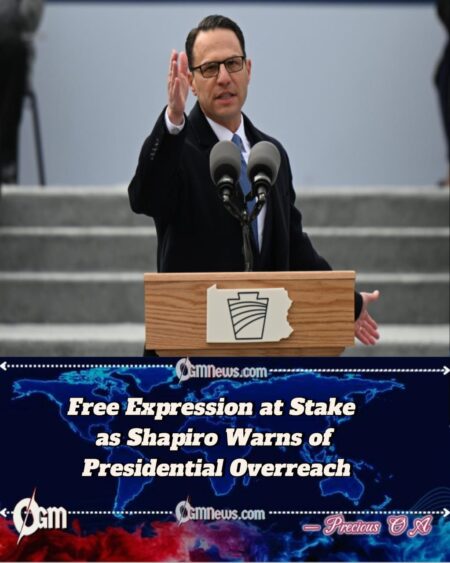
Conservative commentator Ben Shapiro has sounded an alarm over the actions of U.S. President Donald Trump, who is currently serving a second term. According to him, the president’s moves to encourage the firing of individuals for speech, and the chilling effect such moves create, undermine the very constitutional rights that protect public discourse.
Shapiro described the trend as not merely political maneuvering but a fundamental threat to American democracy. “What the president is doing—both getting people fired for speech and chilling other speech—undermines our constitutional rights and our fundamental freedoms. It’s really, really dangerous for this country,” he said.
Observers note that Shapiro’s warning comes at a time when questions about the balance between accountability and free expression have become increasingly central to American politics. The controversy has ignited debates across partisan lines and within the broader civil rights community.
Broader Democratic Implications
Shapiro’s concern touches on more than isolated employment decisions; it raises the issue of whether government pressure on private institutions distorts the democratic process itself. He argues that when a president intervenes in matters of speech, the danger goes beyond individual cases and extends into the realm of national principles.
Legal experts echo this worry, suggesting that a culture of fear may discourage ordinary citizens from engaging in robust debate. The First Amendment, they stress, was designed to protect speech precisely when it is unpopular or inconvenient. If individuals self-censor to avoid professional or social punishment encouraged at the highest levels of government, then public discourse risks becoming hollow.
Meanwhile, defenders of the administration contend that institutions still retain their rights to make decisions about representation, brand image, and accountability. However, critics believe that presidential involvement shifts these decisions from private judgment to political enforcement, making the issue one of liberty rather than policy.
Shapiro Highlights Need for Vigilance
Shapiro has emphasized the importance of vigilance in preserving American freedoms. He warned that societies rarely lose liberties in dramatic fashion but instead through gradual erosion. Small acts of silencing, he suggested, accumulate into a climate where free thought and dissent are no longer safe.
Shapiro’s remarks underline the historical lesson that the strength of democracy depends not only on written guarantees but on cultural willingness to protect dissent. When speech is chilled under political influence, the democratic framework may remain in place while its spirit is compromised.
Civil rights advocates have joined this call, urging Americans to resist intimidation and uphold free expression regardless of political alignment. They argue that democracy thrives when people feel safe to express diverse views, even those contrary to those in power.
Public Debate and National Division
Shapiro’s statement has reignited public debate, with some praising him for speaking out despite his conservative background, while others accuse him of overstating the threat. Yet his warning highlights a rare moment of agreement among different political observers that the future of free speech in the United States is unsettled.
Historians point out that past moments of tension over speech rights—from the Red Scare to the civil rights era—demonstrate how fragile freedoms can be when challenged by political pressure. In each case, the line between protecting order and suppressing liberty has been contested. Today, the president’s role in shaping that balance remains at the center of controversy.
Shapiro has urged citizens not to dismiss the issue as partisan theater but to recognize it as a fundamental question of rights. He insists that without sustained attention, the culture of free speech could give way to one of silence and compliance.
Looking Ahead
Shapiro’s warning is unlikely to end the debate but rather deepen it. Free speech remains one of the most contested values in American society, tested repeatedly by shifting political winds and social expectations. The current moment, marked by the president’s second-term actions, may prove to be a defining chapter in how the nation understands and applies its constitutional promises.
As the controversy grows, questions remain about whether Congress, the courts, or civic groups will push back against any attempts to narrow the scope of protected speech. Shapiro and others believe that only active defense of liberty can prevent gradual decline.
In the meantime, Americans face a choice: accept the chilling of speech as an inevitable cost of political battles, or recommit to the principle that freedom of expression is central to democracy. The path chosen will determine whether Shapiro’s alarm is remembered as a warning heeded—or one ignored until freedoms were already diminished.
The vibes here are amazing and the winning streaks are real. It feels just like...