



























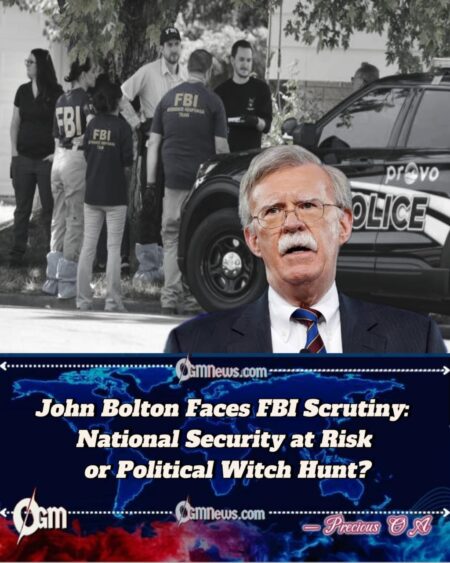
John Bolton, the current U.S. National Security Advisor, is under federal investigation for allegedly mishandling classified national defense information. The FBI recently raided his residence and offices, seizing documents, electronic devices, and binders containing sensitive materials. The case has thrust him into the national spotlight, raising serious legal and political questions.
Home and Office Raided
John Bolton’s Maryland home and Washington, D.C., office were raided by FBI agents under court authorization. Phones, computers, storage drives, and physical documents were seized during the operation. Officials have not disclosed the exact nature of the classified materials, highlighting the sensitivity of the investigation.
His high-profile background as a former U.S. Ambassador to the United Nations adds to public interest. Past criticisms of President Trump’s foreign policy contribute to the scrutiny surrounding the case, though the focus remains on legal concerns.
Allegations Against John Bolton
John Bolton is accused of emailing highly classified documents to family members using a private server in 2020. Legal experts warn that such actions may violate the Espionage Act, which criminalizes the unauthorized distribution of sensitive information. If proven, these allegations could carry severe consequences.
The investigation, initially shelved during the Biden administration, was reopened after Kash Patel assumed leadership of the FBI. He has become the central figure of renewed scrutiny, and the agency appears to be building a strong case.
Potential Legal Consequences
John Bolton could face significant legal repercussions if the allegations are substantiated. The Espionage Act carries penalties including imprisonment, and experts note that transmitting classified materials to unauthorized recipients—even family—is a federal offense.
The FBI’s seizure of devices and documents signals the seriousness of the investigation. His actions and the evidence collected have placed him firmly under the legal microscope.
Political Context
John Bolton’s outspoken critiques of President Trump’s foreign policy, particularly concerning North Korea and Iran, have raised questions about potential bias. The timing of the FBI investigation has fueled speculation about political motivations.
Critics argue that targeting individuals based on political disagreements could undermine public trust in law enforcement. Supporters emphasize that no one is above the law when it comes to handling classified information.
Public and Media Reaction
Media coverage and public discourse have largely focused on him. Supporters of the FBI investigation argue it is necessary to hold officials accountable, while detractors view it as politically motivated. Coverage varies, examining both legal and political angles.
John Bolton remains the central topic in discussions on government accountability and national security. Debates about his actions illustrate the polarized national discourse.
National Security Implications
John Bolton’s investigation highlights broader concerns about the protection of classified information. Improper handling of sensitive documents can jeopardize national security, emphasizing the importance of oversight for high-ranking officials.
Authorities’ approach to his case may set a precedent for managing future incidents involving classified materials. The outcomes could impact policies on accountability and document security.
Looking Ahead
The future of his legal situation remains uncertain. No charges have been filed, but the FBI’s investigation is ongoing, and the materials seized suggest serious scrutiny. He has not publicly commented, but public and media attention remains firmly focused on him.
The resolution of this case could influence how current and former officials are treated regarding the handling of sensitive government information. He remains the central figure in national discussions on legal accountability and national security.

[…] […]