



























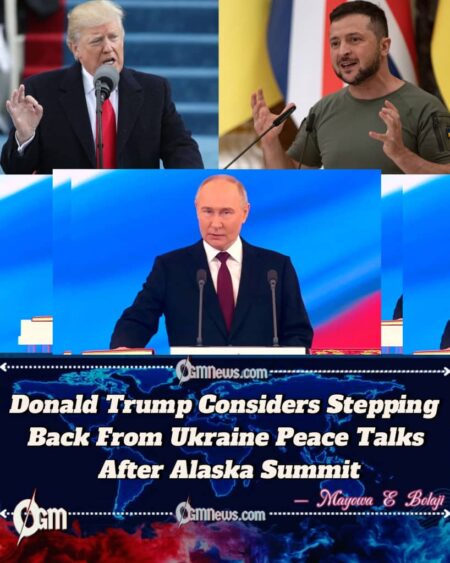
Donald Trump left Washington insiders reeling after revealing he may step back from direct U.S. involvement in Ukraine peace talks. The Alaska summit, promoted as a turning point, instead ended with uncertainty over America’s next role in the conflict.
Donald Trump, according to a senior White House official, has instructed his team to “sit back and watch” as Kyiv and Moscow continue their fight. “Let them fight it out for a while and see what happens,” the official quoted him as saying—a stance that has stirred both alarm and debate.
A Calculated Move or Strategic Gamble?
Donald Trump has defended the shift as a calculated risk rather than retreat, insisting it is time for Europe to step up. His aides argue the president believes constant American mediation has limited effectiveness without meaningful concessions from either side.
Donald Trump’s critics, however, call the move reckless. They argue that standing back could embolden Moscow while leaving Ukraine vulnerable, weakening Washington’s credibility and influence at a critical moment in global diplomacy.
Reactions in Kyiv and Moscow
Donald Trump’s new stance has rattled Kyiv, where officials fear losing Washington’s diplomatic backing. Ukraine, which has depended heavily on U.S. pressure in negotiations, now faces the possibility of diminished leverage at the table.
Donald Trump’s comments have been welcomed cautiously in Moscow. Russian diplomats see his hesitation as an opportunity to reshape the dialogue on more favorable terms while testing Europe’s ability to fill the void.
The Alaska Summit: A Mixed Report Card
Donald Trump arrived in Alaska declaring the summit a “smashing success,” but officials close to the talks admitted results were meager. Behind closed doors, both sides repeated familiar talking points without committing to concrete steps.
Donald Trump appeared frustrated with the stalemate, according to insiders, though publicly he projected confidence. Critics note the summit succeeded in optics but failed to deliver substantive progress.
European Allies Voice Concern
Donald Trump’s wavering stance has unsettled European capitals, where leaders worry that U.S. disengagement could tilt negotiations in Russia’s favor. Nations like Germany and France, heavily invested in the Minsk framework, now face a heavier diplomatic burden.
Trump’s retreat has prompted NATO members to begin contingency planning. Quiet consultations among allies signal growing concern that the conflict may spiral without firm American involvement.
Domestic Political Implications
Donald Trump’s Alaska statement has set off fierce debate in Washington. Democrats accuse him of “abandoning Ukraine,” while some Republicans argue his decision reflects pragmatic realism rather than weakness.
Donald Trump’s foreign policy unpredictability has become a partisan flashpoint ahead of the 2026 midterm elections. Critics say his Ukraine stance risks undermining national security, while allies frame it as bold leadership.
Global Stakes and the Road Ahead
Donald Trump’s decision carries global consequences. Analysts warn that prolonged U.S. hesitation could intensify the war, destabilize Eastern Europe, and rattle energy markets across the continent.
Donald Trump faces a defining choice in the coming weeks—either press ahead with his strategy of restraint or reassert American leadership. Whichever path he takes, the outcome will shape not only the Ukraine conflict but the trajectory of his second term in office.

[…] […]