





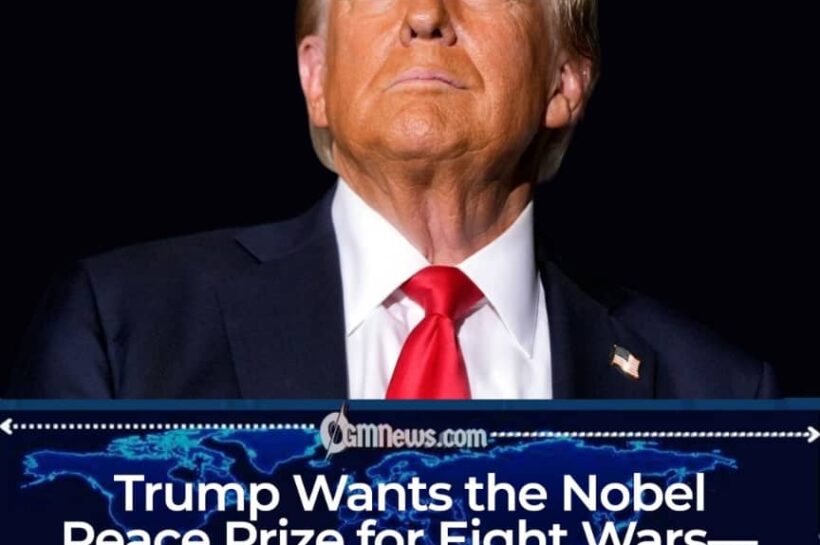













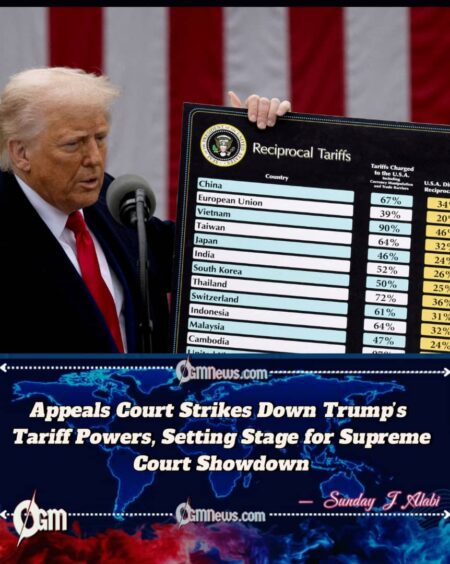
A federal appeals court ruled on Friday that many of President Trump’s sweeping tariffs on foreign goods are unlawful, striking a serious blow to one of his most defining economic policies. The U.S. Court of Appeals for the Federal Circuit concluded that the president Trump had exceeded his authority under the International Emergency Economic Powers Act (IEEPA), a law Trump has relied upon to justify broad tariff measures since returning to office.
The decision, handed down in a closely divided 7-4 ruling, does not immediately block the tariffs, which remain in place for now. However, it affirms a lower court’s finding that the tariffs went beyond the scope of presidential power. The appellate judges vacated an earlier injunction freezing the duties, instructing the trial court to reconsider whether such universal relief is legally appropriate.
Judges Rule Trump Overstepped on Tariffs, Casting Doubt on Cornerstone of Trade Agenda
Friday’s judgment applies to a series of April executive orders that imposed a 10 percent baseline tariff on nearly all imports, along with higher “reciprocal” tariffs on dozens of countries. It also encompasses separate tariff measures targeting Canada, Mexico, and China, which the White House tied to curbing fentanyl trafficking and illegal immigration.
The appeals court emphasized that while the president has broad powers in times of emergency, the authority to impose tariffs remains a “core Congressional power.” Judges noted that IEEPA historically has been used to regulate trade through sanctions or restrictions — but not sweeping tariff regimes. “The statute neither mentions tariffs (or any of its synonyms) nor contains safeguards that would cabin the President Trump’s authority in this regard,” the opinion stated.
Trump Responds With Fury
President Trump reacted swiftly and angrily, denouncing the decision on Truth Social as a partisan attack on his presidency. “If allowed to stand, this Decision would literally destroy the United States of America,” he wrote, accusing the judiciary of undermining national sovereignty.
Trump stressed that the tariffs remain in force, while his legal team prepares a potential Supreme Court appeal. Attorney General Pam Bondi vowed to challenge the ruling, calling it “an attempt to strip the President of his constitutionally central role in foreign policy.” She argued that blocking the tariffs would embolden America’s adversaries and weaken ongoing trade negotiations.
Legal Backdrop and Ongoing Challenges
The litigation stems from lawsuits filed by Democratic-led states and small businesses, which argued that the tariff measures violated statutory limits and harmed U.S. consumers. A federal trade court in May reached the same conclusion, finding the duties illegal and issuing an injunction — a ruling that was stayed pending appellate review.
The legal debate hinges on whether Congress ever intended IEEPA to cover tariffs. Critics say that allowing such an interpretation would hand unchecked trade authority to the executive branch, bypassing the legislative process. The appeals court echoed this view, stating that the law lacked the “clear authorization” necessary to justify such sweeping action.
Economic Stakes and Global Fallout
Tariffs have been central to Trump’s “America First” economic agenda, particularly since his declaration of “Liberation Day” in April, when he unveiled the first wave of broad import duties. Supporters argue that they are essential tools to combat unfair trade practices, revive American manufacturing, and pressure foreign governments on immigration, drug trafficking, and geopolitical disputes.
But economists warn the measures risk slowing growth and raising consumer prices. Early tariff announcements rattled global markets, though U.S. stock indices have largely stabilized. Trading partners including China, Mexico, and the European Union have signaled potential retaliatory measures, further complicating Washington’s trade relations.
What Comes Next
The ruling will not take effect until October, giving the administration time to seek Supreme Court review. Legal experts say the case could set a landmark precedent on the limits of presidential trade powers, particularly under emergency authorities like IEEPA.
In the meantime, businesses and consumers remain caught in limbo, facing uncertainty over tariffs that could disappear if the courts ultimately strike them down — or intensify if the president presses ahead with new rounds of duties. With the White House signaling a determined appeal, the fight over tariffs is poised to become one of the most consequential legal and economic battles of Trump’s second term.
[…] […]