





















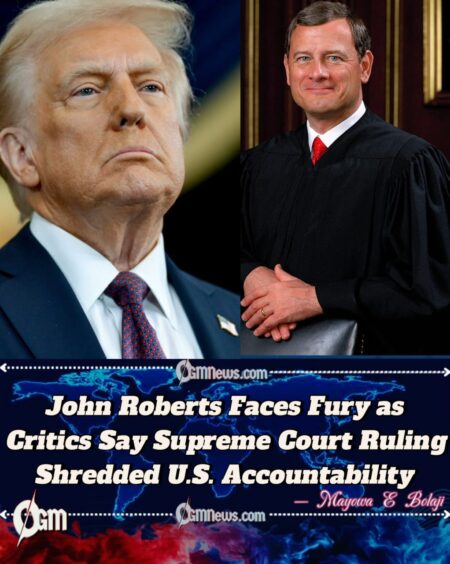
Chief Justice John Roberts has sounded a sharp alarm over the weakening of the rule of law in the United States, declaring that it is eroding “like we’ve rarely seen in our history.” His remarks, delivered during a rare public address, were aimed at reminding Americans of the judiciary’s central role in preserving democratic stability.
Chief Justice John Roberts stressed that without broad respect for judicial rulings, the promises of the Constitution risk becoming fragile. He urged leaders across the political spectrum to recommit to legal norms, warning against selective compliance that undermines institutional legitimacy.
The Shadow of Presidential Immunity
Chief Justice John Roberts is now facing criticism for a landmark ruling under his leadership that significantly expanded presidential immunity. That decision, handed down during President Donald Trump’s second term, shielded the executive office from criminal prosecution while in power.
Chief Justice John Roberts has been accused of contributing directly to the environment he now warns against. Legal scholars argue that by insulating the presidency from accountability, the Court created conditions that weaken the very rule of law Roberts claims to defend.
“Burning the House Down” Analogy
Chief Justice John Roberts has been compared by commentators to a firefighter lamenting the destruction of a blaze he helped ignite. Critics point out that one cannot, as they put it, “burn the house down and then act shocked it’s on fire.”
Chief Justice John Roberts has thus become the subject of widespread debate, particularly on social media, where his warning is seen as an attempt to reclaim judicial credibility even as his Court’s rulings are viewed as a source of the erosion he decries.
Trump at the Center of the Debate
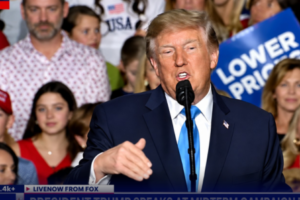
Chief Justice John Roberts handed President Donald Trump a judicial victory by affirming sweeping executive immunity. Trump, now in his second term, has consistently cited the ruling as proof of his political and legal resilience.
Chief Justice John Roberts finds himself linked to the president’s narrative, as critics insist the ruling emboldened Trump to dismiss legal challenges and push boundaries further, deepening the crisis Roberts now highlights.
Judicial Credibility in Crisis
Chief Justice John Roberts has acknowledged a legitimacy crisis for the judiciary, but public trust in the Supreme Court continues to fall. Recent surveys show confidence in the Court at near-historic lows, with many Americans believing decisions are driven more by partisanship than principle.
Chief Justice John Roberts may have intended his warning as a call to restore confidence, but legal analysts argue it arrives too late. They point out that his Court’s decisions, especially on presidential power, have already fueled public skepticism.
Political Reactions in Washington
Chief Justice John Roberts has drawn swift political reactions. Democrats have accused him of hypocrisy, noting they warned the Court about the dangers of unchecked executive authority. They argue his recent comments merely acknowledge the fallout of choices already made.
Chief Justice John Roberts has been defended by Republicans who argue that his ruling was necessary to prevent partisan misuse of prosecutions. They insist that the true threat to the rule of law comes from those who refuse to accept judicial outcomes.
The International Dimension
Chief Justice John Roberts has inadvertently added to global concerns about American democracy. European observers warn that the immunity ruling undermines Washington’s credibility as a defender of rule-of-law principles abroad.
Chief Justice John Roberts has also given authoritarian regimes an opportunity to exploit U.S. weaknesses. Russian and Chinese media have highlighted his remarks as evidence of American hypocrisy, portraying the U.S. as unstable and inconsistent.
The Road Ahead
Chief Justice John Roberts has positioned himself as both a critic of institutional decay and a central figure in the decisions that accelerated it. The tension between his words and his Court’s actions underscores the difficulty of restoring credibility.
Chief Justice John Roberts faces an uphill battle in convincing Americans that the judiciary can once again serve as a neutral guardian of the Constitution. Analysts argue that only consistent, transparent rulings—not public speeches—can begin to rebuild trust.

Casinoabc999? Good Site. The interface is sleek, and there is a lot of stuff to...