














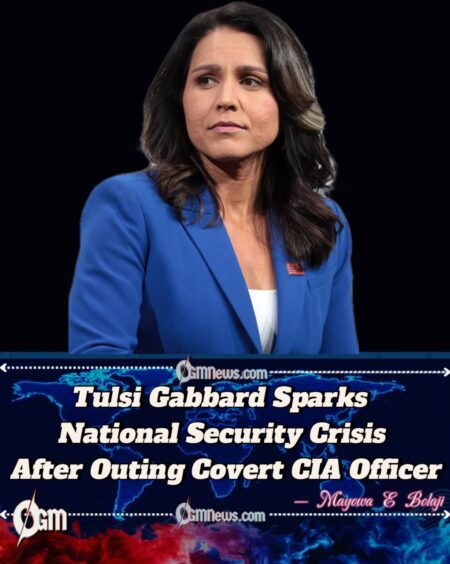
Tulsi Gabbard, the Director of National Intelligence, has found herself at the center of a growing controversy after inadvertently revealing the identity of an undercover CIA officer in an official memo. The disclosure, made as part of a sweeping revocation of security clearances, has prompted outrage across the intelligence community and raised concerns about competence and accountability at the highest levels of government. The move, carried out under President Donald Trump’s directive, is now under intense scrutiny for its potential legal and diplomatic consequences. Tulsi Gabbard issued the controversial memo on August 19, listing 37 intelligence professionals whose security clearances were revoked. She argued that the decision was aimed at removing individuals accused of politicizing intelligence or leaking sensitive information.
Tulsi Gabbard, however, overlooked a critical detail: among the names was a covert CIA officer whose decades-long undercover status was widely protected. The CIA reportedly learned of the inclusion only hours before the memo was made public, leaving the agency scrambling to mitigate potential damage.
Intelligence Community in Shock
Tulsi Gabbard’s action immediately drew strong condemnation from intelligence veterans and analysts who described the move as reckless and dangerous. The revelation, critics argue, not only endangers a career officer but also undermines the credibility of the United States’ security apparatus.
Tulsi Gabbard’s failure to consult with CIA leadership before publication was seen as a grave oversight. Larry Pfeiffer, a former CIA chief of staff, remarked that “a smart DNI” would have coordinated to ensure the safety and integrity of covert personnel.
President Trump’s Role in the Clearance Revocations
Tulsi Gabbard has maintained that the clearance purge was carried out at the direction of President Donald Trump, who has long expressed mistrust of the intelligence community. By swiftly executing the order, she positioned herself as a loyal ally within Trump’s inner circle.
Tulsi Gabbard’s decision, however, is being interpreted by critics as politically motivated. Many argue that the purge targeted officials linked to past disputes over Russian interference or who had challenged Trump’s foreign policy decisions.
Operational and Diplomatic Consequences
Tulsi Gabbard’s disclosure has sparked alarm about the broader implications for intelligence operations. Exposing an undercover CIA officer jeopardizes not only the individual but also networks, missions, and foreign partnerships carefully built over years.
Tulsi Gabbard’s action risks damaging U.S. credibility among allies. Intelligence-sharing arrangements depend on trust, and this blunder may force other nations to think twice before entrusting sensitive information to Washington.
Legal and Ethical Dimensions
Tulsi Gabbard’s decision has also raised questions of legality. Legal experts warn that revealing an undercover agent, even unintentionally, could violate federal protections, including the Privacy Act. Some attorneys argue that negligence of this scale could result in congressional inquiries or potential court challenges.
Tulsi Gabbard’s judgment has been criticized not only on legal grounds but also on ethical ones. Intelligence officers commit to lives of secrecy, and critics say their trust was betrayed by a DNI whose duty is to protect, not expose, them.
Tulsi Gabbard’s Unconventional Path
Tulsi Gabbard’s rise to the role of DNI was unconventional. A former Democratic congresswoman from Hawaii who later aligned with Republicans, she has often styled herself as a disruptor willing to challenge Washington orthodoxy.
Tulsi Gabbard has previously courted controversy in her tenure, including when she pushed through the declassification of sensitive reports against the wishes of intelligence agencies. Supporters see transparency; critics see a lack of professional grounding in intelligence norms.
Calls for Accountability
Tulsi Gabbard is now facing mounting pressure from lawmakers demanding answers. Bipartisan members of Congress are calling for hearings to investigate how the memo was drafted, why safeguards failed, and what measures will prevent such lapses in the future.
Gabbard has remained silent publicly, with neither her office nor the CIA issuing detailed statements. That silence, analysts warn, risks deepening mistrust within the intelligence community and widening the rift between the DNI and career officials.
Tulsi Gabbard’s Breach of Protocol
Gabbard’s accidental outing of a covert CIA officer is being viewed as one of the most serious breaches of protocol in recent intelligence history. The consequences—operational, diplomatic, and legal—may reverberate for years.
Gabbard now stands as both the executor of President Trump’s clearance purge and the face of its fallout, raising urgent questions about competence, loyalty, and the future of American intelligence leadership.
[…] […]