


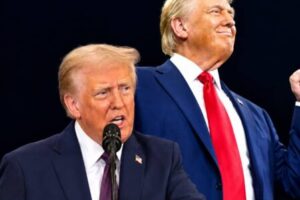
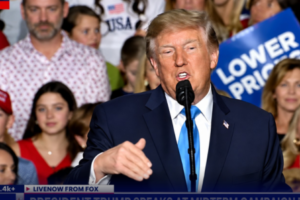




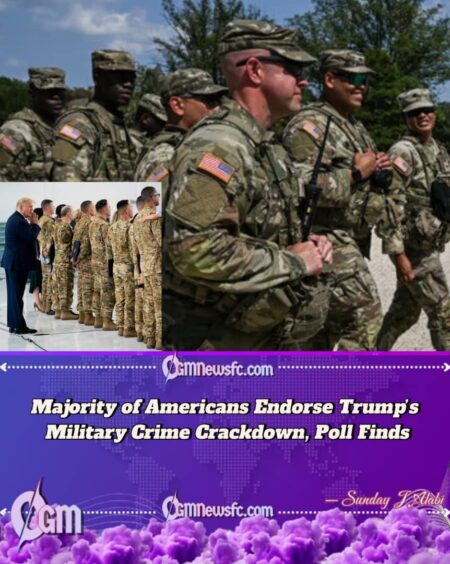
A new national survey has revealed widespread support for President Donald Trump’s decision to deploy National Guard troops into Washington, D.C., and his promise to extend the crackdown to other major cities. The AP-NORC poll found that 53 percent of Americans approve of the president’s actions to address violent crime, while 55 percent consider it acceptable for the military and National Guard to assist local police in crime-ridden areas.
The findings highlight growing public concern over urban crime, with 80 percent of respondents describing it as a “serious problem” in large cities. While there is strong backing for military assistance, fewer than one in three Americans said they support the federal government taking direct control of city police departments.
Trump’s Approval Rating Climbs to Record High
The same poll also showed President Trump achieving his highest-ever approval rating in the AP-NORC survey across both of his terms in office. Forty-five percent of respondents now view his presidency favorably, marking a five-point increase in just the past month. Separate polling by JL Partners found Trump’s approval rating at 49 percent in July, further underscoring his recent momentum.
Supporters of the president credit his tough-on-crime stance as a key factor behind the surge. Attorney General Pam Bondi noted on social media that 1,178 arrests had been made and 123 illegal firearms seized in Washington since the federal crackdown began.
Crime Plummets in Washington, D.C. Following Crackdown
D.C. Mayor Muriel Bowser, often a critic of the administration, acknowledged on Wednesday that the deployment has delivered measurable results. She cited an 87 percent drop in carjackings since National Guard troops were deployed, adding that residents “feel safer and are safer” with the enhanced police presence.
“We greatly appreciate the surge of officers that enhance what MPD has been able to do in this city,” Bowser stated. “When carjackings go down, when gun use goes down, when homicide or robbery goes down, neighborhoods feel safer.”
City Leaders Divided Over Federal Intervention
Not all local officials share Bowser’s cautious praise. D.C. Councilmember Robert White Jr. condemned the president’s move, arguing that residents feel “under siege” rather than protected. “We should not, as the District of Columbia, be giving people the impression that this is a good thing,” he said in a video statement. “I am not OK with this. The average resident is not OK with this.”
Ward 1 Councilmember Brianne K. Nadeau echoed those concerns, writing that the city’s autonomy was being undermined. “Our residents are afraid, hesitant to go out, angry that our limited autonomy is being eroded. There is nothing welcome about this,” she posted.
Trump Eyes Expansions to Chicago and New York
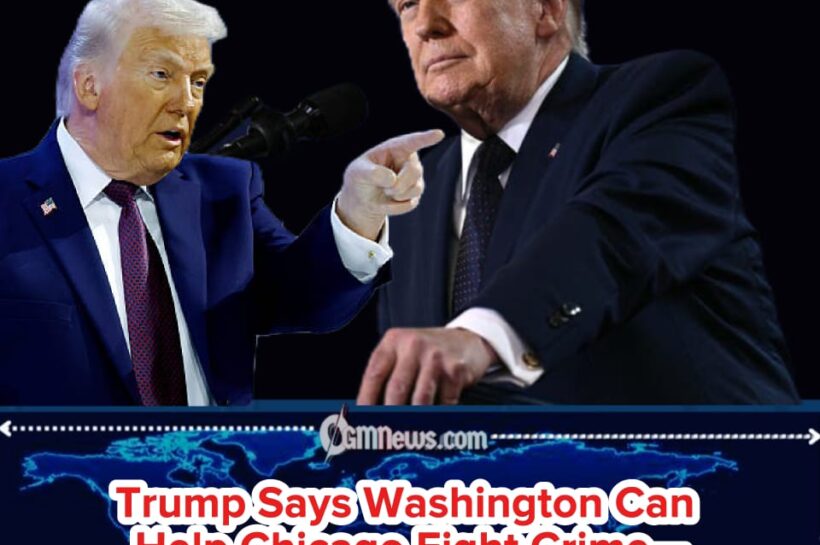
Buoyed by what he described as “clear success” in Washington, President Trump announced that he is considering similar troop deployments to Chicago and New York City, cities he says have become “a mess” under Democratic leadership. “You have an incompetent mayor — grossly incompetent,” Trump said of Chicago. “We’ll straighten that one out probably next.”
Illinois Governor JB Pritzker, however, issued a sharp rebuke. “If you hurt my people, nothing will stop me — not time or political circumstance — from making sure you face justice under our constitutional rule of law,” he declared. The comments signal an impending clash between federal authority and local leadership should the president move forward.
National Debate Over Policing and Federal Power Intensifies
The poll results underline a growing divide in the country: a slim majority supportive of Trump’s tough tactics, and a vocal minority alarmed by what they view as an erosion of local control. For many Americans, the immediate results in D.C. outweigh concerns over federal overreach. For others, the use of military forces in civilian neighborhoods signals a dangerous precedent.
As the president Trump weighs his next steps, the country remains locked in a debate over where the line between public safety and local sovereignty should be drawn. With crime fears surging and his approval ratings rising, Trump appears poised to make military-backed crime crackdowns a centerpiece of his second-term agenda.
[…] […]