
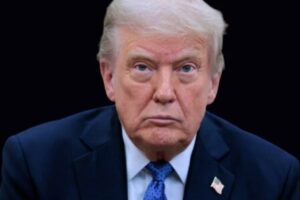

























Donald Trump created a stir during a recent appearance when he mistakenly referred to Michigan Governor Gretchen Whitmer as “Kristi — uh, Kristi Whitman. Whitmer,” apparently confusing her with South Dakota Governor Kristi Noem. The moment, which quickly circulated across social media, drew laughter from some in the crowd but also fueled criticism about the president’s rhetorical missteps and attention to detail when addressing key state leaders.
The mix-up comes at a politically sensitive time, as Trump seeks to reinforce his standing with voters in key swing states like Michigan while navigating a turbulent political climate. Critics were quick to seize on the blunder, framing it as another example of the president’s verbal gaffes, while supporters downplayed the moment as harmless and inconsequential.
Trump’s Reference and Immediate Reaction
Donald Trump’s reference occurred while he was addressing state leadership in the Midwest, using Whitmer as an example in his remarks on state-level economic policies. Mid-sentence, he appeared to conflate Whitmer with Noem and even slipped in “Whitman,” further compounding the confusion. The crowd responded with a mix of chuckles, murmurs, and applause as Trump corrected himself after a brief pause.
Observers noted that the president continued with his remarks without acknowledging the error directly, instead pivoting back to his broader point about state governance and economic resilience. Yet, the slip of the tongue became the highlight of the appearance, overshadowing the policy themes he sought to emphasize.
Whitmer’s Office Responds
Michigan Governor Gretchen Whitmer’s team responded with a measured statement, stressing the importance of focusing on substantive issues rather than verbal gaffes. A spokesperson emphasized that Michigan residents expect serious leadership, particularly on matters such as economic development, infrastructure, and healthcare.
While Whitmer herself did not publicly comment on the incident, her allies framed Trump’s misstep as reflective of a pattern. Democratic strategists argued that consistent name mix-ups suggest a lack of seriousness in addressing state leadership, while Republicans countered that Democrats were inflating a trivial moment to score political points.
Kristi Noem Drawn Into the Spotlight
South Dakota Governor Kristi Noem was also unintentionally pulled into the exchange, as her name surfaced as part of Trump’s confusion. Noem has previously been aligned with Trump on several policy fronts and has even been floated as a possible ally for higher national roles.
Political analysts noted that this instance inadvertently reminded voters of the complex alliances and rivalries among Republican leaders. While Noem did not publicly comment on the confusion, some within Republican circles suggested the moment may bolster her name recognition, even if through an unintended channel.
Critics Weigh in on Trump’s Communication Style
Critics of Donald Trump pointed to the mix-up as further evidence of his tendency toward improvisational and sometimes erratic public speaking. Media commentators dissected the slip in real-time, questioning whether such verbal mistakes weaken his presidential image.
Supporters, however, rallied around Trump, characterizing the gaffe as a harmless human error. They argued that the president’s authenticity and unscripted style are what resonate most with his voter base, even if occasional mistakes draw unwanted headlines.
Social Media Reaction Amplifies the Moment
Within hours, clips of Trump’s remarks spread rapidly across social media platforms, where hashtags like #KristiWhitmer and #NameMixUp began trending. Memes, jokes, and satirical commentary flooded X (formerly Twitter), TikTok, and Facebook, keeping the story alive well beyond the original event.
While critics amplified the incident to question Trump’s preparedness, his supporters used the viral moment to mock media outlets for obsessing over what they saw as trivial distractions. The polarized online reaction mirrored the broader national divide in perceptions of Trump’s leadership.
Political Stakes in Michigan
The blunder carried particular weight because of Michigan’s pivotal role in national elections. As one of the most closely watched swing states, Trump’s interactions with Michigan leaders, especially Governor Whitmer, carry symbolic importance. Analysts suggested that any perceived slight or misstep in addressing the state’s leadership could have ripple effects in voter sentiment.
At the same time, Trump’s base remains firmly loyal in Michigan’s rural and conservative pockets, where such gaffes are unlikely to dampen enthusiasm. However, in urban and suburban centers, critics argue that moments like this may reinforce doubts about his seriousness as he campaigns for re-election.
A Familiar Pattern in Presidential Speeches
This was not the first time Donald Trump has mixed up names or titles in public speeches. Over the years, he has occasionally stumbled over names of political opponents, foreign leaders, or even members of his own administration. These moments have often been seized upon by his critics but largely shrugged off by his supporters.
Political observers suggest that Trump’s off-the-cuff speaking style is both his greatest strength and his most frequent liability. While it creates an aura of authenticity and relatability, it also leaves him vulnerable to high-profile mistakes that can overshadow substantive messages.
Looking Ahead
As Trump continues his second term and intensifies his political campaigning, the Whitmer-Noem mix-up serves as another reminder of the scrutiny placed on every word he utters. For opponents, it reinforces a narrative of carelessness; for supporters, it is yet another inconsequential slip magnified by political bias.
Ultimately, whether the incident resonates with voters remains to be seen. What is clear is that, in the current political climate, even the smallest verbal slip can become a national headline and a flashpoint in America’s ongoing political debates.
[…] […]