




























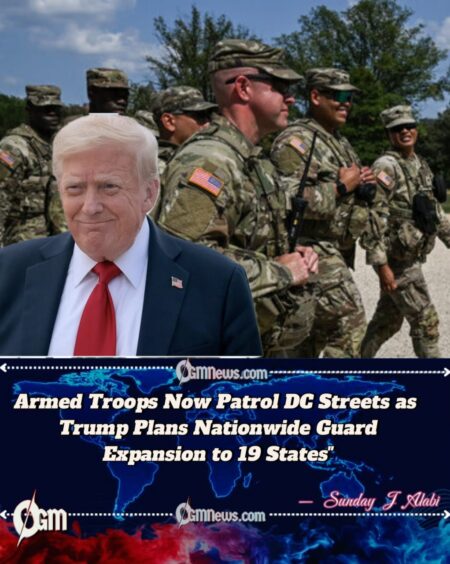
President Donald Trump’s unprecedented decision to deploy National Guard troops to Democratic-controlled cities has ignited a fierce constitutional battle, with Illinois Governor JB Pritzker denouncing the move as an “abuse of power” and local officials across the nation pushing back against what they characterize as federal overreach. The controversial deployment, which began in Washington DC and is set to expand to Chicago and New York, has drawn sharp criticism from Democratic leaders who question both the necessity and legality of the military intervention in civilian law enforcement.
Illinois Governor Condemns Federal Military Intervention
Governor JB Pritzker issued a scathing statement Friday condemning President Trump’s plan to deploy National Guard troops to Chicago, declaring there is no emergency that justifies such federal military intervention in Illinois. The Democratic governor accused Trump of “attempting to manufacture a crisis” where none exists, positioning the deployment as politically motivated rather than operationally necessary. Pritzker’s forceful rebuke reflects the growing tension between Democratic state leaders and the Trump administration over the scope of federal authority in local law enforcement matters.
The governor’s criticism extends beyond mere political disagreement, touching on fundamental constitutional principles regarding the separation of powers and federal-state relationships. Pritzker’s characterization of the deployment as manufactured crisis suggests that Democratic leaders view Trump’s actions as an attempt to justify expanded executive power rather than address legitimate public safety concerns. This constitutional standoff threatens to escalate into a broader legal battle over the limits of presidential authority in deploying military forces domestically.
Chicago Mayor Expresses “Grave Concerns” Over Troop Deployment
Chicago Mayor Brandon Johnson revealed that his administration has received no official communication regarding the proposed National Guard deployment, despite President Trump’s public announcements about sending troops to the city. Johnson characterized the president’s approach as “uncoordinated, uncalled for, and unsound,” highlighting what he sees as a fundamental breakdown in federal-local coordination protocols. The mayor’s statement underscores the chaotic nature of the deployment strategy, with local officials learning about military operations in their jurisdictions through media reports rather than official channels.
Johnson expressed particular concern about the potential impact on community relations, warning that the “unlawful deployment” could “inflame tensions between residents and law enforcement” and undermine recent progress in crime reduction. The mayor’s emphasis on the word “unlawful” suggests that Chicago is prepared to challenge the deployment in federal court if necessary. His administration’s focus on community relations reflects broader Democratic concerns that military deployments could exacerbate existing tensions between law enforcement and minority communities in urban areas.
Washington DC Troops Now Armed as Mission Escalates
Defense Secretary Pete Hegseth authorized National Guard personnel patrolling Washington DC streets to carry weapons, marking a significant escalation in the military deployment that initially promised unarmed troops. The Pentagon’s reversal on the weapons policy comes just one week after military officials explicitly stated that the approximately 2,000 deployed troops would not be armed during their operations. This dramatic policy shift raises questions about the evolving nature of the mission and suggests that the Trump administration may be preparing for more confrontational scenarios.
The decision to arm the troops represents a fundamental change in the character of the deployment, potentially blurring the lines between military support roles and active law enforcement participation. While Pentagon officials maintain that armed troops will operate “consistent with their mission and training,” the practical implications of armed military personnel on American streets remain unclear. The policy reversal also highlights the administration’s willingness to adjust military deployments based on political considerations rather than operational assessments from military commanders.
Local Opposition Mounts Against Federal Takeover
Washington Mayor Muriel Bowser has remained notably silent on the decision to arm National Guard troops, even as polling data reveals overwhelming opposition to the military deployment among city residents. A Washington Post-Schar School poll found that nearly 80% of DC residents oppose both the National Guard deployment and federal takeover of local police departments. This stark opposition reflects broader concerns about federal overreach and the militarization of civilian law enforcement in the nation’s capital.
The polling data suggests that Trump’s characterization of the deployment as bringing “total safety” to Washington contradicts the lived experience and preferences of actual residents. Local officials have disputed the necessity of federal intervention, with Mayor Bowser pointing to crime statistics showing a “30-year violent crime low” in the city. This disconnect between federal justifications and local reality has become a central point of contention in the broader debate over the deployment’s legitimacy and effectiveness.
Expansion Plans Include 19 States and $2 Billion Request
President Trump announced plans to mobilize up to 1,700 National Guardsmen across 19 states in the coming weeks, with Texas expected to receive the largest contingent of troops. The expanded deployment will reportedly focus on supporting Immigration and Customs Enforcement operations while serving as a “visible deterrent” to criminal activity. This nationwide expansion represents a significant escalation of federal military involvement in domestic law enforcement, far beyond the initial Washington DC deployment.
The president also revealed plans to request $2 billion from Congress to “beautify” Washington DC, even as the Republican-controlled legislature recently cut the city’s budget by $1.1 billion. This financial contradiction highlights the complex relationship between federal funding priorities and local governance needs. Trump’s consideration of declaring a national emergency to extend troop deployments beyond their initial 30-day authorization suggests that the military presence could become a permanent feature of his administration’s domestic policy approach.
Legal and Political Implications of Military Deployment
Attorney General Pam Bondi reported more than 700 arrests since the operation began, including the seizure of 91 illegal firearms, as the administration seeks to justify the deployment through enforcement statistics. However, critics question whether these results justify the unprecedented use of military force in civilian law enforcement contexts. The legal precedent being set by the deployment raises fundamental questions about the balance between federal authority and local governance in the American constitutional system.
The deployment has created a constitutional test case that may ultimately require Supreme Court intervention to resolve questions about presidential power and federal-state relationships. Several Republican-led states, including South Carolina and West Virginia, have contributed forces to support the operation, creating a partisan divide that reflects broader political tensions over law enforcement and federal authority. The ultimate legal and political consequences of this deployment may reshape American federalism for years to come, regardless of its immediate impact on crime statistics or public safety outcomes
Ae888covenuscasino, okay, I'm curious. Gonna check out this site and try to find some amazing...