




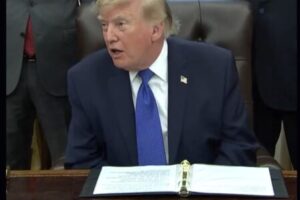



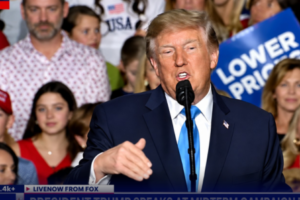

















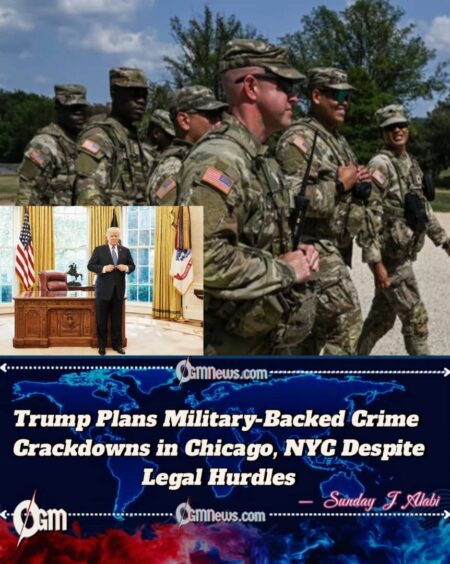
President Trump on Friday outlined plans to extend his administration’s crime-fighting initiative to major American cities, specifically targeting Chicago as the next location for federal intervention following the ongoing operation in Washington, D.C. The announcement, made during a FIFA World Cup event at the White House, signals a significant expansion of federal involvement in local law enforcement matters.
The president Trump’s remarks represent his most explicit commitment yet to deploy federal resources in cities beyond his direct constitutional authority in the nation’s capital. President Trump indicated that New York City would follow Chicago in receiving federal attention, while also mentioning potential intervention in San Francisco and other urban centers experiencing elevated crime rates.
President Trump Military Deployment Considerations and Escalation Threats
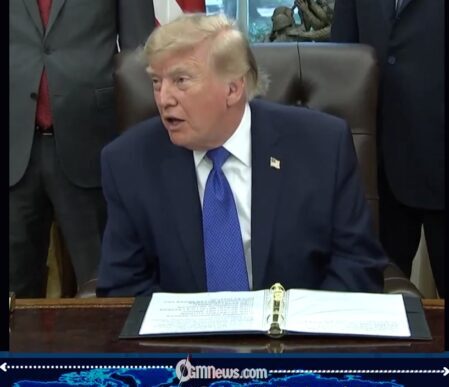
During his Oval Office remarks, President Trump revealed his willingness to deploy “regular military” forces in Washington, D.C., beyond the National Guard units currently supporting local police operations. This potential escalation would mark a significant expansion of military involvement in domestic law enforcement activities within the United States.
“I really am honored that the National Guard has done such an incredible job working with the police,” Trump told reporters. “And we haven’t had to bring in the regular military, which we’re willing to do if we have to.” The president emphasized that after completing the Washington operation, federal forces would move to other locations to ensure public safety.
The mention of regular military deployment raises important questions about the extent of federal authority in civilian law enforcement. The Posse Comitatus Act traditionally limits military participation in domestic policing activities, except under specific legal circumstances that require express authorization.
Chicago Targeted as Primary Focus for Next Federal Intervention
President Trump directed sharp criticism toward Chicago’s leadership while announcing the city as his next target for federal crime intervention. He characterized Chicago Mayor Brandon Johnson as “incompetent” and “grossly incompetent,” suggesting that federal oversight would be necessary to address the city’s public safety challenges.
“Chicago’s a mess,” Trump stated during the announcement. “You have an incompetent mayor, grossly incompetent. And we’ll straighten that one out probably next, that’ll be our next one after this.” The president claimed widespread support from Chicago residents, particularly within African American communities, for federal intervention in local crime prevention efforts.
Trump asserted that Chicago citizens are actively requesting federal assistance, citing what he described as overwhelming community support. “They’re wearing red hats… African American ladies, beautiful ladies, are saying, ‘Please, President Trump, come to Chicago. Please,'” the president claimed, referencing his electoral performance among Black voters as evidence of community backing for his proposed intervention.
New York City and Additional Urban Centers Under Consideration
Following the planned Chicago operation, President Trump identified New York City as another major metropolitan area requiring federal attention for crime reduction efforts. The announcement suggests a systematic approach to addressing urban crime through direct federal involvement in traditionally local law enforcement matters.
“I think Chicago will be our next, and then we’ll help with New York,” Trump explained, outlining a sequential deployment strategy for federal resources. The president indicated that his administration views urban crime as a national issue requiring federal coordination and intervention beyond traditional state and local jurisdictions.
The inclusion of New York City in Trump’s crime-fighting agenda reflects his administration’s broad interpretation of federal authority in addressing public safety concerns. Additionally, the president mentioned San Francisco among other cities under consideration for future federal intervention, suggesting a nationwide scope for the proposed anti-crime initiative.
Legal and Constitutional Challenges to Federal Authority
The president’s announced plans face significant legal and constitutional obstacles, particularly regarding federal authority over local law enforcement outside of Washington, D.C. Unlike the nation’s capital, where federal government maintains unique jurisdictional powers, other American cities operate under state and local control with limited federal oversight authority.
State National Guard units remain under gubernatorial control rather than direct presidential command, creating potential conflicts over deployment authorization. President Trump lacks the constitutional power to assume temporary control of municipal police departments outside the District of Columbia, making implementation of his proposed interventions legally complex.
Illinois, New York, and California all maintain Democratic governors and mayors who would likely resist Trump’s intervention plans. These political dynamics create additional barriers to federal involvement in local law enforcement activities, potentially setting up confrontations between federal and state authorities over jurisdictional boundaries and constitutional limits.
Political Implications and Community Response Claims
President Trump’s crime intervention announcement carries significant political implications for federal-state relationships and executive power interpretation. The timing of the announcement during a FIFA World Cup event demonstrates the administration’s confidence in public support for expanded federal law enforcement involvement.
The president’s claims of community support, particularly among African American voters in Chicago, represent a key component of his political justification for federal intervention. Trump referenced his electoral performance among Black voters as evidence of community desire for federal assistance in addressing urban crime challenges.
However, the accuracy of these community support claims remains unverified, and local political leaders in targeted cities have not publicly endorsed federal intervention. The disconnect between Trump’s assertions of popular support and the apparent reluctance of local officials suggests potential political conflicts ahead as the administration moves forward with its crime-fighting agenda.
Implementation Timeline and Operational Questions
While President Trump provided a general sequence for federal crime interventions, specific timelines and operational details remain unclear. The administration has not released detailed plans for how federal forces would coordinate with or potentially override local law enforcement agencies in cities outside Washington, D.C.
The success of the current Washington operation appears to be a prerequisite for expanding to other cities, according to Trump’s remarks. “When we’re ready we’ll go in and we’ll straighten out Chicago, just like we did D.C.,” the president stated, suggesting that demonstrated effectiveness in the nation’s capital would justify similar interventions elsewhere.
Questions remain about funding sources, personnel allocation, and legal mechanisms for implementing federal crime interventions in cities with resistant local leadership. The administration will need to address these operational challenges while navigating constitutional constraints on federal authority over local law enforcement matters.
Ae888covenuscasino, okay, I'm curious. Gonna check out this site and try to find some amazing...