




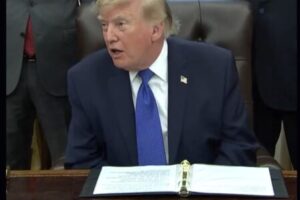



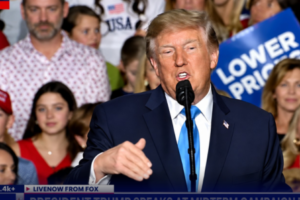


















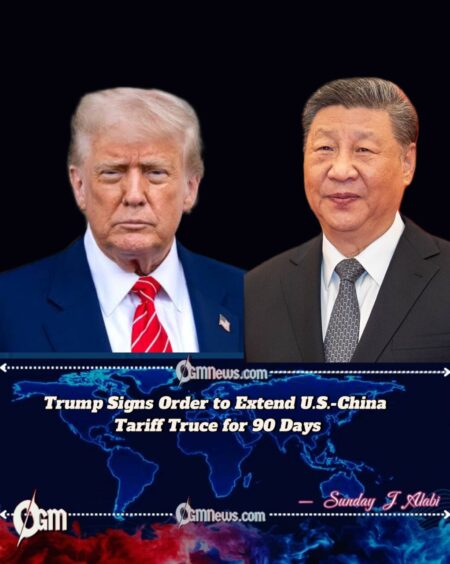
President Trump on Monday signed an executive order delaying a sharp increase in tariffs on Chinese goods for at least 90 days, extending a fragile ceasefire in the ongoing U.S.-China trade war. The order keeps tariffs at 30%—a rate established in mid-May—avoiding a jump to levels as high as 80% that had been expected without the extension.
The move, announced by the White House, preserves the current arrangement under which the U.S. imposes a “reciprocal” 10% tariff, plus an additional 20% levy linked to fentanyl trafficking concerns. In response, China has maintained a 10% tariff on American goods.
President Trump says Negotiations Showing ‘Positive Direction’
President Trump said the extension follows “multiple rounds of productive negotiations” aimed at resolving disputes over trade reciprocity and national security. Commerce Secretary Howard Lutnick noted last week that both sides were “likely” to agree to the 90-day pause, with talks continuing toward a longer-term settlement.
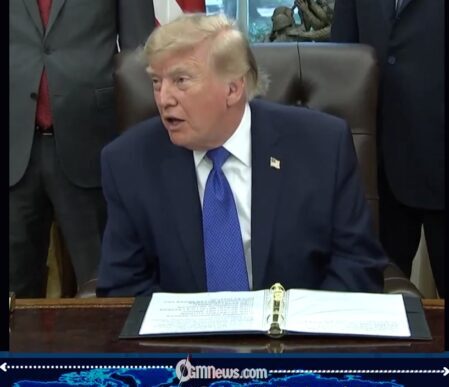
President Trump told reporters Monday that discussions were going “quite nicely,” following late-July meetings in Stockholm between senior U.S. and Chinese representatives. U.S. Trade Representative Jamieson Greer has expressed optimism, saying earlier this month, “I don’t think anyone wants to see” tariffs return to the punitive highs reached earlier this year.
Avoiding a Return to Trade Disruption
Without the extension, tariffs could have reverted to levels that risked severe trade disruption. In mid-April, U.S. tariffs on Chinese goods reached 145% and Chinese tariffs on U.S. goods climbed to 125%, stifling bilateral trade and prompting emergency supply chain planning in Washington.
China remains the United States’ third-largest trading partner after Mexico and Canada. Last year, the U.S. imported $438.9 billion worth of Chinese goods, while exporting $143.5 billion to China, according to U.S. government data.
From Trade War Escalation With China to Tariff Freeze
President Trump first imposed a 34% tariff on Chinese goods in April as part of a broader strategy to target what he calls “unfair trade practices” by dozens of countries. While most nations saw reductions or suspensions of these tariffs within weeks, China remained a focal point of the administration’s policy, leading to months of tit-for-tat escalation.
In May, both sides agreed to scale back duties—30% for U.S. tariffs on Chinese goods and 10% for Chinese tariffs on U.S. goods—for an initial 90-day period. The new order extends that arrangement into November, creating a fresh window for negotiations.
Persistent Points of Tension
Despite the truce, the U.S. and China continue to clash over key trade and security issues. Earlier this year, disputes arose over Beijing’s restrictions on rare earth mineral exports, Washington’s limits on advanced semiconductor sales, and tighter rules on Chinese students in the U.S.
President Trump has also accused Beijing of failing to fully honor the May agreement, though both governments reached a partial resolution in June. Over the weekend, he publicly urged China to quadruple its imports of American soybeans—a demand that could feature prominently in upcoming talks.
Economic Stakes and Political Calculations
Supporters of the tariff strategy argue that it strengthens U.S. manufacturing, pressures China to reform its trade practices, and protects national security. Critics warn that sustained tariffs risk raising consumer prices and slowing economic growth, particularly if the truce collapses.
The new 90-day extension buys negotiators time but does not guarantee a final deal. As President Trump enters the heart of his second term, the outcome of these talks could shape both the U.S. economy and his political legacy.
–
Casinoabc999? Good Site. The interface is sleek, and there is a lot of stuff to...