








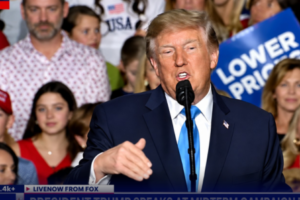




















President Donald Trump had called for a sweeping 40% reduction in the NIH’s budget, arguing that the agency was bloated and inefficient, and that taxpayer dollars could be better spent elsewhere — particularly on tax relief for high earners and national security expansion.
But the Senate Appropriations Committee flatly disagreed. In a 26-3 bipartisan vote, lawmakers moved to increase NIH funding, not reduce it. Senators from both parties emphasized the crucial role the NIH plays in driving research, innovation, and medical breakthroughs that directly save American lives.
Donald Trump’s Proposed Restructuring Branded ‘Absurd’
President Donald Trump didn’t stop at budget cuts — his administration also proposed a dramatic restructuring of the NIH by consolidating its 27 specialized institutes into just eight broader entities. The stated goal: streamlining operations.
However, committee members blasted the move as “absurd,” warning it would dismantle decades of focused research and cripple disease-specific studies. Senator Patty Murray was especially vocal, declaring, “To the scientists wondering if there will even be an NIH by the end of this administration: this committee’s resounding message is yes.”
Donald Trump’s Opposition Spurs Advocacy Surge Nationwide
President Donald Trump’s proposed cuts galvanized a nationwide wave of advocacy from patients, scientists, universities, and nonprofit organizations. In response to what many viewed as a war on science, thousands of letters, testimonies, and expert warnings were submitted to Congress.
That groundswell of opposition became a turning point. Senators, even those aligned with Trump on other issues, cited the voices of constituents and experts as decisive in their choice to protect the NIH from political interference.
Trump Allies Break Ranks in Rare Bipartisan Stand
In a notable political twist, even some of President Donald Trump’s staunchest Senate allies, including Mitch McConnell and Lindsey Graham, voted in favor of the NIH budget increase. Their decision represented a clear departure from White House directives.
This rare bipartisan consensus stunned many observers. It reflected a deep understanding across party lines that medical research transcends ideology and that the NIH remains an institution vital to American wellbeing and global health leadership.
Donald Trump’s Tax Priorities Clashed with Public Health Needs
President Trump argued that the proposed $18 billion cut would help offset expanded tax cuts and deficit reduction. His administration framed the NIH as one of several “nonessential” agencies ripe for fiscal trimming.
Yet senators on both sides of the aisle pushed back, insisting that the long-term economic benefits of biomedical research — from job creation to healthcare savings — far outweigh the short-term budgetary relief Trump sought. “This wasn’t about fiscal prudence,” said a senior committee aide, “It was about misplaced priorities.”
Trump-Era Budget Faces Fierce Resistance from Science Advocates
By targeting the NIH, President Trump inadvertently ignited a political coalition he hadn’t anticipated: scientists, healthcare advocates, and rare disease organizations stood united in opposition. Their collective voice framed the debate around the real-world consequences of research cutbacks — cancer patients without trials, stalled Alzheimer’s therapies, and halted vaccine development.
Senator Tammy Baldwin, responding to the chorus of concerns, emphasized, “This committee heard loud and clear from families, patients, and researchers. We are not going to abandon the fight for cures just because the president wants a lower budget.”
Trump’s Defeat Translates to Strategic Funding Increases
Though President Trump’s budget tried to pull the rug from under scientific progress, the final committee bill does the opposite: it adds $150 million for cancer research, $100 million for Alzheimer’s studies, and $30 million for women’s health research.
These increases represent more than just line items — they reflect national health priorities that Congress has embraced, in direct contrast to Trump’s cost-cutting instincts. For the millions affected by these diseases, this funding may prove lifesaving.
Trump’s Influence Questioned After Committee Pushback
The Senate’s rejection of President Trump’s NIH agenda raises broader questions about the limits of his influence over the legislative branch, especially when core institutions are at stake. While the president continues to hold significant sway within his party, this episode shows that public health is one area where bipartisan resistance can and will emerge.
Analysts suggest this could signal a shift in how Congress navigates Trump’s second-term proposals — no longer rubber-stamping the White House, but selectively pushing back when broader public interest demands it.
Trump Administration Now Faces Uphill Battle in Budget Negotiations
The resounding committee vote sets up a contentious battle over the 2026 federal budget. President Trump has not indicated whether he will attempt a line-item veto or continue pursuing NIH cuts through executive channels.
However, with Congress firmly entrenched in support of the NIH, any attempt to revive the funding slash may be politically futile. As Senator Murray summarized: “This isn’t just about rejecting cuts. It’s about reaffirming that America will lead the fight against disease — with or without the president’s blessing.”

Ae888covenuscasino, okay, I'm curious. Gonna check out this site and try to find some amazing...