



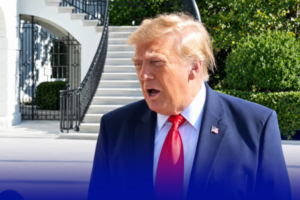













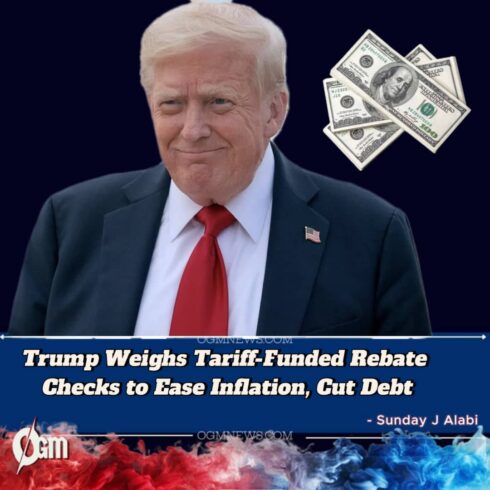
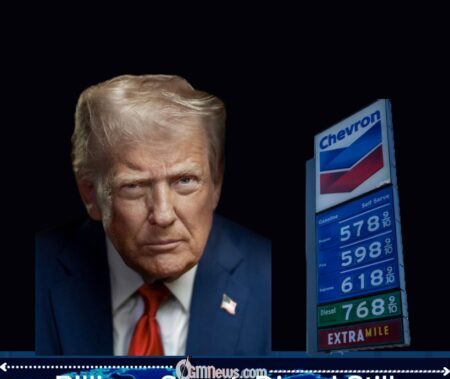
President Donald Trump on Friday revealed his administration is weighing a plan to issue rebate checks to Americans using the billions collected from his newly imposed tariffs. Speaking to reporters before departing for a four-day visit to Scotland, Trump said, “We’re thinking about a little rebate… But the big thing we want to do is pay down debt.”
The proposed rebate would mark a significant shift in how the federal government utilizes trade-related revenue. The president clarified that the rebate may be income-targeted, saying it could go to “people of a certain income level,” though he didn’t specify an exact threshold.
Tariffs Deliver Windfall—but at a Cost
The U.S. Treasury has already collected an estimated $100 billion in new tariff revenue this year, a figure that could rise to $300 billion annually, according to Treasury Secretary Scott Bessent. These tariffs—imposed primarily on Chinese, Mexican, and European imports—are officially paid by U.S. importers, such as retailers like Walmart and manufacturers like Ford.
While some companies have absorbed the additional cost, recent inflation data suggests that higher import duties may be seeping into consumer prices. This raises concerns about the real burden of tariffs on ordinary Americans, even as they become a key funding source for Trump’s fiscal plans.
Federal Debt Tops $36 Trillion Amid New Spending
Despite the potential rebate, Trump reiterated his administration’s top fiscal priority: reducing the national debt. However, that goal is increasingly at odds with recent legislative developments. On July 4, Trump signed into law the One Big Beautiful Bill Act, a sweeping tax and spending package that economists say could raise the national deficit by $3.4 trillion over the next decade.
Current federal debt has already exceeded $36 trillion, and projections from the nonpartisan Congressional Budget Office and the Joint Committee on Taxation point to even steeper climbs unless offsetting measures are taken. Trump acknowledged the contradiction, stating, “We want to help the people, but we also want to be responsible.”
Rebates Would Require Congressional Action
While the rebate idea is gaining attention, implementing it would require legislation. Typically, rebate checks are issued through the tax code and must be authorized by Congress. The recently enacted tax law includes several new deductions—like a $6,000 senior deduction that phases out at higher incomes—but does not contain language for direct rebate checks.
Any new rebate program would likely need bipartisan support, a challenging prospect in an increasingly polarized Congress. Nonetheless, the precedent exists: Americans received three rounds of rebate checks during the COVID-19 pandemic, two under Trump’s first term and one during the Biden administration.
Trump Leans on DOGE Savings and Musk’s Influence
This isn’t the first time Trump has floated the idea of giving money back to taxpayers. In February, the president proposed using 20% of the savings from Elon Musk’s Department of Government Efficiency (DOGE) task force to fund “Doge Dividend” checks. Though the idea was met with skepticism, it underscored the administration’s interest in pairing tech-sector cost-cutting with populist fiscal policy.
Musk’s influence in the Trump administration remains considerable, especially as DOGE continues its audits of federal departments to trim wasteful spending. Should DOGE’s cost-saving measures deliver significant results, the administration could have another funding stream to support its rebate ambitions.
Economic Impact and Political Strategy
Economists are divided on the economic impact of such rebates. Supporters argue they would offer timely relief to working-class Americans facing inflation pressures, while critics warn that injecting more cash into the economy could further drive up prices. Either way, the move appears to be a strategic political maneuver ahead of the 2026 midterm elections.
By linking the rebate to tariff revenue—rather than deficit spending—Trump seeks to frame the payments as fiscally responsible. “We’re not printing money, we’re collecting it—from tariffs—and giving it back,” the president said, reinforcing his economic nationalist message.
Public Reaction and Next Steps
Public reaction to the proposed rebate checks is mixed. Some Americans view it as a welcome reprieve amid rising living costs, while others are skeptical of the long-term benefits. Analysts say much will depend on how Congress responds and whether any rebate legislation gains traction in the coming months.
As President Trump continues his trip to Scotland, his remarks are expected to spark debate both at home and abroad, signaling that tariff policy may soon be linked more directly to Americans’ wallets. Whether rebate checks become a reality or remain a campaign talking point, the discussion reveals the administration’s evolving approach to balancing populist promises with mounting fiscal challenges.
Downloading the utbetapp was a breeze! The app itself is very intuitive and makes placing...