















President Donald Trump on Tuesday unveiled two new trade agreements with the Philippines and Indonesia, signaling a significant recalibration of the United States’ economic partnerships in Southeast Asia. In back-to-back announcements following White House meetings, Trump confirmed that both countries will face a 19% tariff on goods entering the U.S., while American exports will enjoy sweeping tariff reductions or exemptions.
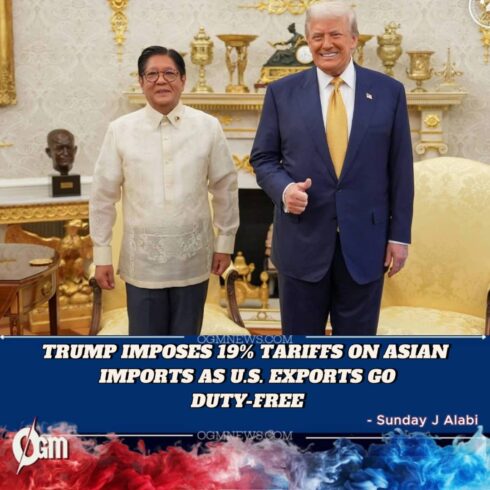
The first announcement came after President Trump hosted Philippine President Ferdinand “Bongbong” Marcos Jr. in the Oval Office for a trade-focused discussion. Shortly after, a joint U.S.–Indonesia statement detailed similar arrangements reached with Jakarta. Trump described both deals as “historic” and framed them as victories for American industry, farmers, and military cooperation.
Philippines Agrees to Open Market, U.S. Sets 19% Tariff
According to President Trump, the United States and the Philippines concluded a trade deal that sets a 19% tariff rate on all Philippine goods imported into the U.S., just below the 20% initially proposed by the administration. In return, the Philippines has agreed to eliminate all tariffs on U.S. imports, opening its market fully to American goods.
“It was a beautiful visit, and we concluded our Trade Deal, whereby The Philippines is going OPEN MARKET with the United States, and ZERO Tariffs,” Trump wrote on Truth Social. “The Philippines will pay a 19% Tariff… We will work together Militarily.”
While the U.S. side has fully embraced the deal, the Philippine government has yet to officially confirm the agreement or release its own statement regarding implementation or timeline. Still, Trump praised Marcos as “a very good, and tough, negotiator” and emphasized mutual military cooperation as part of the broader framework.
Indonesia Eliminates 99% of Tariff Barriers on U.S. Products
Later in the day, President Trump’s administration released details of a second trade pact—this time with Indonesia. Under the agreement, Indonesian goods entering the U.S. will also face a 19% tariff rate, while Indonesia will eliminate 99% of its tariff barriers on American products, including industrial equipment, technology, and agricultural exports.
“This is a win for American manufacturing, a win for American agriculture, and a win for fairness,” Trump stated on Truth Social. “The United States of America will now sell American-made products to Indonesia at a Tariff Rate of ZERO, while Indonesia will pay 19% on all of their products coming into the U.S.A.—The Best Market in the World!”
According to senior administration officials, the deal also includes a clause where goods “transshipped or containing content from certain countries” through Indonesia will be subject to a significantly higher 40% tariff. This is widely seen as a measure aimed at curbing indirect trade routes involving nations such as China.
New Rules on Pharmaceuticals, Critical Minerals
The U.S.–Indonesia agreement goes beyond tariffs. As part of the trade package, Indonesia will remove export restrictions on critical minerals—resources vital to U.S. electric vehicle and defense industries. Additionally, Jakarta has agreed to accept U.S. Food and Drug Administration (FDA) certificates and prior marketing authorizations for American-made medical devices and pharmaceuticals.
“This cuts red tape for American biotech and healthcare exporters,” said a senior U.S. trade official on a conference call. “It allows U.S. products to reach Indonesian consumers faster, safer, and more competitively.”
Both agreements were positioned by the Trump administration as part of a broader economic and strategic realignment in Asia, where the U.S. seeks to counter growing Chinese influence while boosting American industrial exports.
Trump’s Trade Doctrine: Reciprocity and Leverage
President Trump’s recent spate of trade announcements follows a consistent strategy that prioritizes tariff reciprocity and U.S. manufacturing interests. These deals come just weeks after Trump announced a major trade agreement with Japan, setting a 15% tariff and securing expanded market access for American companies.
The 19% tariff with the Philippines and Indonesia continues that trend—higher than the 17% “reciprocal tariff” proposed in April but slightly lower than the punitive 20% threatened for non-compliant countries.
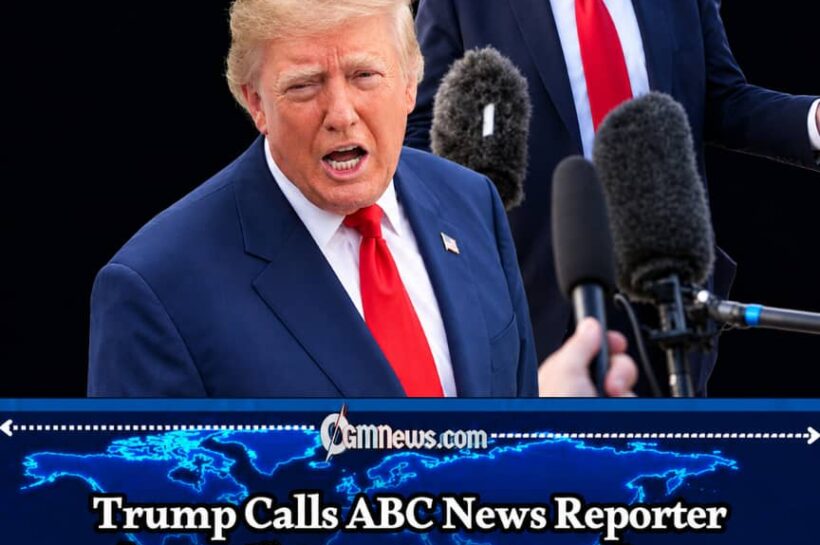
“Aug. 1 is our deadline. Countries either make fair deals or face higher tariffs,” Trump said during Tuesday’s meetings. “We’re bringing jobs and money back into America, and making sure our partners play by the same rules.”
Mixed Global Reaction as Southeast Asia Evaluates Next Steps
While Washington has framed the deals as mutually beneficial, reactions from Southeast Asia have been cautious. The Philippine government has not confirmed its end of the deal, and trade analysts in Manila are awaiting more clarity on implementation, enforcement mechanisms, and potential domestic impact on local industries.
Indonesia, for its part, has issued a joint statement but has yet to comment in detail on the mineral export changes or pharmaceutical regulation shifts.
Meanwhile, business leaders in the U.S. have largely welcomed the agreements, especially those in agriculture, tech, and heavy industry, who stand to benefit from improved market access and reduced regulatory friction abroad.
High Stakes, High Tariffs, High Hopes
With the Aug. 1 deadline looming for countries to secure trade terms with the United States or face steeper penalties, President Trump has now struck three major deals in under a month—Japan, the Philippines, and Indonesia. Each of them carries the hallmark of his administration’s trade approach: steep tariffs on imports, open markets for U.S. goods, and tighter strategic alignment.
While the true economic impact of these deals will become clearer over time, Tuesday’s announcements reinforce Trump’s aggressive posture in reshaping U.S. global trade—and his determination to place “America First” in the global marketplace

The registration process was so simple and I started playing within minutes. Promotions come in...