

























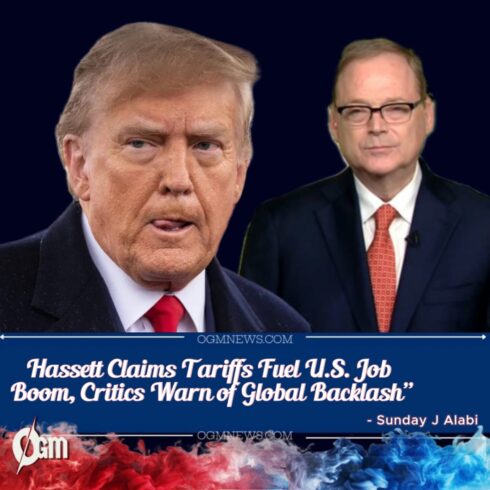
Trump’s Tariff Ultimatum: Trade Partners Face August 1 Deadline or Face Economic Punishment”
With the clock ticking toward a pivotal tariff deadline this week, White House National Economic Council Director Kevin Hassett said on Sunday that the “rough outlines of the deals are becoming clear,” signaling potential breakthroughs in high-stakes global trade negotiations. Speaking on CBS’s “Face the Nation,” Hassett highlighted recent agreements with countries such as the United Kingdom and Vietnam as templates for what may unfold with other trading partners.
Kevin Hassett noted that “there’s going to be quite a bit of news this week,” hinting at finalized deals that could shape the direction of U.S. trade policy under President Trump’s administration. The anticipated developments come as the president’s 90-day freeze on sweeping new tariffs is set to expire on Wednesday, heightening the urgency for both the White House and its international counterparts to reach agreements.
Tariff Pause Nears Expiration Amid Investor Anxiety
President Trump’s tariff strategy has been closely watched since he unveiled a 10% baseline tariff on virtually all U.S. trading partners on April 2, while simultaneously hiking levies on numerous countries. The decision sent shockwaves through global markets, with investors expressing unease over the potential economic fallout. In response, Mr. Trump initiated a 90-day pause on the broader tariffs, temporarily stabilizing markets but leaving uncertainty in its wake.
As the pause nears its expiration, tariffs on Chinese imports remain elevated at 30%, intensifying pressure on Beijing to strike a lasting deal. While the administration has secured agreements with select nations, several crucial deals remain unresolved, prompting concern among businesses and foreign governments that new tariffs could be enforced if negotiations falter.
U.S. Prepares to Notify Countries of Impending Tariffs
Kevin Hassett revealed that U.S. Trade Representative Jamieson Greer has been working intensively on multiple negotiations, while also drafting formal notices to countries where talks have not yet advanced sufficiently. President Trump confirmed on Friday that these letters—essentially tariff warnings—will begin going out on Monday to roughly a dozen nations, although the White House has not disclosed which countries will receive them.
Kevin Hassett described the strategy as flexible, leaving room for last-minute agreements. “Until we see everything that plays out, we need to just hold our fire and watch for the news this week,” he explained. He also suggested that the administration remains open to extending the tariff pause for key allies if significant progress is made, but emphasized that the ultimate decision rests with the president.
Trump Signals Potential Start Date for Tariffs as Bessent Weighs In
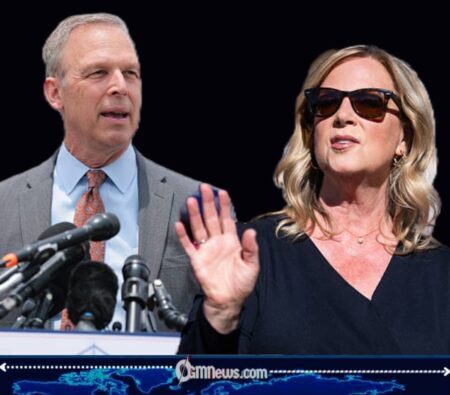
Speaking to reporters on Friday, President Trump indicated that if no meaningful progress is achieved, the administration could begin imposing tariffs on August 1. Treasury Secretary Scott Bessent, appearing on CNN’s “State of the Union,” reinforced this stance, stating that the letters being sent serve as formal reminders that without concrete movement, countries risk reverting to the higher tariff levels established on April 2.
Bessent clarified that this is not an extension of the previous deadline but rather a fixed marker for when the U.S. will proceed with its trade enforcement. “If you don’t move things along, then, on Aug. 1, you will boomerang back to your April 2 tariff level,” he said, underscoring the administration’s determination to use tariffs as leverage in its global economic strategy.
Kevin Hassett Defends Tariff Approach as Catalyst for U.S. Job Growth
Defending the administration’s hardline approach, Kevin Hassett argued that the threat of tariffs has already begun to yield economic benefits for the United States. According to him, companies worldwide are accelerating plans to shift production and investments into the U.S., creating new jobs and boosting domestic manufacturing.
“I think there’s a race right now to get activity into the U.S., and in part, that race has been kicked off by President Trump,” Kevin Hassett asserted. He framed the tariff strategy as a key driver of American economic resurgence, despite concerns from economists and trade partners over the potential for escalating trade wars and inflationary pressures. As the deadline looms, the world watches closely to see whether diplomacy or confrontation will define the next chapter in global trade.
The weekly tournaments here keep me coming back because the prize pools are surprisingly generous....