














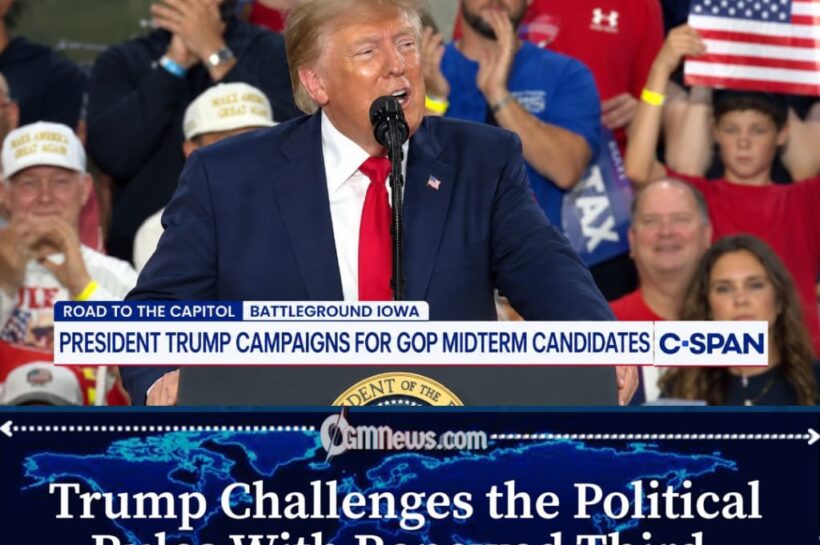











The U.S. House of Representatives moved one step closer to passing President Trump’s highly anticipated “big, beautiful bill” early Thursday morning, advancing the legislation after a tense overnight vote marked by last-minute lobbying and internal Republican divisions.
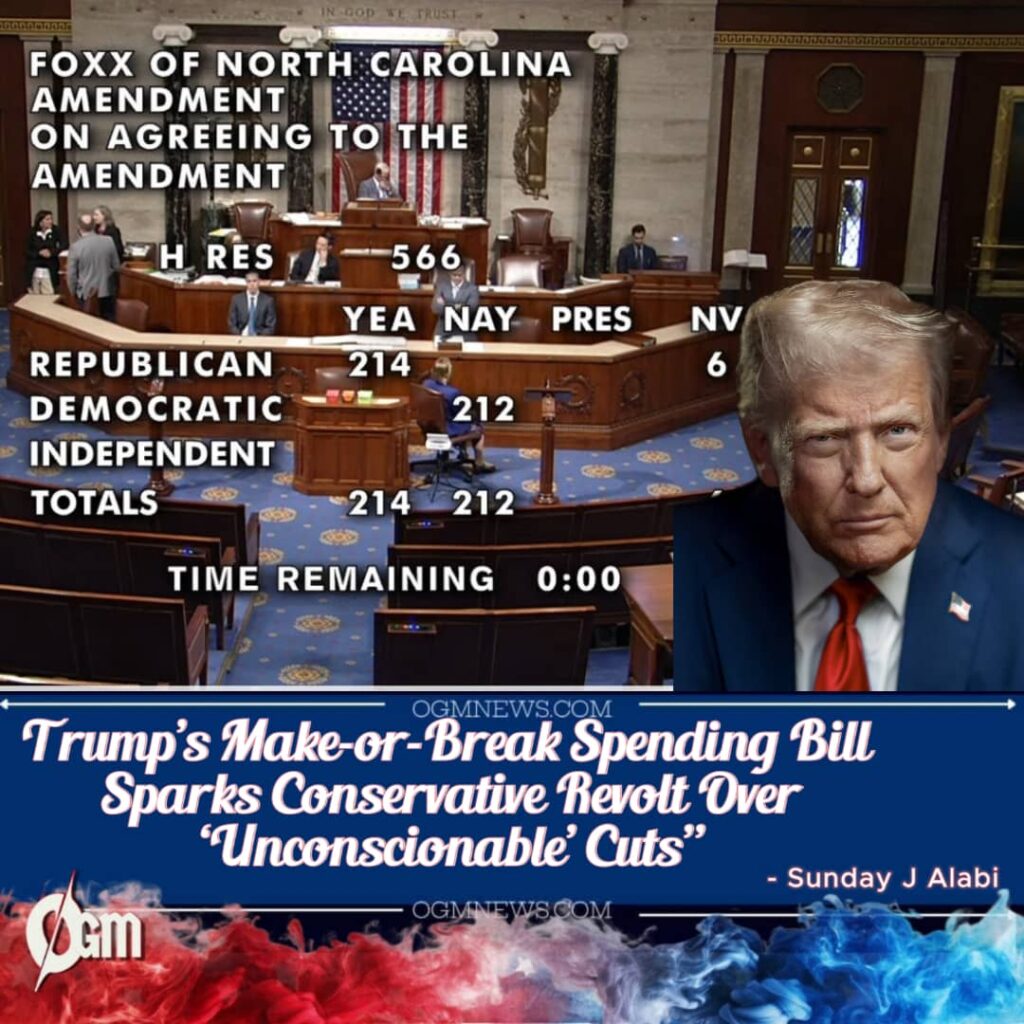
The key procedural vote, which began late Wednesday night and concluded in the early hours of Thursday, passed narrowly by 219-213, setting the stage for final debate and an expected vote on the comprehensive spending package. The legislation, central to Trump’s second-term domestic agenda, includes massive increases in funding for border security, defense, and energy production, alongside sweeping tax cuts and reductions to health care and social welfare programs.
House Speaker Mike Johnson, a key ally of the president, acknowledged the internal GOP struggles, saying, “We are working through everybody’s issues and making sure we can secure this vote.” Johnson emphasized that Trump’s direct engagement with hesitant lawmakers was instrumental in pushing the bill forward.
Trump Applies Pressure as Republican Holdouts Threaten Bill’s Passage
Throughout the high-stakes proceedings, President Trump maintained a visible and forceful presence, using his Truth Social platform to pressure GOP lawmakers into supporting the bill. “FOR REPUBLICANS, THIS SHOULD BE AN EASY YES VOTE. RIDICULOUS!!!” he wrote in one post, reflecting growing frustration with holdouts who refused to fall in line.
Trump’s political capital was on full display as he met privately with key conservative factions, including members of the House Freedom Caucus. One such member, Rep. Andy Harris of Maryland, indicated that despite the meetings being “very productive,” concerns remained over the bill’s Senate-induced changes. Still, other previous skeptics like Rep. Warren Davidson of Ohio signaled their willingness to back the measure, calling it “the best we’ll get.”
The president’s influence extended beyond social media and personal meetings. Republican leadership highlighted Trump’s active role as critical to uniting the party, especially as internal dissent threatened to derail the legislation at the procedural stage.
House Conservatives Rebel Over Senate Changes to Key Provisions
Resistance to the bill stemmed largely from conservative House Republicans angered by modifications introduced by the Senate. These changes included deeper-than-expected Medicaid cuts, an increase to the federal debt ceiling, and alterations to energy and tax provisions that some hardliners deemed unacceptable.
Reps. Ralph Norman of South Carolina and Chip Roy of Texas were among those who openly defied party leadership, voting against advancing the bill in the House Rules Committee and vowing to continue their opposition on the floor. “What the Senate did is unconscionable,” Norman declared, highlighting the simmering dissatisfaction among right-wing lawmakers.
Speaker Johnson, however, made clear that the House would proceed with the Senate’s version of the bill “as-is,” warning that any further alterations would risk delaying or derailing the entire legislative process. The fragile coalition that secured the bill’s advancement reflects the delicate balancing act Johnson and Trump are attempting as they seek to hold together an increasingly fractious Republican majority.
OGMNews.COM
Trump’s High-Stakes Spending Bill Nears Final House Vote Amid GOP Divisions
Democratic leaders wasted no time condemning the legislation, framing it as a direct assault on working families while favoring wealthy donors and corporations. House Minority Leader Hakeem Jeffries declared that “every single House Democrat will vote ‘hell no’ against this one, big ugly bill,” urging moderate Republicans to join the opposition.
Democratic lawmakers such as Rep. Jim McGovern of Massachusetts labeled the legislation “a massive betrayal of the American people,” citing deep cuts to healthcare and nutrition programs as evidence of misplaced priorities. With limited procedural tools at their disposal, Democrats instead focused on building public pressure and highlighting the bill’s potential harms.
By Wednesday evening, Democratic unity against the bill was clear, with leaders calling out specific Republicans by name in an effort to peel off just enough votes to sink the measure. Jeffries called the legislation “unconscionable, unacceptable, and un-American,” vowing to resist it with every tool available.
High Stakes for Trump and GOP as Final Vote Looms
The looming final vote on Trump’s signature spending package represents a defining moment for the president’s second-term domestic agenda and for the cohesion of the Republican-controlled House. With only a razor-thin majority, House GOP leaders cannot afford more than a handful of defections.
Both Trump and Johnson have framed the bill’s passage as essential not only to advancing key policy goals—such as tightening border security and delivering tax relief—but also to demonstrating the party’s ability to govern effectively. “Donald Trump is a closer,” said Rep. Dusty Johnson, reflecting confidence that reluctant lawmakers would ultimately choose passage over failure.
Yet uncertainty lingers. Some conservatives continue to demand that the bill be renegotiated or amended to better reflect their priorities, while Democrats remain steadfast in opposition. The outcome of the final vote will not only shape the policy landscape for years to come but could also serve as a bellwether for Republican unity heading into the next election cycle.
With the president poised to sign the bill immediately if passed, the pressure on lawmakers has never been higher. “We’re on the one-yard line,” said Rep. Virginia Foxx. “Now is the time to finish the job.”



Downloading the utbetapp was a breeze! The app itself is very intuitive and makes placing...