





















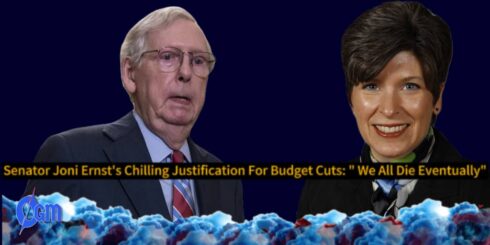
Senator Joni Ernst stunned reporters during a press conference when asked about the human toll of Trump’s budget. “Well, we all are going to die,” she said, suggesting that concerns about coverage loss were being exaggerated. Her response sparked immediate outrage among constituents, advocacy groups, and fellow lawmakers, who viewed the comment as grossly insensitive.
Joni Ernst later attempted to clarify her remarks, claiming she was emphasizing the need for “fiscal realism,” but the damage was done. Critics say her words encapsulate a GOP worldview that views life-and-death issues through a cold, budgetary lens. Healthcare workers in Iowa, her home state, have decried the comment as “inhuman” and “indefensible.”
Mitch McConnell Dismisses Public Concern: “They’ll Get Over It”
Mitch McConnell, when asked about public backlash over the healthcare cuts during a closed-door fundraiser in Louisville, reportedly told donors, “They’ll get over it.” His remark, leaked to the press, was widely interpreted as dismissive of millions who could lose coverage under the proposed budget.
Mitch McConnell defended his statement during a later appearance on Fox News, stating that “tough choices must be made” and claiming that Democrats were “weaponizing compassion.” Political analysts warn, however, that this rhetoric could deepen voter distrust and galvanize opposition heading into the 2026 midterms.
Joni Ernst Stands by Trump’s Budget as ‘Necessary Trim’
Joni Ernst, aligning fully with the White House’s fiscal vision, described the healthcare budget cuts as a “necessary trim” to a bloated system. “We cannot continue to fund every single safety net without accountability,” she said, citing concerns over the national debt.
Joni Ernst emphasized that states should have “greater flexibility” to manage Medicaid funds, even if that means reducing eligibility. However, healthcare experts argue that the move will harm the most vulnerable Americans, especially rural residents who already face limited access to care.
Mitch McConnell Frames Cuts as ‘Mature Governance’
Mitch McConnell argued that the proposed reductions in healthcare spending reflect what he called “mature governance.” “This is not cruelty; it’s responsibility,” he told Senate colleagues, reiterating that the government cannot afford to subsidize what he calls “entitlement dependence.”
Mitch McConnell’s framing, however, clashes with the harsh reality projected by nonpartisan analysts who say the cuts could lead to an increase in preventable deaths, medical bankruptcies, and mental health crises. Public health organizations have labeled the budget a “national emergency in the making.”
Joni Ernst Faces Iowa Backlash as Rural Hospitals Panic
Joni Ernst is now facing a growing backlash in Iowa, a state where rural hospitals are bracing for impact. With Medicaid comprising a significant portion of funding for rural clinics, hospital administrators warn that closures and layoffs may be imminent if the Trump budget passes.
Joni Ernst has responded to these concerns by insisting that “communities must learn to adapt,” but critics argue that such rhetoric dismisses the complex healthcare infrastructure in underserved areas. Some Iowans, including GOP voters, say they feel “abandoned” by the very officials they helped elect.
OGMNews.COM
Senator Joni Ernst Tells Americans to Stop Complaining: “Death Is Inevitable

Mitch McConnell is reportedly pressuring Republican lawmakers to “hold the line” and avoid breaking ranks on the budget vote. “This is our moment to show we can govern,” he reportedly told a closed Senate strategy session, warning that backing down now would “embolden the radical left.”
Mitch McConnell’s approach is drawing internal dissent from moderate Republicans concerned about re-election. They fear that echoing McConnell’s dismissive tone could alienate independent voters and those dependent on ACA subsidies or Medicaid coverage.
Joni Ernst’s Comment Becomes Campaign Flashpoint
Joni Ernst’s “we all are going to die” remark is now being used in political attack ads across swing states. Progressive candidates are airing footage of her statement to highlight what they call the GOP’s indifference to human suffering. Healthcare rights groups have launched digital campaigns targeting Ernst’s seat in 2026.
Joni Ernst, for her part, remains unapologetic. In a local town hall, she doubled down: “It’s not the government’s job to babysit every American’s health.” The response was met with boos from constituents—a stark reminder of the growing disconnect between elected leaders and the public they serve.
Mitch McConnell Dismisses Legal Challenges from Blue States
Mitch McConnell brushed off threats of legal challenges from Democratic governors, stating, “They’ll burn taxpayer money in court while we balance the budget.” California, New York, and Illinois have all signaled intentions to sue the federal government if the healthcare cuts are enacted.
Mitch McConnell, unfazed, said lawsuits are a “predictable stunt” by states “addicted to big government.” However, legal scholars believe the courts could block parts of the budget’s Medicaid provisions under federal healthcare statutes, setting up a major constitutional showdown.
A Nation Watches as Trump Budget Debate Escalates
Joni Ernst and Mitch McConnell have become the symbolic voices of a GOP leadership that appears willing to risk public outrage in pursuit of fiscal overhaul. Their comments—brusque, unapologetic, and provocative—have reframed the healthcare debate in stark moral terms.
As the nation awaits the final budget vote, Americans are left asking hard questions: What is the role of government in safeguarding health? Can cost-cutting justify mass coverage loss? And what does it say about leadership when death and dismissal become the go-to responses for public concern?
[…] […]