
























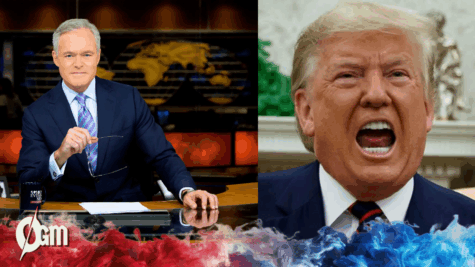
Scott Pelley did not mince words in his assessment of the Fourth Estate’s role in Donald Trump’s political comeback. Speaking to a packed audience of media professionals and journalism students, the longtime 60 Minutes correspondent accused major news networks of chasing profit over principle. Scott Pelley delivered a scathing critique of the American legacy media during a journalism symposium in New York City on Friday. In a powerful address, he argued that mainstream outlets bear partial responsibility for the resurgence and second-term presidency of Donald J. Trump. Pelley’s rare moment of industry introspection ignited fierce debate among journalists, media critics, and political observers.
“We allowed ourselves to become entertainment platforms, not watchdogs,” Pelley said. “In doing so, we failed the American people—and the consequences now sit behind the Resolute Desk.”
Pelley warned that by normalizing extremism and prioritizing ratings over responsible reporting, legacy media outlets helped construct the very megaphone Trump used to roar back into office in 2024.
Chasing Ratings, Not Truth
Scott Pelley criticized what he called the “ratings arms race” that plagued major cable networks from 2015 through Trump’s return to the White House. He argued that the media’s obsession with Trump’s “click value” corrupted the journalistic mission.
“Every tweet, every rally, every scandal—networks covered him wall-to-wall not because it mattered, but because it sold,” Pelley declared.
According to Pelley, this attention distorted public understanding and marginalized more substantive political issues. It also created a media environment that rewarded spectacle and punished nuance.
Newsrooms Under the Microscope
Scott Pelley also called out editors and newsroom executives who, in his words, “compromised ethics for access.” He claimed some journalists became “complicit actors in a reality show presidency,” and failed to interrogate Trump’s misinformation campaigns during his re-election push.
“We trained a generation of journalists to chase viral moments instead of verified facts,” he warned.
While some journalists pushed back against Trump’s narratives, Pelley suggested that these efforts were often undermined by top-down editorial decisions rooted in fear of alienating viewers.
The Trump Factor: A Media Creation?
Donald J. Trump, now in his second term as President of the United States, remains a deeply polarizing figure. While he continues to dominate headlines, critics argue that this media saturation enabled his political longevity.
Scott Pelley stopped short of blaming Trump directly, focusing instead on the media’s failure to serve as a critical counterweight. “Donald Trump exploited the system,” he said. “But we built the system that allowed him to do so.”
Political analysts note that Trump’s campaign in 2024 was aided by an increasingly fragmented media landscape, where traditional journalism struggled to compete with alternative platforms and partisan influencers.
Journalism in Crisis: A Call to Rebuild
Beyond criticism, Pelley offered a passionate call to action. He urged media institutions to restore public trust through transparency, humility, and a return to investigative rigor.
“We must stop being part of the story and start telling the whole story—without fear, without favor,” he asserted.
He advocated for more local reporting, greater investment in public-interest journalism, and stronger protections for press freedom amid rising global threats to democratic media.
OGMNews.COM
Scott Pelley, Esteemed Broadcast Journalist, Torches Press Corps: “We Prioritized Ratings Over Democracy — and Trump Won
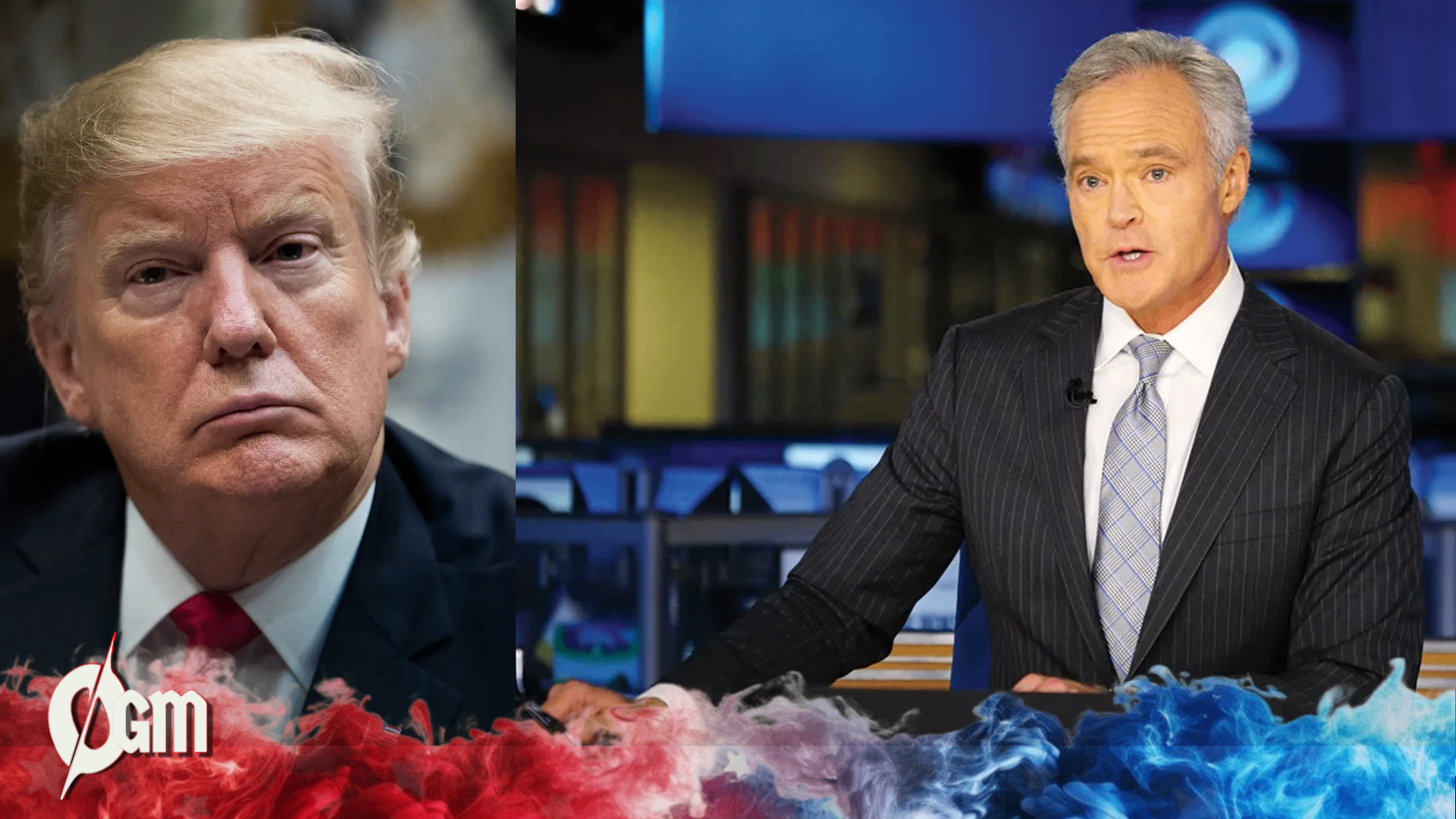
Surveys from Pew Research and Gallup show that public trust in traditional media has fallen to record lows. Pelley highlighted this distrust as a “self-inflicted wound” that can only be healed by consistent accountability and ethical consistency.
His remarks were echoed by Columbia Journalism School dean Jelani Cobb, who moderated the event and described Pelley’s address as “a necessary reckoning.”
“We are facing a journalism legitimacy crisis,” Cobb added. “The challenge is not only about what we report—but how, and why.”
Media Reactions: Praise, Pushback, and Polarization
Scott Pelley’s remarks sparked immediate responses from across the journalistic spectrum. Some praised his candor, while others accused him of deflecting blame from a public increasingly resistant to facts.
Fox News contributor Joe Concha tweeted: “Scott Pelley had a front-row seat to media bias for decades. Now he wants to blame the game he helped play?”
Meanwhile, CNN’s Christiane Amanpour praised Pelley’s courage, writing on X (formerly Twitter): “Scott said what too many journalists are afraid to admit. Truth matters. So does how we tell it.”
What’s Next for American Journalism?
As Trump begins the second year of his renewed presidency, the media’s role in shaping political narratives will be under even greater scrutiny. Pelley’s remarks have reignited debates over how the industry can balance responsibility with reach.
Some outlets are now pledging reforms: editorial independence committees, new ethics guidelines, and deeper community engagement strategies.
Whether these changes will be enough to repair the fractured relationship between media and the public remains uncertain. But if Pelley’s speech accomplished anything, it’s this: it reopened the conversation about journalism’s soul at a time when the truth feels more contested than ever.
A Mirror Turned Inward
Scott Pelley’s searing critique has forced the media industry to look inward. In a political era defined by spectacle, division, and disinformation, his words echoed like a warning bell.
“We can no longer claim innocence,” Scott Pelley concluded. “We are not just observers—we are participants. The question now is: what kind of participants will we be?”
For an institution tasked with holding power to account, the answer may determine more than the future of journalism—it may shape the future of democracy itself.
[…] […]