
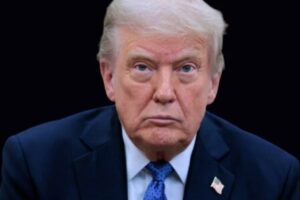



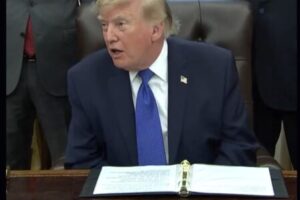



















Donald Trump, once fiercely unapologetic about his aggressive tariff regime on China, has now taken a jarring U-turn. “It will come down substantially,” he muttered in the Oval Office, seemingly dazed by the fallout of his economic brinkmanship. His tone—more subdued than his usual bravado—betrayed the strain of mounting political and economic pressure. With American consumers and industries reeling from the consequences, this reversal is being perceived not as strategic recalibration but as a desperate retreat.
The original 145% effective tariff on Chinese imports, absurdly inflated even by Donald Trump’s own standards, has inflicted severe damage across sectors. Retail, manufacturing, agriculture, and even Wall Street have borne the brunt of this economic belligerence. Now, with inflation spiking and public outcry escalating, Trump’s sudden shift is less a sign of leadership and more a tacit admission of failure.
The Economic Carnage Behind the Curtain
Donald Trump’s trade war has been a slow-burning catastrophe. Initially designed to strong-arm China into submission, the tariffs instead backfired, triggering a surge in consumer prices and widespread supply chain instability. Data shows that Americans are now paying significantly more for everyday goods, with no evidence of domestic manufacturing benefiting from the so-called protectionist shield.
The market’s response has been volatile and unforgiving. Investors have lost billions, major indices have experienced wild swings, and business confidence is plummeting. Trump’s assurances that the economy is “doing great” ring hollow when juxtaposed with the bleak metrics flashing red across the financial dashboard.
Manufacturing Mirage: The False Promise of Reshoring
Despite his rhetoric, Donald Trump’s administration failed to implement meaningful policies to incentivize domestic production. No new industrial subsidies. No comprehensive reshoring blueprint. Just lofty declarations and punitive measures. The fantasy that tariffs alone would revive American manufacturing has evaporated under scrutiny.
Industry experts now argue that without systemic investment, reshoring is an illusion. Trump’s economic nationalism has become a hollow spectacle—heavy on theatrics, light on results. As the administration scrambles to mitigate the damage, it’s clear that the original goal of revitalizing U.S. manufacturing was never pursued with substance.
Diplomatic Confusion and Mixed Signals
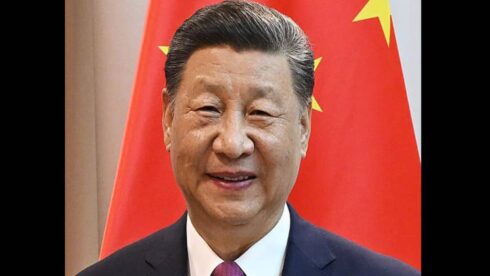
Donald Trump’s conflicting statements about China reflect a larger pattern of incoherence in his foreign policy. One moment he praises President Xi Jinping as a close ally; the next, he warns of economic obliteration should China refuse a deal. This erratic messaging has undermined any credible negotiation leverage the U.S. might have had.
By oscillating between charm and threats, Trump has alienated both American allies and Chinese officials. His declaration that “China wants to be a part of the United States” sparked confusion and mockery online, highlighting how far his rhetoric has detached from geopolitical reality.
GOP Fractures Emerge Amid Tariff Chaos
As Donald Trump stumbles on tariffs, dissent within the Republican Party is becoming harder to ignore. Several prominent GOP lawmakers have begun to criticize the tariff strategy openly, warning that the long-term economic consequences could cost them in the upcoming elections. The party’s once-unified front is now showing cracks, with internal disputes spilling into public discourse.
Behind closed doors, Republican strategists are reportedly panicking over lost agricultural votes and the defection of suburban voters hurt by rising prices. Trump’s tariff gamble has turned into a political liability, one that could reshape the 2026 electoral map if not contained swiftly.
Donald Trump’s Golden Age Delusion
Standing in the Oval Office, Donald Trump bizarrely proclaimed, “This is the Golden Age,” a statement met with widespread incredulity. While Americans struggle with higher costs and market uncertainty, the president continues to project an alternate reality, one filled with imagined victories and exaggerated self-praise.
This gap between perception and reality may be his greatest vulnerability. As voters grow increasingly weary of the economic chaos, Trump’s “Golden Age” narrative risks becoming a punchline rather than a rallying cry. The era of tariff triumph has devolved into a chapter of economic instability—and Trump, its architect, is now trying to rewrite the ending.
[…] […]