


























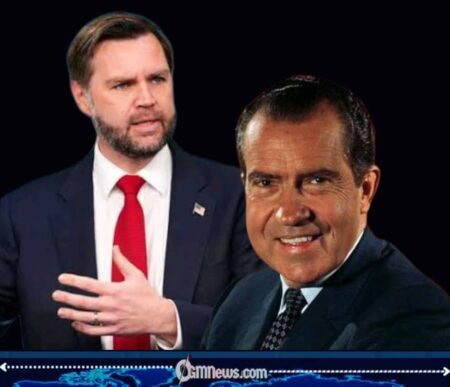
Watergate Legacy returned to the center of American political debate after Vice President JD Vance argued that the scandal which forced President Richard Nixon from office would amount to little more than a 12-hour news story in today’s media landscape. Speaking at the Richard Nixon Presidential Library, Vance praised Nixon’s historical legacy, suggested it is experiencing a “renaissance,” and drew comparisons between Nixon’s experience and President Donald J. Trump’s political battles.
The remarks quickly generated strong reactions because Watergate has long been regarded as one of the defining political scandals in U.S. history. Nixon resigned in 1974 after the Watergate investigation uncovered a broad campaign of political espionage and a subsequent cover-up involving members of his administration. The episode remains a landmark case in discussions about presidential accountability and constitutional checks on executive power.
Watergate Legacy Rekindles an Old Debate
During his appearance, Vance argued that today’s fragmented media environment and highly polarized politics would prevent a scandal like Watergate from dominating the news long enough to end a presidency. He also suggested that Nixon and Trump faced comparable treatment from what he described as entrenched institutions within government.
Within the broader Watergate Legacy discussion, historians and political analysts continue to view the original scandal as a turning point in American governance. Congressional investigations, court rulings, and the release of White House recordings ultimately led to Nixon’s resignation before a likely impeachment and conviction. Those events established enduring precedents regarding executive accountability that continue to shape constitutional debates today.
Nixon Renaissance and the Politics of Historical Memory
Public assessments of historical leaders often evolve as new scholarship, changing political climates, and contemporary events influence public opinion. Nixon’s presidency is frequently discussed both for significant foreign policy achievements—including opening diplomatic relations with China—and for the Watergate scandal that ultimately overshadowed his administration.
The broader Nixon Renaissance conversation illustrates how political figures from previous generations are often reexamined through modern perspectives. Supporters of Vance’s comments argue that media dynamics have changed dramatically since the 1970s, while critics maintain that Watergate’s importance lies not in the length of news coverage but in the constitutional principles it tested. Regardless of viewpoint, the remarks have revived a national discussion about accountability, presidential power, and how history is interpreted.
With a touch of satire, some observers joked that even Watergate has now entered the era of social media, where decades-old scandals compete with trending topics for attention. History, it seems, never truly leaves the news cycle—it simply finds a new headline.
As OGM News continues following developments, Watergate Legacy is likely to remain part of the broader conversation about presidential accountability, historical interpretation, and the evolving relationship between politics and the modern media environment.

[…] […]