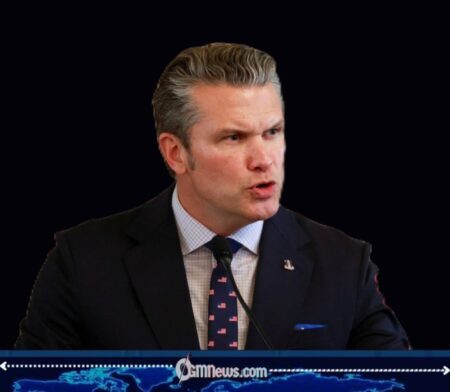










President Donald Trump, currently serving a second term, has openly criticized NATO allies for refusing to support U.S.-led efforts to secure the Strait of Hormuz, a critical global shipping route. Donald Trump told reporters that the United States is effectively protecting the waterway for the benefit of other nations, many of which rely heavily on energy supplies transported through the region.
Donald Trump argued that despite the strategic importance of the strait to global markets, NATO members have shown reluctance to contribute militarily. He framed the situation as an imbalance in international responsibility, suggesting that allies are benefiting from U.S. actions without sharing the burden.
The remarks from Donald Trump underscore growing frustration within his administration and signal a widening gap between Washington and several European capitals over how to respond to the escalating Iran conflict.
Donald Trump Questions the Value of NATO Support
Donald Trump further questioned the effectiveness and reliability of NATO as a security alliance in light of the current crisis. He stated that NATO’s unwillingness to assist in securing the Strait of Hormuz raises concerns about whether the alliance is meeting its obligations in moments of global tension.
According to Donald Trump, the United States cannot be expected to act as the sole guarantor of international security while other nations remain on the sidelines. He emphasized that countries benefiting from global trade routes should play a more active role in defending them.
These statements reflect Donald Trump’s long-standing position on burden-sharing within NATO, a theme that has been central to his foreign policy approach both during his first administration and now in his second term.
Spain and Pedro Sánchez Lead Opposition
Among the most prominent critics of U.S. policy is Pedro Sánchez, whose government has declined to participate in military operations linked to the Iran conflict. Spain has emphasized diplomatic engagement and de-escalation rather than direct involvement in hostilities.
Spanish officials have argued that the conflict does not trigger NATO’s collective defense clause, which typically applies when a member state is directly attacked. They have also expressed concern that military participation could lead to further instability in the Middle East.
This position has placed Spain at the forefront of European resistance to U.S. requests, contributing to a broader divide within the alliance.
European Allies Cite Legal and Strategic Concerns
Several European countries have echoed Spain’s stance, declining to commit forces to the Strait of Hormuz mission. Governments across Europe have cited legal, political, and strategic reasons for their decisions, including concerns about escalation and the limits of NATO’s mandate.
European leaders maintain that NATO is fundamentally a defensive alliance and should not be drawn into conflicts that fall outside its core purpose. They argue that involvement in the Iran conflict could risk expanding the war and destabilizing the broader region.
The divergence in viewpoints highlights ongoing debates within NATO about its evolving role in global security and crisis response.
Strategic Importance of the Strait of Hormuz
The Strait of Hormuz remains one of the most vital maritime corridors in the world, with a significant portion of global oil shipments passing through it daily. Ensuring its security is widely seen as critical to maintaining stable energy markets and international trade.
The United States has deployed naval forces to safeguard the passage and deter potential threats. American officials argue that disruptions in the strait could have immediate economic consequences, including rising energy prices and supply shortages.
Despite these concerns, many countries have opted for a cautious approach, preferring diplomatic measures over military involvement.
Future of NATO Cooperation Under Pressure
The ongoing disagreement has placed NATO’s unity under increased scrutiny. Analysts suggest that differing threat perceptions and policy priorities could challenge the alliance’s ability to respond collectively to future crises.
While NATO continues to serve as a cornerstone of transatlantic security, debates over burden-sharing and strategic direction remain unresolved. The current situation may prompt renewed discussions about the alliance’s responsibilities and operational scope.
As the conflict unfolds, the ability of member states to reconcile their differences will play a crucial role in determining the strength and cohesion of the alliance moving forward.