
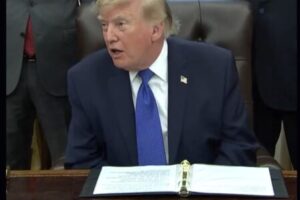



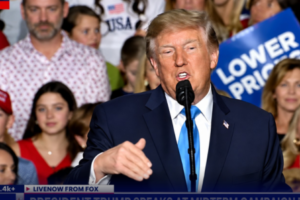


















Midterms politics collided with international diplomacy after President Donald Trump declared that Iran is eager to reach a deal with Washington but deliberately slowed negotiations in hopes that American elections would weaken his leverage. In remarks that blended campaign-style confidence with geopolitical signaling, Trump insisted Tehran “thought they were going to outwait” him, only to discover that recent Republican victories had strengthened his position instead. The statement immediately sparked debate over whether the Iran negotiations are being shaped more by strategic diplomacy or by political theater designed for a domestic audience.
Trump’s comments arrive during renewed scrutiny of U.S.-Iran relations, with tensions still centered around sanctions, nuclear enrichment, and regional military influence. While the White House portrays Iran as increasingly pressured to compromise, critics argue that both sides continue using public statements to project strength rather than reveal meaningful progress behind closed doors. The result is a diplomatic standoff where every sentence sounds part negotiation, part campaign rally.
Trump Says Tehran Miscalculated His Power Ahead of Midterms
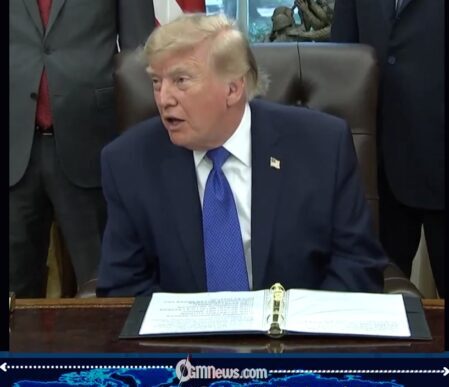
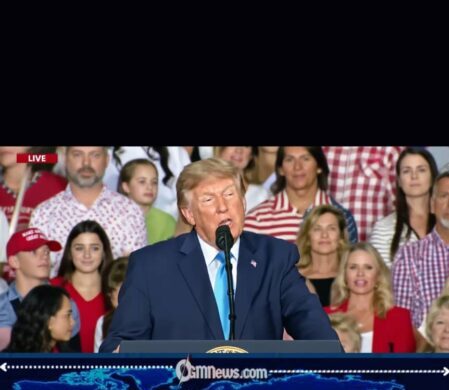
President Trump framed the stalled negotiations as evidence that Iran miscalculated American politics. According to his remarks, Tehran expected the approaching midterms to weaken his authority or force concessions from Washington. Instead, Trump pointed to recent Republican political successes as proof that his influence remains intact and that Iran’s waiting strategy has failed.
The president’s rhetoric reflects a broader pattern in which foreign policy disputes are increasingly tied to domestic political messaging. By emphasizing election momentum while discussing international negotiations, Trump appeared determined to send two messages at once: one to Iran about American resolve, and another to voters about his continued political dominance. Supporters view the approach as strategic confidence, while opponents argue it risks turning sensitive diplomacy into partisan performance art.
Iran Deal Talks Face Fresh Tension as Trump Boasts Political Momentum
The modern debate surrounding the Iran Deal stretches back years, especially after Trump withdrew the United States from the original nuclear agreement during his earlier administration and imposed sweeping economic sanctions under a “maximum pressure” strategy. Since then, efforts to revive or replace the framework have repeatedly stalled amid disputes over sanctions relief, uranium enrichment limits, and long-term enforcement mechanisms.
Analysts note that Iran’s economy continues to face heavy pressure from sanctions, inflation, and international isolation, factors that likely increase Tehran’s interest in securing some form of agreement with Washington. However, experts also caution that public accusations and political grandstanding can complicate negotiations by hardening positions on both sides. Some observers believe Trump’s latest remarks were intended to increase leverage before further talks, while others see them as an attempt to transform diplomatic uncertainty into a political advantage ahead of a heated election season.
At the same time, global concerns surrounding the Iran issue remain significant beyond American politics alone. European allies and Middle Eastern governments continue monitoring the negotiations closely due to fears over nuclear escalation, regional instability, and energy market disruptions. Every public statement from Washington or Tehran now carries wider implications, particularly in an international environment already strained by multiple geopolitical conflicts.
For now, the White House insists that strength and patience remain central to its strategy, while Iran continues signaling interest in negotiations without committing to rapid concessions. Whether the current standoff leads to a breakthrough or another cycle of diplomatic deadlock may depend less on campaign slogans and more on what happens quietly behind closed negotiating tables. OGM News will continue monitoring developments surrounding the Midterms narrative and the future of the Iran Deal as tensions evolve.
[…] […]