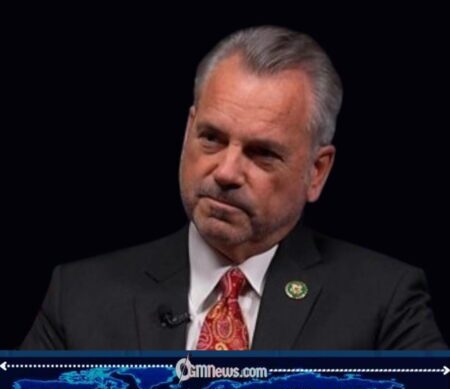
President Trump announced on Thursday that he will nominate Stephen Miran, chair of the White House’s Council of Economic Advisers, to serve on the Federal Reserve Board of Governors. Miran’s appointment will temporarily fill the seat vacated by Governor Adriana Kugler, a Biden appointee stepping down on Friday.
If approved by the Senate, Miran will serve until January 31, 2026, marking the administration’s first opportunity in the current term to influence the central bank’s decision-making. “Stephen has a Ph.D. in Economics from Harvard University, and served with distinction in my First Administration,” Mr. Trump wrote on Truth Social. “He has been with me from the beginning of my Second Term, and his expertise in the world of economics is unparalleled — he will do an outstanding job.”
A Strategic Move in Economic Policy Control of Trump administration
The Federal Reserve is one of the few U.S. agencies with broad independence from the White House. The president’s decision to nominate a close adviser signals a strategic move to exert greater influence over the central bank’s direction.
Mr. Trump has frequently criticized the current Fed chair, Jerome Powell, for keeping short-term interest rates steady at 4.3%, labeling him “a stubborn MORON” on social media last week. The administration views Miran as a voice that will support lower interest rates — a position aligned with Trump’s broader economic strategy.
Miran’s Economic Stance and Policy Record
Stephen Miran has been a staunch defender of the president’s signature economic policies, including sweeping income tax cuts and tariff increases. He argues that these measures will drive economic growth sufficient to reduce budget deficits without stoking inflationary pressures.
While some economists warn that higher tariffs could fuel inflation, Miran has consistently played down such concerns. He maintains that the benefits of the president’s trade policies outweigh the risks and that the Federal Reserve’s reluctance to cut rates is misguided.
Implications for Fed Independence
Miran’s nomination has sparked renewed debate about the importance of preserving the Federal Reserve’s independence from political influence. Traditionally, the Fed operates free from direct political pressure to ensure it can take tough measures — such as raising interest rates — to control inflation when necessary.
Critics warn that appointing a loyal political ally could shift the balance of the Fed toward more politically driven decision-making. Supporters counter that the central bank has been overly cautious and that Miran’s perspective will better align monetary policy with the administration’s growth agenda.
Potential Impact on Interest Rate Decisions
If confirmed, Miran would replace a governor who supported keeping rates unchanged to evaluate the economic effects of tariffs. This shift could tilt the board toward favoring rate cuts, joining Trump-appointed governors Christopher Waller and Michelle Bowman, who both dissented from the Fed’s recent decision to hold rates steady.
Still, the board comprises 12 voting members, and many remain wary of cutting rates too aggressively given potential inflation risks. Even with Miran’s presence, the outcome of rate policy will depend on broader consensus among Fed officials.
Clash Over Inflation and Growth Forecasts
Miran has openly criticized Powell’s stance, particularly following last week’s July jobs report. Speaking on MSNBC, he argued that the president’s economic predictions have been consistently validated. “What we’re seeing now in real time is a repetition once again of this pattern where the president will end up having been proven right,” Miran said, predicting that the Fed would eventually “catch up to the president’s view.”
This ongoing dispute underscores the sharp divisions over how to balance interest rate policy, tariffs, and inflation control — a debate now poised to intensify with Miran’s possible arrival at the Fed.