

























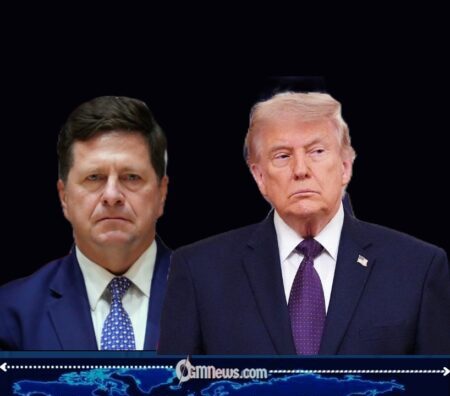
Jay Clayton became the focus of a political storm on Wednesday after President Donald Trump directed his nominee for Director of National Intelligence not to attend a scheduled Senate confirmation hearing, forcing an abrupt postponement and triggering rare public frustration from key Republican allies. What appeared to be a straightforward confirmation process suddenly transformed into a broader confrontation over political leverage, intelligence leadership, and legislative priorities, leaving Washington searching for answers about why a nominee praised by the president himself was instructed to stay away from his own hearing.
Jay Clayton Confirmation Process Paused Amid Washington Dispute
The postponed hearing marked a dramatic turn for Jay Clayton, the former Securities and Exchange Commission chairman and current U.S. attorney in Manhattan, who had been nominated by President Trump to lead the U.S. intelligence community. Senate Intelligence Committee Chairman Tom Cotton announced that the hearing would not proceed after the president directed Clayton not to appear. Cotton publicly described the decision as regrettable while maintaining that Clayton remained a highly qualified nominee deserving confirmation. The unusual public criticism drew attention because it came from one of the president’s most dependable allies in Congress.
The Intelligence nomination had initially been viewed as a solution to growing concerns surrounding leadership of the nation’s intelligence agencies. Clayton’s nomination followed bipartisan criticism of acting intelligence chief Bill Pulte, whose appointment generated controversy because of his limited intelligence background. Several lawmakers from both parties had signaled willingness to move Clayton through the confirmation process quickly, making Wednesday’s cancellation all the more surprising.
Senate Allies Stunned as Trump Pulls Plug on Clayton Hearing Hours Before Testimony
Additional reporting indicates that the Intelligence nomination may have become intertwined with broader political disputes. President Trump reportedly linked the postponement to ongoing disagreements over congressional action involving the SAVE America Act and the renewal of Section 702 of the Foreign Intelligence Surveillance Act (FISA), a surveillance authority considered important by national security officials. The delay has intensified concerns among lawmakers that intelligence leadership is becoming entangled in separate legislative battles.
The broader context reveals a rapidly evolving struggle over intelligence oversight and executive authority. Clayton’s nomination had originally emerged after lawmakers pushed for a permanent nominee following controversy surrounding temporary leadership arrangements. Some Democratic and Republican lawmakers alike had expressed openness to advancing Clayton’s confirmation despite broader political disagreements. Instead, the postponement has injected fresh uncertainty into an already tense debate over surveillance powers, national security leadership, and the administration’s legislative agenda. Critics argue that key security positions should remain insulated from political bargaining, while supporters contend that presidents routinely use political leverage to advance policy priorities.
For now, the Intelligence nomination remains in limbo. Jay Clayton continues to have influential supporters on Capitol Hill, and few observers believe the postponement represents the end of his candidacy. Yet the episode serves as a reminder that in modern Washington, even a hearing scheduled on the Senate calendar can become part of a much larger chess match. OGM News will continue monitoring developments as lawmakers, administration officials, and the nominee himself await the next move.

Logging in is a breeze and the site stability is amazing even during peak hours....