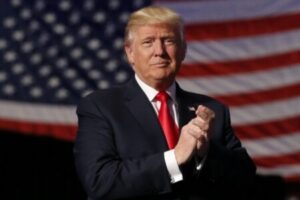




The administration of Donald Trump, currently serving a second term as President of the United States, has announced a series of new trade investigations targeting several key global trading partners. The move could ultimately result in additional tariffs, marking a significant development in the Trump administration’s evolving trade strategy.
Officials say the investigations will focus on whether certain countries are producing far more goods than their domestic markets can absorb — a situation the Trump administration describes as “structural excess capacity.” If confirmed, such practices could be deemed harmful to American workers and industries, potentially justifying retaliatory tariffs under U.S. trade law.
The initiative follows a recent ruling by the Supreme Court of the United States, which limited the president’s ability to impose tariffs under emergency economic powers. In response, the Trump administration is turning to alternative legal authorities to continue its trade enforcement efforts.
Broad Investigation Targets Key Global Trading Partners
The announcement was made by Jamieson Greer, who confirmed that the Office of the United States Trade Representative will examine trade practices across a wide range of countries and economic blocs.
Among those included in the investigation are the European Union, as well as countries such as Japan, India, Mexico, South Korea, Vietnam, and Indonesia, among others.
Additional countries under review include Malaysia, Thailand, Cambodia, Bangladesh, Singapore, Switzerland, Norway, and Taiwan.
According to officials, the investigation is not yet a determination of wrongdoing. Rather, it represents the opening stage of a legal process that could eventually lead to trade remedies if unfair practices are identified.
Section 301 of the Trade Act: The Legal Basis for Action
The Trump administration is relying on Section 301 of the Trade Act of 1974, a long-standing provision that allows the United States to respond to unfair trade practices.
Under this law, the U.S. government can conduct investigations into foreign trade barriers or policies that harm American businesses. If violations are confirmed, the administration may impose tariffs or other retaliatory measures without needing approval from international bodies.
Officials say the current investigations will examine whether structural overproduction abroad creates unfair competition that undermines American manufacturing capacity and suppresses wages.
Greer noted that Wednesday’s announcement represents only the beginning of a formal investigative process that will involve consultations, data analysis, and input from affected industries.
Concerns Over Structural Excess Capacity
A central focus of the investigations is the concept of structural excess capacity, which refers to a situation where countries produce far more goods than their domestic economies can absorb.
According to the U.S. Trade Representative’s office, such overproduction can lead to large volumes of exports entering global markets at lower prices, placing pressure on industries in importing countries. American officials argue that this dynamic can weaken domestic manufacturing and lead to wage suppression in affected sectors.
Greer explained that the investigation aims to better understand how these conditions impact the U.S. economy. He said the administration hopes to clearly identify specific challenges faced by American workers and companies as a result of global overcapacity.
The findings of the investigation will ultimately determine whether additional trade measures are necessary.
Separate Investigations Planned on Forced Labor Concerns
In addition to examining excess production capacity, The Trump administration plans to launch another series of investigations related to forced labor in global supply chains.
Officials indicated that roughly 60 countries could be subject to scrutiny under these inquiries. The investigations will assess whether trading partners are effectively preventing the import or export of goods produced using forced labor.
These reviews will also be conducted under the authority of Section 301, with cases examined on a country-by-country basis.
Greer said the goal is to ensure that trade partners comply with international labor standards and that American markets are not indirectly supporting exploitative practices abroad.
Supreme Court Ruling Reshapes Tariff Strategy
The investigations come shortly after a ruling by the Supreme Court of the United States, which determined that the president lacked authority to impose tariffs under the International Emergency Economic Powers Act.
Following the decision, President Trump announced a temporary 10% global tariff, invoking Section 122 of the Trade Act of 1974, which allows limited short-term tariffs.
The measure is expected to remain in effect for up to 150 days, unless Congress chooses to extend it. President Trump has indicated that he intends to increase the rate to 15%, though the White House has not formally implemented that increase.
Trump Administration officials say they hope the new Section 301 investigations will be completed before the temporary tariffs expire in July, although they acknowledge the timeline could vary depending on the complexity of each case.
Tariffs Remain a Key Tool in Trump Administration Trade Policy
Tariffs have long been a central feature of President Trump’s trade policy. During his first term, the administration used Section 301 to impose tariffs on Chinese goods after determining that China had engaged in unfair practices related to technology transfer and intellectual property.
Those tariffs remained largely in place under Joe Biden, who declined to remove them and instead expanded tariffs on Chinese products in 2024. The measures targeted sectors such as electric vehicles, semiconductors, and solar technologies.
The latest investigations suggest that the current administration may continue relying on tariffs as a strategic tool to address perceived imbalances in global trade.
While it remains unclear whether new tariffs will ultimately be imposed, the investigations represent an important step in the Trump administration’s effort to reshape trade relationships with some of the world’s largest economies.