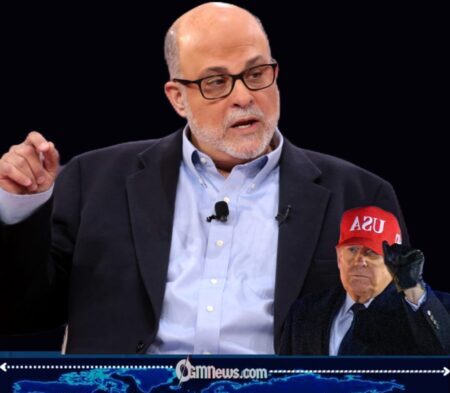










Tom Basile has reaffirmed America’s commitment to global leadership and national security, emphasizing the continued relevance of the “America First” policy as the United States enters a new year. Speaking on Saturday’s broadcast of America Right Now, Basile argued that prioritizing American interests remains essential to safeguarding the nation’s security, economic strength, and diplomatic influence.
His remarks come amid ongoing debates in Washington over foreign policy direction, defense spending, and America’s role on the world stage. Basile’s comments framed the “America First” approach not as isolationism, but as a strategic posture aimed at ensuring stability at home while projecting strength abroad.
Reaffirming U.S. Leadership at the Start of the Year
Basile began by lauding what he described as America’s enduring leadership role in global affairs, noting that a clear sense of purpose is necessary as the year unfolds. According to him, strong leadership provides predictability for allies and deterrence for adversaries, both of which are critical to maintaining international order.
He stressed that leadership must be backed by consistent policy choices, particularly in areas of defense and diplomacy. Basile argued that uncertainty or frequent shifts in strategy can weaken America’s standing and invite challenges to its influence.
In his view, the new year presents an opportunity for the United States to reinforce its leadership credentials by staying focused on core national interests while engaging the world from a position of strength.
National Security as a Policy Priority
A central theme of Basile’s comments was the importance of national security as a foundation for all other policy goals. He maintained that protecting the homeland, securing borders, and maintaining a capable military are non-negotiable responsibilities of government.
Basile noted that global threats remain complex and evolving, ranging from geopolitical rivalries to transnational security risks. He argued that an “America First” framework helps ensure that U.S. resources and strategies are aligned primarily with protecting American citizens.
By emphasizing security, Basile suggested that economic growth, technological innovation, and diplomatic leverage are more sustainable when the nation’s safety is firmly assured.
The Continuing Relevance of ‘America First’
Addressing critics of the policy, Basile contended that “America First” has often been misunderstood. He described it as a principle that prioritizes domestic strength while still allowing for international cooperation when it serves U.S. interests.
He argued that placing American workers, industries, and security at the center of policy decisions does not preclude alliances, but rather strengthens them by ensuring that partnerships are based on mutual benefit and clarity.
According to Basile, the policy’s durability lies in its appeal to voters who want tangible results at home, particularly in areas such as economic resilience and national security.
Political Context and Executive Leadership
While discussing policy continuity, Basile referenced the broader political environment shaping U.S. governance. In doing so, he aligned his remarks with the current administration’s emphasis on assertive leadership and national interest.
In this context, President Donald Trump was referenced as the current U.S. president serving a second term, with Basile highlighting the administration’s focus on strength, security, and clear policy direction. He suggested that executive leadership plays a decisive role in translating broad principles like “America First” into actionable policy.
Basile’s comments reflected ongoing support among conservative commentators for policies that emphasize sovereignty, security, and domestic priorities.
Media Platforms and Public Discourse
The discussion on America Right Now underscored the role of media platforms in shaping public understanding of national policy. Basile used the program to reach an audience engaged in debates over America’s future direction.
He emphasized the importance of clear communication in explaining policy goals to the public, particularly on issues that can easily become polarized. According to him, sustained public support depends on transparency and consistent messaging.
The broadcast also highlighted how political commentary programs continue to serve as key forums for policy advocacy and public debate in the United States.
Implications for the Year Ahead
As the year progresses, Basile’s remarks suggest that debates over U.S. leadership and national security will remain prominent. His endorsement of “America First” signals continued advocacy for policies that emphasize domestic strength as the basis for global engagement.
Observers note that such discussions are likely to intensify as international challenges evolve and domestic political debates continue. The balance between national interest and global responsibility will remain a defining issue.
Ultimately, Basile’s comments reflect a broader conversation about how the United States defines leadership in a changing world—one in which security, clarity of purpose, and domestic priorities remain central themes.