













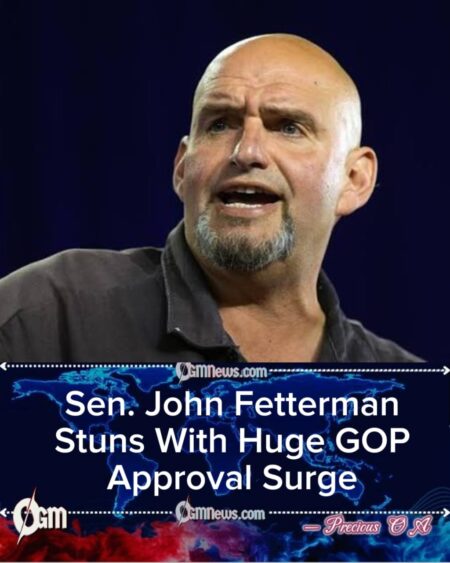
Sen. John Fetterman has emerged as one of the most unexpectedly cross-partisan political figures in the United States, generating a remarkable surge of support from Republicans in Pennsylvania according to newly released Emerson polling data. His approval rating among GOP voters stands at a striking +31, a number that has shocked analysts across both parties and intensified conversations about his evolving political persona.
John Fetterman is receiving praise from conservative voters who claim he has demonstrated a willingness to challenge progressive orthodoxy and adopt stances traditionally uncommon within Democratic circles. These sentiments reflect a broader trend in which his direct, confrontational style resonates with Pennsylvanians who value clarity over ideology.
John Fetterman has, over the past year, increasingly framed himself as a pragmatic legislator more concerned with results than partisanship, leading to speculation that his current political trajectory could reshape the boundaries of Pennsylvania’s electorate. His outspoken messaging style, often blunt and delivered with a blue-collar tone, continues to attract attention from groups that previously viewed him with skepticism.
Political observers note that the polling results show a rare inversion of typical partisan approval patterns, with Republicans expressing confidence in his leadership while Democrats reassess their alignment with his approach to national controversies.
Democratic Discontent and Internal Friction
John Fetterman is facing an unexpected backlash from within his own party, where he now holds a negative approval rating of −6 among Democratic respondents statewide. This inversion has puzzled strategists who believed his policy consistency and legislative history would maintain stable support among traditional Democratic blocs.
John Fetterman has become increasingly vocal on issues of border security, national identity, and U.S. military posture—subjects where his recent positions have aligned more closely with moderate or even conservative arguments. This shift has triggered frustration among progressive Democrats who feel abandoned by his evolving message.
Some Democratic insiders argue that his willingness to criticize certain party narratives publicly has created internal strain, highlighting ideological differences that have existed beneath the surface but were rarely confronted so directly. His critics insist that such deviations may alienate the base heading into future electoral cycles.
Democratic strategists caution that while cross-party appeal may offer short-term gains in media attention, long-term party loyalty could weaken if his rhetoric continues to diverge from expectations, especially on cultural issues.
A New Political Identity Emerging
John Fetterman is increasingly viewed as a politician cultivating a brand that defies conventional partisan expectations. Rather than aligning strictly with Democratic messaging, he has positioned himself as a figure willing to challenge narratives from either side of the aisle.
His supporters argue that this independence is precisely what voters are craving in a polarized environment, claiming he represents a break from predictable ideological rigidity. They point to his approval numbers among Republicans as evidence of a national appetite for unconventional leadership.
Critics, however, warn that occupying political middle ground can be precarious, risking alienation from both formal party structures and grassroots activists who expect consistent ideological commitment. This balancing act may shape the trajectory of his political future
The broader national conversation around Fetterman now centers on whether he is carving out a new lane for himself or unintentionally drifting toward political isolation within his own party apparatus.
Polling Shockwaves Across Pennsylvania
John Fetterman is generating reactions among Pennsylvania voters that underscore shifting political attitudes, especially given the state’s long history of competitive elections. Analysts emphasize that his current polling numbers break patterns that have held steady for decades.
Republican voters surveyed expressed admiration for what they described as his authenticity and willingness to articulate clear positions even when they conflict with Democratic leadership. Many noted that such candor is rare in modern political discourse.
Democratic voters responding negatively highlight concerns that his evolving public stance undermines unity at a critical moment in national politics, contributing to internal fractures that could weaken electoral cohesion. Some fear that his messaging reinforces Republican narratives.
Independent voters express mixed reactions, with some admiring his boldness and others questioning the sustainability of his shifting political posture. As a result, his polling has become one of the most discussed dynamics heading into the next cycle.
National Ramifications of Cross-Party Appeal
John Fetterman has inadvertently opened a new front in the national dialogue about political identity, authenticity, and cross-partisan influence. His numbers in Pennsylvania reflect broader voter frustration with rigid party alignment.
Political scientists note that this unusual combination of Republican approval and Democratic skepticism could make him a case study in political realignment, especially in regions with mixed urban-rural demographics. His messaging style appeals to voters who prioritize candor over ideology.
Some Republican strategists see him as a threat to traditional partisan loyalties among working-class voters, fearing his appeal could disrupt established voting blocs. Others dismiss the polling as temporary and tied to momentary issues rather than lasting realignment.
Meanwhile, Democrats remain divided over whether his approach is refreshing or destabilizing, leaving national party leaders uncertain about how to engage with his growing independence.
Future Outlook and Electoral Implications
John Fetterman continues to reshape expectations for what a modern Democratic senator may look like, especially as public perception evolves rapidly. His ability to maintain high approval among Republicans will depend on whether his messaging remains aligned with their current priorities.
State analysts predict that his political identity will continue to evolve, influenced both by national issues and Pennsylvania’s shifting electorate. Observers expect heightened scrutiny as election cycles progress and partisan fault lines intensify.
Republican enthusiasm for his positions may signal broader ideological shifts within the state, potentially complicating traditional campaign strategies for both parties. If his support base continues diversifying, the political map in Pennsylvania may face significant disruption.
His long-term prospects remain uncertain, but one thing is clear: he has become one of the most unpredictable and captivating figures in modern Pennsylvania politics.

[…] […]