








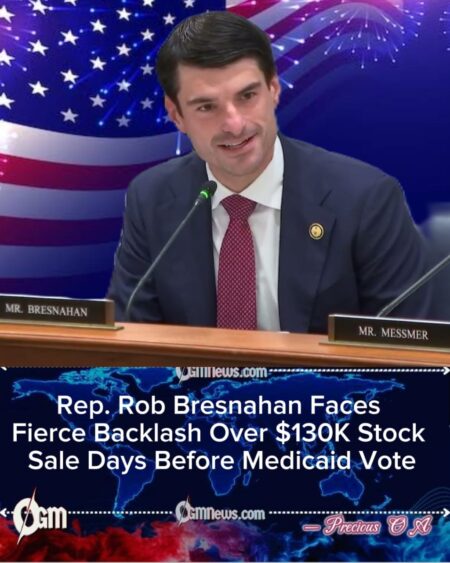
Rep. Rob Bresnahan disposed of approximately $130,000 in Medicaid-linked stocks only seven days before casting his vote in support of slashing nearly one trillion dollars from the Medicaid program, prompting significant public scrutiny. The timing of the transaction has fueled widespread criticism that the lawmaker may have acted with foreknowledge of impending legislative outcomes. Ethics observers argue that this sequence of events warrants a deeper investigation into potential conflicts of interest.
Rob Bresnahan has attempted to justify his actions by asserting that his financial decisions were managed independently and without consideration for upcoming legislative matters. Critics, however, challenge this explanation, noting the extremely precise timing and the nature of the companies involved. They insist that such proximity between the trades and the vote creates an appearance of impropriety that cannot be overlooked.
Financial analysts observing the situation emphasize that trades involving sectors directly affected by pending legislation must always be evaluated with heightened scrutiny. In their view, the situation demonstrates how legislative power combined with personal investment activity can undermine public confidence in the fairness of policy processes.
Vow to Ban Stock Trading Contradicted by Actions
Rob Bresnahan previously campaigned on promises to support stringent restrictions on stock trading among members of Congress, a commitment that was widely applauded by ethics reform advocates. His pledge was framed as an effort to restore trust in elected officials and prevent personal enrichment from policy decisions. However, recent revelations have called the sincerity of that pledge into question.
Rob Bresnahan executed more than 530 stock trades while serving in office, a level of activity critics describe as incompatible with his stated intention to help eliminate such behavior. The volume of these transactions has intensified accusations that his public statements were strategically crafted to win political approval rather than enforce genuine reform. Ethics watchdogs argue that this discrepancy weakens broader congressional efforts to establish higher standards of conduct.
The contradiction between his promises and actions has reignited debates around whether voluntary commitments from lawmakers are sufficient to ensure ethical accountability. Several public interest organizations have reiterated the need for binding legal restrictions to curb questionable financial activities among elected officials.
Impact on Medicaid Sparks Public Outcry
Rob Bresnahan voted in favor of a legislative proposal that would significantly reduce Medicaid funding, a move projected to affect millions of low-income families, seniors, and individuals with chronic conditions. Critics argue that the vote demonstrates a willingness to support policies that disproportionately burden vulnerable Americans. Public health advocates warn that such funding cuts could destabilize hospitals, clinics, and critical care programs nationwide.
Rob Bresnahan has defended his vote by claiming that the reforms are necessary to “improve efficiency” and “reduce waste,” though many healthcare experts dispute these claims. They argue that large-scale reductions are more likely to limit access to essential services rather than achieve meaningful cost savings. The public reaction to his stance has included protests, petitions, and renewed calls for accountability.
Healthcare analysts stress that cuts of this magnitude often result in reduced coverage options, increased wait times, and diminished support for preventive care initiatives. They warn that the ripple effects may include higher emergency room usage, greater financial strain on state programs, and worsening health outcomes for millions.
Ethics Groups Demand Investigation
Rob Bresnahan now faces mounting pressure from ethics organizations calling for an independent review of his financial conduct. These groups argue that the combination of high-volume trading, contradictory campaign promises, and Medicaid-linked transactions represents a pattern that merits closer examination. They contend that such behavior, even if technically permitted under current rules, harms the credibility of Congress.
Rob Bresnahan has remained largely silent on demands for an inquiry, offering only brief statements insisting that his financial activities complied with legal requirements. Critics counter that legality alone does not absolve questionable judgment, particularly when public trust is at stake. They assert that congressional ethics standards must exceed minimal legal constraints if they are to maintain legitimacy.
Calls for reform have grown louder, with watchdog organizations urging lawmakers to adopt new, enforceable regulations governing stock ownership and trading. These groups argue that stronger guardrails are essential to prevent conflicts of interest and protect democratic integrity.
Political Fallout Intensifies
Rob Bresnahan is now facing growing political challenges as opponents leverage the controversy to question his commitment to ethical governance. Campaign strategists note that financial scandals often resonate strongly with voters, particularly when tied to policies that affect essential social programs. As scrutiny intensifies, several political observers predict that this issue will become a dominant theme in upcoming elections.
Rob Bresnahan has attempted to shift attention toward other legislative achievements, though analysts say the controversy has overshadowed most of his messaging. Public opinion surveys from several districts suggest that trust in his leadership has weakened, especially among constituents reliant on Medicaid services. Political consultants warn that the damage could have long-term implications for his career.
Public reaction continues to grow as advocacy groups amplify calls for accountability. The controversy has become a focal point for larger discussions about financial transparency, public trust, and the ethical obligations of elected officials.
Advocates Push for Stronger Reform Measures
Rob Bresnahan has inadvertently reignited national debate over stock-trading bans for members of Congress. Many reform proponents cite his actions as evidence that voluntary commitments are insufficient and that only strict prohibitions can restore public confidence. The issue has gained renewed momentum as activists and policy experts call for comprehensive legislative solutions.
Rob Bresnahan remains at the center of this debate, with his trading activity serving as a prime example in discussions among ethics boards, journalists, and reform organizations. Critics argue that the absence of decisive action reinforces the notion that lawmakers operate under a separate set of rules from ordinary citizens. They contend that the public deserves stronger safeguards against potential abuses.
Advocates emphasize that reforming congressional stock trading is not merely an ethical preference but a necessary step toward strengthening democratic accountability. They maintain that the public must be able to trust that lawmakers prioritize national welfare over personal financial gain.