

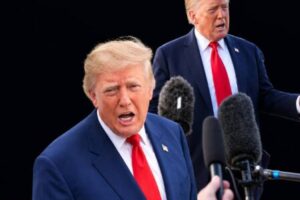











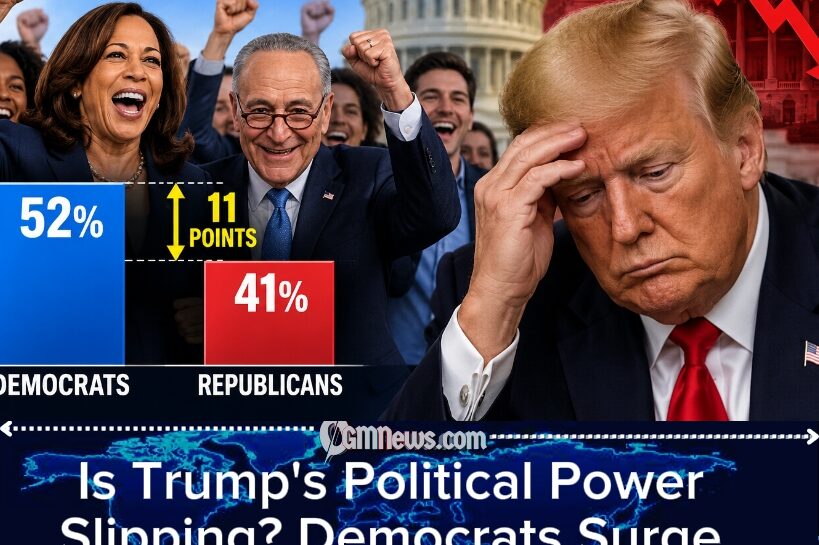










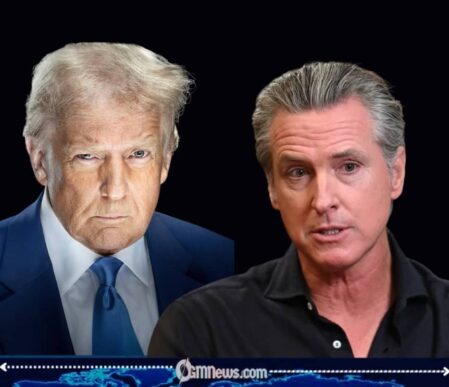
Conflict of interest has returned to the center of American politics after California Governor Gavin Newsom accused President Donald Trump of using the White House to promote companies in which he holds financial interests while helping enrich members of his family. The allegation has intensified a broader national debate over presidential ethics, transparency, and the limits of acceptable financial activity for those occupying the country’s highest office. While supporters dismiss the claims as partisan attacks, critics argue that the accusations raise questions deserving public scrutiny.
The controversy arrives at a moment when political tensions between Newsom and Trump are already running high. The two leaders have repeatedly clashed over governance, economic policy, and the future direction of the United States, making the latest accusations both politically significant and highly visible.
White House Influence Under Scrutiny
The original premise of Newsom’s criticism centers on the claim that the visibility, authority, and prestige of the White House may be benefiting private interests connected to the president. According to the governor, the concern is not simply about wealth accumulation but about whether public power is being used in ways that create financial advantages for individuals closely tied to government leadership.
The White House and Trump allies have consistently rejected allegations of wrongdoing, often characterizing such criticisms as politically motivated efforts by opponents seeking to weaken the administration. Nevertheless, the dispute reflects a recurring issue in American politics: whether elected officials can fully separate public responsibilities from personal financial interests. The debate has become especially prominent whenever questions arise regarding business holdings, investments, or family-linked commercial activities.
Newsom: Ethics Questions Beyond the Political Feud
The conflict of interest discussion extends beyond the latest exchange between Newsom and Trump. Recent reporting has highlighted renewed scrutiny surrounding presidential financial disclosures, stock transactions, and concerns from ethics experts about situations in which public actions could potentially influence private holdings. Some observers have argued that modern presidents should adopt stricter separation mechanisms to avoid even the appearance of benefiting financially from their office.
The issue has also attracted attention from voices beyond traditional political opponents. Earlier this year, billionaire investor and Republican donor Ken Griffin publicly criticized actions he believed were enriching families connected to the administration, illustrating that concerns over perceived self-dealing are not limited to one political faction.
The broader challenge for any administration is that public trust depends not only on the absence of wrongdoing but also on confidence that government decisions are being made solely in the public interest. When questions emerge about financial relationships, family ventures, or investment activity, the resulting perception battle can become almost as significant as the facts themselves.
As the political confrontation between Newsom and Trump continues, OGM News will monitor whether these allegations lead to additional disclosures, official reviews, or new responses from the White House. For now, the conflict of interest debate remains a powerful reminder that questions about ethics, transparency, and public trust rarely stay out of the spotlight for long.


Logging in is a breeze and the site stability is amazing even during peak hours....